
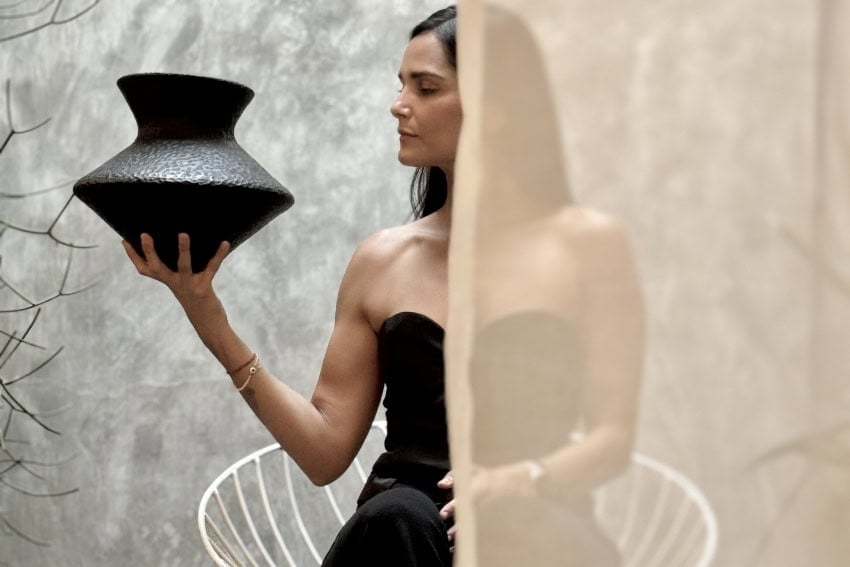
Ana Karina Herrera Gálvez is a 37-year-old Mexican architect whose career has taken an interesting turn toward interior design. Her project, Albaricoque, stands out for breathing new life into some of the oldest craft techniques from her home state, Michoacán. One of these ancient materials is chuspata, a type of palm that grows along the shores of lakes Pátzcuaro and Cuitzeo. For hundreds of years, even before the colonial period, people have used this plant to make beautiful, practical items. Today, Albaricoque honors this craft by creating masterful objects that help revive the tradition. This totem, called ‘Root to the Sky’, is made from the chuspata palm. (Albaricoque) Although Herrera Gálvez specializes in furniture design, her work transcends the boundaries of traditional craftsmanship, venturing into artistic expression. She creates totems, sculptures and a variety of forms that blend modern art with ancestral techniques. Chuspata is woven into remarkably intricate fabrics, and her work showcases both the material and the technique, while its use in contemporary design also helps preserve the craft. In an interview with Mexico News Daily, she shared her thoughts on art, crafts and their significant role in shaping identity and culture. What is the story behind Albaricoque? I was working at an architecture firm in Mexico City when I decided to take a trip to Bali. The experience made me appreciate the richness of Mexico’s materials and techniques; I began to recognize the incredible wealth of this country in terms of its history, nature and identity, so I decided to set up Albaricoque in 2020. The project started in Morelia, where I still live, in the midst of the pandemic. Its aim is to honor the artisanal legacy while creating objects that go beyond aesthetics and connect people with spaces, generating emotions that positively influence their lives. How a Tijuana ceramicist turned desert animals into an interior design concept What inspires you? I draw a lot of inspiration from nature, shapes, architecture and travel. For me, it also comes during the creative process. Sometimes I start with an idea, but as I experiment with the material, I discover something completely different, and new possibilities or challenges arise. Can you tell us about your relationship with traditional crafts and techniques in Michoacán? Living in Michoacán means being surrounded by incredible artisanal crafts. I have always been struck by how simple materials, such as clay and palm fronds, can be transformed into objects with their own identity, meaning and power. Why are crafts important to you? Because for me, they represent more than just a way of making things — they embody heritage, knowledge and culture. These techniques have been passed down from generation to generation for centuries and in a world of mass production and quick fixes, we’ve often lost sight of that. Craftsmanship reminds us of the value of things made with time, patience and experience. Every craft tells a story, has an identity and represents a fulfilling way of life. Why is it important to you to preserve the craft of working with chuspata fibers from the lakes of Michoacán specifically? Chuspata fiber is harvested from the lakes Pátzcuaro and Cuitzeo. The braiding techniques used to create furniture and other objects are extremely elaborate and complex, and the craft is deeply rooted in the region’s cultural heritage. The artisanal process involves extracting the fiber, drying it and determining how much water is needed to moisten it before shaping. Working with chuspata is a lengthy process, and the manual dexterity required for braiding is impressive. At Albaricoque, we work with different types of chuspata weave, including “chain,” “fish” and “openwork.” How do you collaborate with the artisans? We collaborate with a variety of artisans who specialize in woodworking, pottery and chuspata weaving, both here in Morelia and in smaller communities such as Ihuatzio and Zinapécuaro. Working with the artisans is an ongoing process of getting to know the materials. It requires patience, plenty of dialogue and a great deal of openness on both sides. While I propose a design, we learn from each other about the limits and possibilities of each material and process. What threats are currently endangering the preservation of this technique? Overall, I think climate change poses an immediate threat to chuspata. This year, the area experienced excessive rainfall. Some of the material was salvaged, but it began to rot and deteriorate, leaving very little usable fiber; some of it was also damaged or stained. In addition, younger generations are beginning to work with this material, but they often struggle to find ways to commercialize their work. What happens when Mexican artisans meet Middle Eastern, South Asian design talent? In what ways are you helping to preserve the craft? I think that by working with local workshops and respecting their prices, we recognize and promote the value of this art in the region. Collaboration with the workshops is also very important. When artisans see new pieces and new possibilities for materials and techniques, it encourages them to preserve the craft and imagine how their work might connect with other industries, such as architecture, interior design and hospitality. It is also encouraging to see that many young people, including students, are continuing these traditions. What are your thoughts on the current Mexican interior design scene? In my view, Mexico is currently experiencing a really interesting period in interior design. There are more projects with distinctive identities that explore Mexican culture through materials, processes and colors. However, I believe it is important to move beyond viewing craftsmanship merely as an aesthetic or decorative element and to recognize its value more fully, in a way that reflects its profound richness. Ana Paula de la Torre is a Mexican journalist and collaborator for various outlets, including Milenio, Animal Político, Vice, Newsweek en Español, Televisa and Mexico News Daily.
Turning Michoacán’s lake fibers into art: An interview with Mexican designer Ana Karina Herrera Gálvez
Full Article
Original Source
Read the full article at Mexiconewsdaily →KhanList aggregates and links to publicly available news content. We do not host full articles from third-party sources. Always verify important information with original sources.