
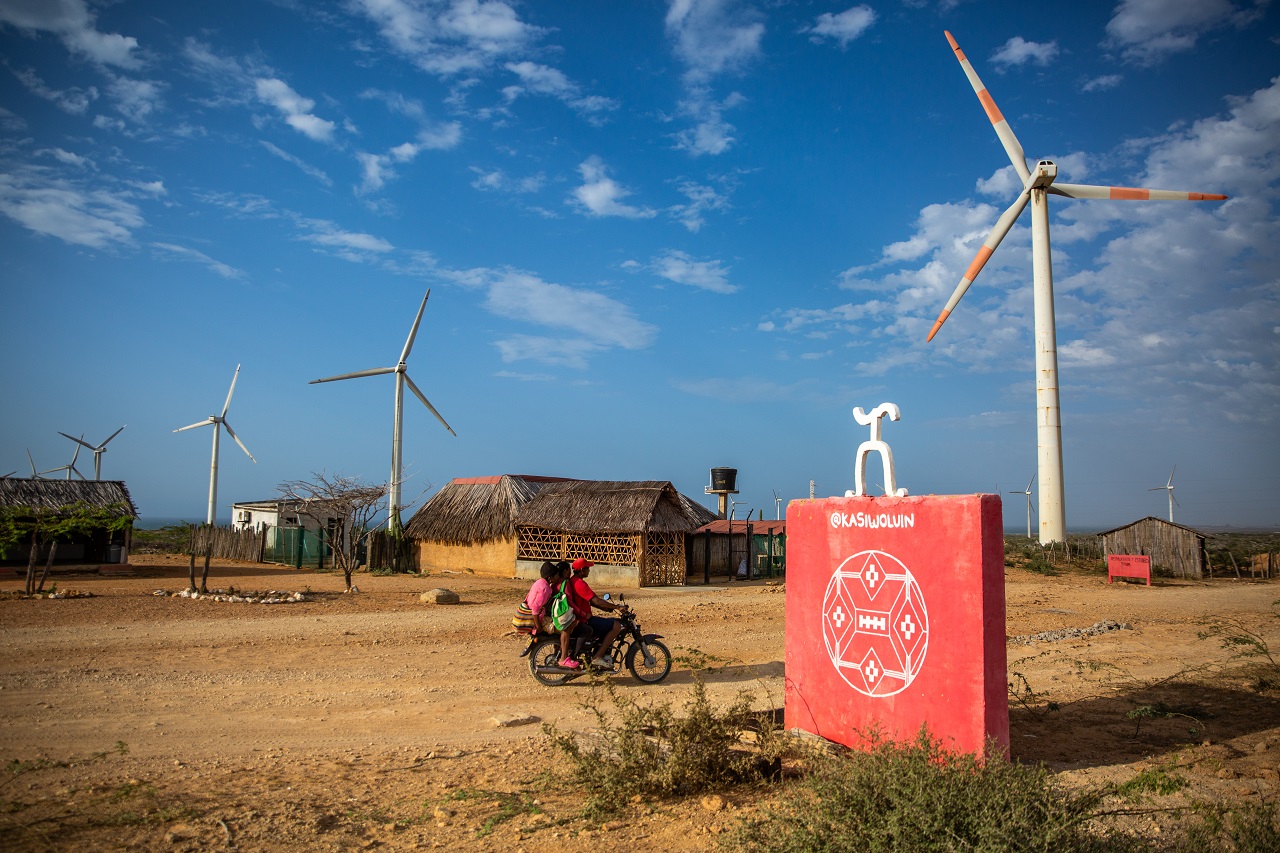
Indigenous delegates came to the U.N. climate talks in Anatalya, Türkiye, hoping the promises from the previous year in Belém, Brazil, would be translated into real rights, funding, and influence.But the final main text collapsed, and the narrower decisions that eventually passed mostly lumped Indigenous peoples in with other groups without recognizing their distinct rights.Mining for the energy transition touches Indigenous lands heavily, yet their consent was left out of the mineral provisions, and the new just-transition mechanism won’t be shaped until talks next year.Much of the money is still not directly reaching organizations the ground, and the Tropical Forest Forever Facility, which promises Indigenous peoples at least 20% of its payouts, stands $1.7 billion short of its $10 billion goal. Indigenous delegates vowed to hold donors to their promise to send more forest tenure pledge funding directly to Indigenous peoples and local communities. ANATALYA, Türkiye — A year ago, a record number of Indigenous people attended the United Nations climate summit in Belém, Brazil. Although there as observers, without a seat at the negotiating table, they left with promises: recognition of their lands, a share of a new forest fund, and a just transition mechanism in the making. The 2026 climate conference, or COP31, that just concluded in Antalya, Türkiye — billed as the “implementation COP” — put those promises to the test. After two days of overtime, its main text collapsed. Narrower decisions survived, and some unresolved issues were pushed to next year’s climate meetings. Belém’s promises remain on hold. It was also meant to have a Pacific accent. Australia steered the negotiations, far from the other islands that had hoped to co-host. The region still made itself heard. In the closing plenary, the Marshall Islands and Vanuatu rejected the final text. Fiji and Tuvalu also voiced disappointment. For Indigenous delegates, Pacific Islanders among them, the question was whether Belém’s promises would turn into rights, funding, and a seat at the table. They came in numbers to find out. More than 350 were in the caucus in the first week, “a very big turnout,” Larissa Baldwin-Roberts, co-chair of the International Indigenous Peoples Forum on Climate Change (IIPFCC), told Mongabay. Delegates during the 2026 U.N. climate conference in Türkiye. Image by IISD/ENB – Mike Muzurakis. A push for rights recognition Among several demands, the IIPFC caucus pressed one across the talks: to be named as rights holders and not one group among many. As observers, its members cannot vote, but they build common positions and engage directly with governments. The adopted texts rarely obliged. A new adaptation task force will be made up of experts nominated by governments, not by the caucus, as it had asked. This year’s guidance to the loss and damage fund lists Indigenous peoples alongside “local communities, women and youth,” with no distinction for their rights and status. A push to write consent and land tenure into the mitigation work program stalled when governments failed to agree on it. The main text went further, then back. A Nov. 16 draft recognized their “inherent and distinct rights,” including consent, in a paragraph of their own. By Nov. 19, they were again grouped with “local communities,” and the consent had disappeared. “It’s incredibly disappointing,” Baldwin-Roberts said. Lumping groups together without recognizing distinct rights, she added, “undermines the amount of work that we’ve done for the last three decades.” The final draft, never adopted, kept it that way. A just transition, but on whose land? The energy transition runs through Indigenous lands: 54% of the mining projects for its minerals and metals sit on or near Indigenous peoples’ lands, and its hunger for minerals is growing. Last year, 17% of abuse allegations linked to transition mineral mines involved Indigenous peoples, who make up 6% of the world’s population, according to the Business and Human Rights Centre. In Antalya, the caucus wanted the new mechanism to guarantee consent for mining projects and dedicated Indigenous seats with functions that can help identify and address risks arising from just-transition activities. Nickel mining activity in the PT IWIP industrial area in Central Halmahera, an island in Indonesia where O’Hongana Manyawa people living in voluntary isolation reside. Image by Irfan Maulana/Mongabay Indonesia. “Indigenous peoples are not merely here to be hosts of the transition on our lands,” Baldwin-Roberts said, a role that fossil fuel extraction forced on them. The decision adopted at the close wrote their rights in and left the mines out. It reaffirms last year’s recognition of their rights and cites their free, prior, and informed consent in industrial transitions. Critical minerals appear only as a matter of value chains. “Removing human rights from mineral value chains is lethal,” the caucus said in its closing statement, delivered to a half-empty hall as the plenary wound down. On paper, the mechanism is meant to boost cooperation, technical assistance, capacity building, and knowledge sharing for fair energy transitions. How it will work remains largely undefined. Under a “phased approach,” its functions and governance, including who sits on it, go to negotiators at the pre-COP meeting in Bonn in June 2027. No Indigenous seat is guaranteed. ‘Not enough reaching the ground’ Then there’s the question of money. “We are managing approximately 25% of the world’s land surface,” said Emil Sirén Gualinga, a Kichwa from Ecuador who co-leads the caucus’s finance work. “But the funds, they aren’t reaching the ground.” Much of the money, he added, is “staying in the implementing agencies.” A previous funding commitment for Indigenous and local land tenure, the Intergovernmental Land Tenure Commitment, announced this year that it had surpassed its $1.7 billion pledge. While delegates acknowledged this as a significant achievement and found that direct finance increased over the years, it was still at just 7.2% of the overall total. The $1.8 billion, five-year pledge announced at COP30 aimed to extend support to Afro-descendant communities and other ecosystems, promising more direct, flexible, and long-term financing. Indigenous delegates said they will be holding these promises to account. The Green Climate Fund acknowledges that an overall gap in finance for communities remains, beyond just what reaches Indigenous organizations directly. Indigenous peoples receive “less than 1% of [overall] international climate finance,” Eleni Kyrou, the GCF’s head of sustainability and inclusion, told Mongabay in a written statement. Indigenous forest tour guide Lenito Pampilo in the forests of Puerto Galera. Image by Keith Anthony Fabro for Mongabay. The fund is building “a dedicated approach,” she said, including help with accreditation. This is a known hurdle: in 2025, the fund’s independent evaluators found accreditation “would be unfeasible for most” Indigenous groups. In Antalya, governments’ guidance, their annual instructions to the fund, backed better direct access, “including for Indigenous Peoples.” The caucus said it wants a dedicated channel for Indigenous peoples to apply directly. Talks on the other two funds produced less, or nothing at all. Governments could not agree on guidance for the Global Environment Facility. The caucus had sought language ensuring that money kept by intermediaries would not count toward the fund’s new goal of steering 20% of its money to Indigenous peoples and local communities, Sirén Gualinga said. The loss and damage fund’s guidance offers more “engagement,” but not the direct access the caucus had sought. Its first round drew $2.8 billion in requests. It had set aside $342 million, which governments themselves called “insufficient.” The forest fund: A 20% share of how much? Belém’s flagship initiative, the Tropical Forest Forever Facility (TFFF), promises to pay countries to keep forests standing, with at least 20% going to Indigenous peoples and local communities. In Antalya, Canada pledged C$560 million ($390 million), the Netherlands formalized $500 million, and philanthropies added $88 million. That brings the fund to $8.3 billion, or $1.7 billion short of the $10 billion goal for the end of the year — a threshold Norway has demanded in order to release its $3 billion loan. Even if fully funded, it may pay out little. The TFFF invests borrowed money and pays out only what it earns above what it owes investors. At best, $10 billion in sponsor capital would pay about 60 cents per hectare a year if no country defaults, against the $4/hectare promised, according to political economist Max Alexander Matthey, who ran the first independent stress test of the fund with economist Aidan Hollis from the University of Calgary in Canada. In their test, the original design would have paid nothing in nearly 40% of years. The fund is reworking its model to reduce that risk but has not made it public yet. The financial industry would collect some $100 million a year in fees, by Matthey’s count. Tropical forests like this one in the Peruvian Amazon could qualify for annual payments from the Tropical Forest Forever Facility (TFFF) to help keep them standing and delivering planetary ecosystem services — especially carbon sequestration that slows the rate of climate change. Image by Justin Catanoso “Indigenous groups will most probably receive less than the financial industry,” he said. How the 20% would reach communities is still “not fully determined,” Baldwin-Roberts said. Unlike other funds, the TFFF was set up to grant to Indigenous peoples directly. A co-chair behind bars One of the caucus’s co-chairs was missing. Daria Egereva, a Selkup woman from Siberia, has been in jail in Moscow since Dec. 17, 2025, days after she returned from Belém. She and her colleague Natalia Leongardt are charged with taking part in the Aborigen Forum, which Russia listed as a “terrorist organization” in 2024. Her lawyer, Olga Podoplelova, told Mongabay the forum “never engaged in or advocated for violence.” The two women face 10 to 20 years in prison. A verdict is expected by January. U.N. human rights experts have called for their release, and the caucus has kept Egereva as co-chair. In a letter read in Antalya, she wrote that “our collective voice” was on trial. Her arrest has sharpened the caucus’s focus on safety, Baldwin-Roberts said, but “we haven’t taken a step back.” Nor does she judge Antalya by the text alone. The caucus built consensus across its seven regions and did “a lot of education” with governments on why Indigenous rights stand apart. “A lot of the work, regardless of whether it makes it into the text, is actionable on our home territories,” she said. Next year, the talks move to Addis Ababa, Ethiopia, and Baldwin-Roberts said she feels “more hopeful about COP32.” Banner image: The house and the restaurant of Wayuu leader Nancy Gutiérrez sitbetween the turbines of the Jepirachi wind farm in Kasiwoluin village, La Guajira, north of Colombia. Gutiérrez used to cook for workers in EMP, the company owning the wind farm, to provide for her and her son. Image by Antonio Cascio for Mongabay. Analysis: The collapse of UN climate talks, over fossil fuels, was years in the making FEEDBACK: Use this form to send a message to the author of this post. If you want to post a public comment, you can do that at the bottom of the page. Credits Topics
Indigenous peoples leave collapsed climate talks with promises on hold
Full Article
Original Source
Read the full article at News →KhanList aggregates and links to publicly available news content. We do not host full articles from third-party sources. Always verify important information with original sources.