
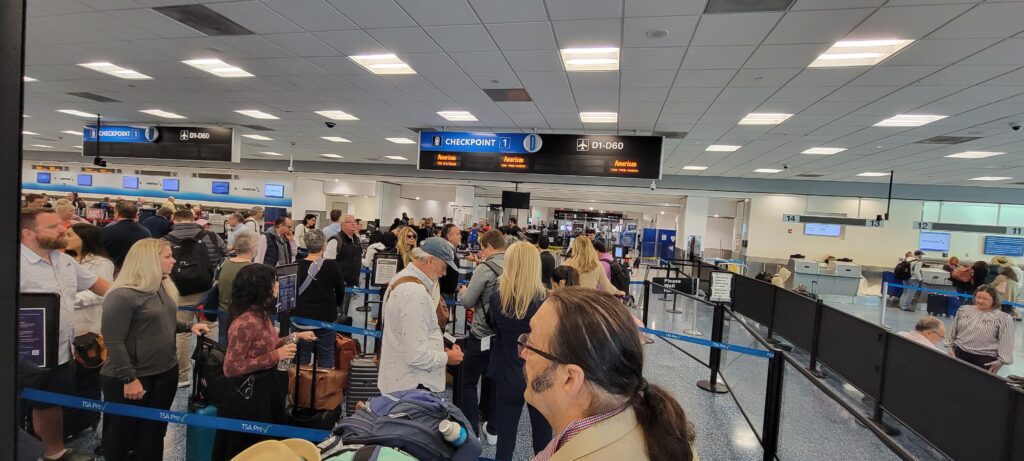
TSA is promoting military line-skipping at 33 airports, with benefits for veterans and families as well as current service members. You don’t have to be in uniform, and at participating airports without a dedicated lane, eligible travelers can simply show their credentials for front-of-line service. That means security takes longer for non-military passengers who arrived first. The agency presents this as honoring the military community. I understand why many people want to do that, but many of the arguments for this wouldn’t seem to extend to people taking vacations or whose military service ended years ago. A July 2025 Initiative Gets A Fresh Publicity Push TSA announced its “Serve with Honor, Travel with Ease” initiative on July 2, 2025, ahead of Independence Day. The package included free PreCheck enrollment for Gold Star families, a $25 enrollment discount for military spouses, and enrollment events near military installations. It also included expedited access for military members using PreCheck at selected airports near larger military installations. The announcement described “dedicated screening lanes, or front-of-line privileges.” So the core benefit is more than a year old. What appears to have set off a wave of coverage over the past few days is TSA’s renewed promotion on social media. On September 15, the agency posted on Facebook and on Twitter: “You’ve answered the call. We’ve got a lane.” A September 16 FOX Local article then spread across FOX station websites and Yahoo. Scripps distributed its own story, crediting reporting from Phoenix. How Military Priority Works, And Which Airports Offer It There are two ways the benefit works: A dedicated military lane. Eligible travelers show their qualifying credentials to enter the designated queue. Front-of-line service. Where a participating checkpoint doesn’t have a dedicated lane, eligible travelers identify themselves to the lane monitor, show their credentials, and receive priority access. Military personnel already have access to free PreCheck using their Defense Department identification number when booking. Military priority can move them ahead of other people who also have PreCheck. Here are the 33 airports: Airports Listed For Military Priority Albany Albuquerque Anchorage Atlanta Austin Birmingham Boise Casper Charlotte Cleveland Columbus John Glenn Denver Detroit El Paso Fort Lauderdale Fort Myers Honolulu Jackson Las Vegas Little Rock Los Angeles LAX Miami Nashville Oklahoma City Phoenix Sky Harbor Raleigh–Durham San Antonio San Diego San Juan Seattle Sioux Falls St. Louis Lambert Tampa TSA says Phoenix currently offers this to active-duty military, but not veterans. Active-duty travelers can show military ID to the lane monitor at any of its five PreCheck checkpoints. That’s more limited than what TSA is promoting nationally. Gratitude Doesn’t Make Every Military Trip Urgent The strongest argument for this is that someone who volunteers for military service accepts restrictions on where they live, separation from family, and the possibility of being ordered into danger. Some people will think that (voluntarily undertaken obligation for pay) deserves recognition even when the person is off duty, and that past service deserves continued gratitude. I don’t think it follows that TSA should create a privileged class at a government checkpoint for one category of current and former government workers, and their families. Most of the practical justifications don’t seem to support it: Military readiness. It’s one thing to expedite someone to an urgent assignment but doesn’t support off-duty priorty or extending this to veterans. Security vetting. Existing vetting can support eligibility for PreCheck but doesn’t explain why a military PreCheck passenger should go ahead of other vetted passengers who arrived earlier. Public service. Plenty of people perform difficult, dangerous, or socially valuable work. Nurses, firefighters, and teachers aren’t less important when their work falls outside the military. Some of you will want to extend this privilege to those professions as well. Airlines have historically had say in queues rather than TSA itself, and allowed priority for premium cabin passengers. The idea there was that TSA hassle and waits undermined the airline business and made trips more arduous (making driving or train relatively more attractive) and this was a concession to preserve their business from their best customers. Plus, frequent travelers wind up spending more time in these lines than others even with priority given the total number of trips they take. Adding lines for designated passengers can make waits worse because they spread TSA resources that get used less efficiently when a a fully staffed lane stands ready for a limited number of eligible passengers. Ultimately this is attractive politics precisely because TSA (and the President) will get the credit while other travelers absorb much of the cost. Topics on this page
TSA Now Lets Military Travelers And Veterans Skip Security Lines
Full Article
Original Source
Read the full article at Viewfromthewing →KhanList aggregates and links to publicly available news content. We do not host full articles from third-party sources. Always verify important information with original sources.