
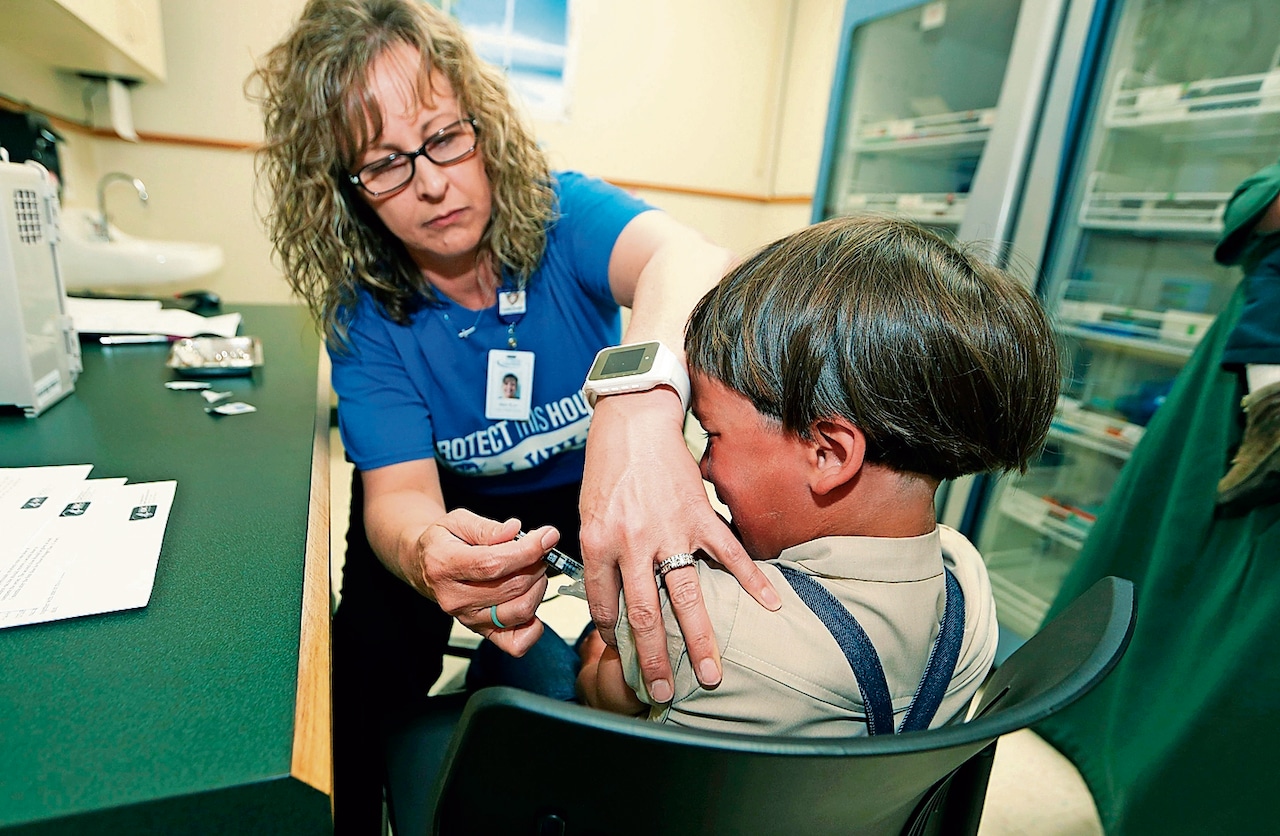
OpinionCountering vaccine misinformation requires real stories that touch the heart: Richard M. PerloffRegistered nurse Starr Roden, left, immunization outreach coordinator with the Knox County Health Department, administers a vaccination to Jonathan Detweiler, 6, in Mount Vernon, Ohio, in this 2022 file photo. (Associated Press File)Associated Press FileBy Guest Columnist, cleveland.comIf you get a vaccine, you’re going to sprout horns and hooves, the anti-vaxxers claimed. Others charged that people who get vaccinated are performing a blasphemous act by injecting part of an inferior animal into their body.You might think that these vaccine opponents were challenging the COVID-19 or MMR (Measles-Mumps-Rubella) vaccines, but their opposition dates back much further, to the time when Edward Jenner developed the smallpox vaccine in the 1800s. For that’s the thing about vaccines: They have always elicited resistance because people have harbored fears and misconceptions about the power of foreign objects entering their bodies. Once we appreciate this, we can take a less judgmental, more realistic approach to encouraging vaccination, an important objective as the school year begins.2026 has seen the most measles deaths since the virus was regarded as eliminated in 2000. Here in Ohio, the percentage of kindergarteners who received the MMR vaccine, according to the Ohio Department of Health, is disturbingly low at 88.2%, markedly below the 95% level the U.S. Centers for Disease Control and Prevention says is the gold standard needed to guarantee herd immunity.One reason Ohio’s vaccination rate has dropped is that more families are asking for nonmedical exemptions to vaccines, requests that require only that parents provide justifications based in reasons of conscience or religious beliefs.But in doing this, parents are putting their children and other kids at medical risk. For vaccines are remarkably safe. They have been hailed as miracles of modern medicine, preventing millions of deaths of children worldwide. The stakes are high. If a child with measles is sitting in a waiting room with 10 children who didn’t get the measles vaccine, an estimated nine of those kids will get infected, sometimes with harmful effects.If we want to change Ohio’s vaccine-hesitant parents’ attitudes, we need to understand the psychological roots of their opposition and find ways to call on persuasive communications to change their views.To influence vaccine opponents with strong religious beliefs, we could call on a genre of communicators that might surprise you: Faith-based leaders of congregations. These religious leaders are trusted by conservative Americans and when they promote vaccines, they can reduce vaccine hesitancy among white evangelical Christians.Other anti-vaccination groups argue that natural immunity is superior to immunity acquired through vaccinations, a mistaken belief. But such beliefs are steeped in misinformation. Nearly 3 in 10 adults say they have heard the false statement that the measles vaccine is more dangerous than becoming infected with measles. The skepticism has risen 11% over the past two years. To counter these claims, one can’t just give anti-vaxxers the facts, for as classic persuasion research shows, opponents will vociferously insist the facts are not true. Instead, we need to perform some psychological jujitsu, playing on the heartstrings, telling a story that arouses parents’ guilt about their failure to vaccinate a child who got sick from measles. Richard M. Perloff is a distinguished professor of communication and psychology at the Levin College of Public Affairs and Education, Cleveland State University.Reena Arora, Cleveland State UniversityWith highly contagious measles cases increasing in Ohio, we need our political leaders to marshal their persuasive resources. The election offers an opportunity. The major gubernatorial candidates, if they wanted, could call on health persuasion principles to urge Ohioans to get their kids vaccinated. Instead, discussions about health have focused on Vivek Ramaswamy’s misleading statements about Amy Acton’s record as Ohio Department Health Director early in the pandemic, or Acton’s decision to refuse an invitation to a debate where she could have promoted the importance of the measles vaccine.Yet measles can cause severe sickness, even death. We need full-fledged health campaigns to change attitudes. Our political candidates should lead the way.Perloff is a distinguished professor of communication and psychology at the Levin College of Public Affairs and Education at Cleveland State University.MORE BY GUEST COLUMNIST CLEVELAND.COMHave something to say about this topic?* Send a letter to the editor, which will be considered for print publication.* Email general questions, comments or corrections on this opinion column to Elizabeth Sullivan, director of opinion, at esullivan@cleveland.com.
Trusted religious leaders can reduce vaccine hesitancy among white evangelical Christians
Full Article
Original Source
Read the full article at Cleveland →KhanList aggregates and links to publicly available news content. We do not host full articles from third-party sources. Always verify important information with original sources.