
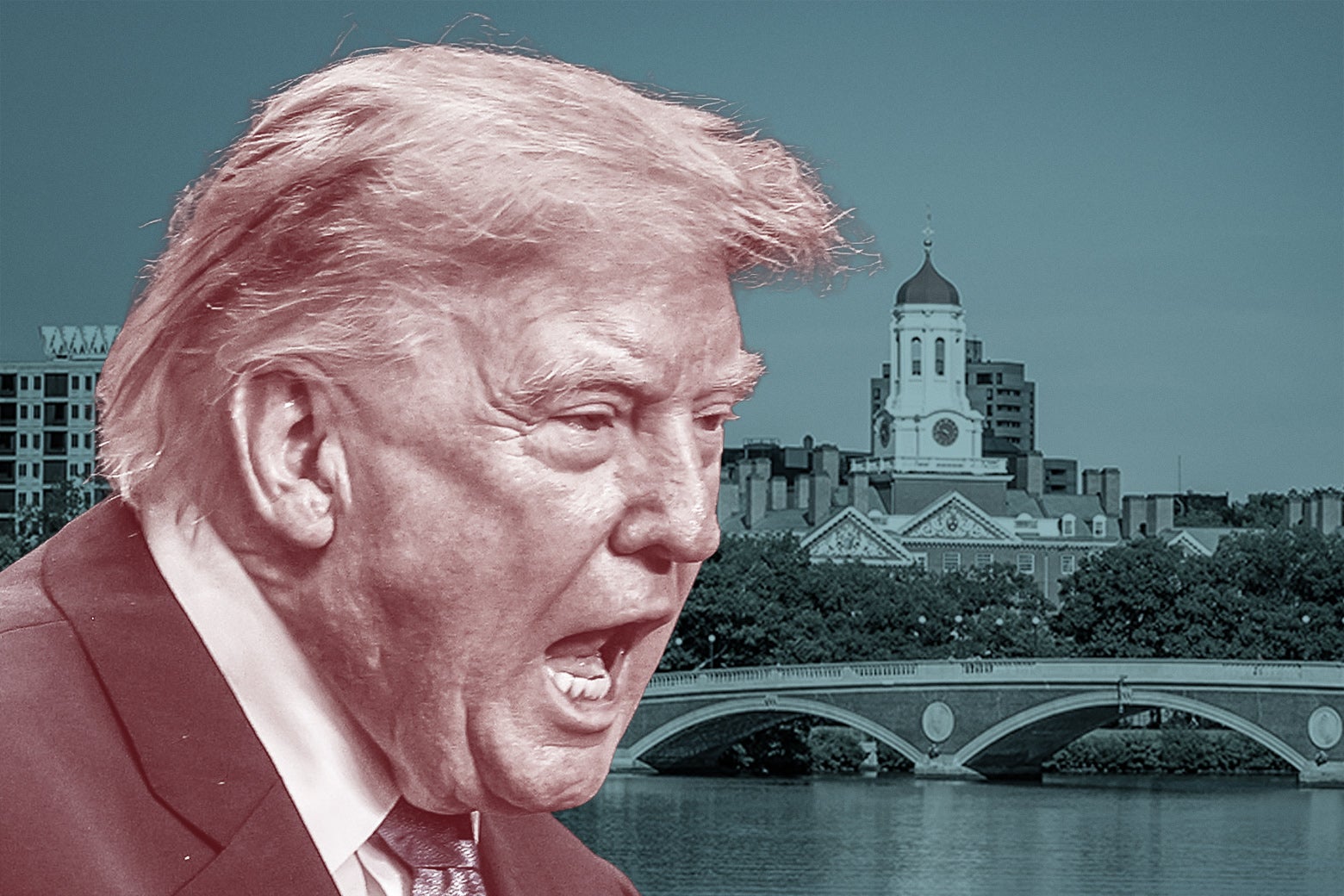
The Slatest The war on education is back on, and this time, Trump’s team has found a way to punish students. Photo illustration by Slate. Photos by Win McNamee/Getty Images and Getty Images Plus. This story is adapted from the Slatest newsletter. You can sign up here to get it in your inbox every day. Since Donald Trump returned to office, his administration has waged a war on supposed “wokeness” in education. On Thursday, it proposed new federal regulations that would target schools that explicitly aim to help nonwhite students. Here we go again. What exactly does this new rule say? Schools already have to meet certain requirements to qualify for 501(c)(3) tax-exempt status with the IRS. The new rule, which has yet to be finalized but is set to take effect in May, would add another. It states that any private school, trade school, or university that uses “race, color, or national or ethnic origin” in “admissions, educational policies, scholarships and loans, athletics, and every other school-administered or school-supported program” would no longer qualify for tax-exempt status. Many institutions have adopted policies to aid minority and underprivileged students in an attempt to balance out legacies of discrimination in both higher education and American society. But the Trump administration has cast those efforts as discriminatory against the students’ white and Asian peers. OK, but what would this rule mean in practical terms? Enforcing these guidelines would probably require IRS audits to determine whether a school’s policies or programs are in compliance. But the rule would seem to be worded broadly enough that a school that in any way supports, say, a club for Black students could conceivably be at risk. The IRS estimates that the new rule could strip scholarships from about 750,000 students and threaten the tax-exempt status of up to 18,000 schools nationwide, from private elementary schools to colleges. I get why that would be bad for students. But why is losing tax exemption bad for schools? Tax exemption, which private schools receive because education has long been considered a public good, saves some schools millions of dollars a year. It also lets people who give money to them deduct the donations from their taxes, an incentive that helps schools fundraise. Losing it could exacerbate financial struggles that have already caused some colleges to cut programs, lay off staff, and even close. Hang on: I thought the Supreme Court already outlawed affirmative action. So why is this even necessary? The new rule is part of an ongoing struggle to interpret the court’s landmark 2023 ruling, which banned race-conscious college admissions policies. In response, some schools have cut back on programs aimed at helping minority students, even relatively benign initiatives like special orientation events, and Black and Latino enrollment at top universities has fallen. But other schools have looked for wiggle room, and the new IRS rule does have some exceptions. It lets institutions continue to support underprivileged students as long as those efforts use “race-neutral criteria such as family income, geographic location, first-generation status, individual hardship, military family status, or academic achievement.” Even so, as schools try to walk Trump’s line under the new rule, they risk huge consequences if they err in a way the administration considers excessively “woke.” Can they do anything to fight this? According to the New York Times, the administration already expects a suit from the American Association of University Professors, a group that supports academic freedom and has successfully challenged other Trump efforts to target higher education. And if the IRS does start auditing individual schools once the rule takes effect, the schools could contest attempts to take away their tax-exempt status in court. Threatening an organization’s tax-exempt status seems like an effort to intimidate it into complying in advance. Yes. Even the prospect of being investigated can lead organizations to steer clear of anything that might put them in Trump’s sights. In fact, that’s already happening. In previous cases, some colleges have settled with the administration (or are considering doing so) to end federal probes, or they’ve preemptively changed their policies to avoid scrutiny. Sometimes, controversy can be a tax in its own right. Tolga Akdoğan Now let’s pivot from higher education to higher purpose—like how to have a great rest of your evening. My colleagues think the following might help: A tribute to a feminist icon: Slate executive editor Susan Matthews (who also hosted Slow Burn: Roe v. Wade) remembers Gloria Steinem, who died on Wednesday at 92. Susan shares what she learned from Steinem’s long and successful career fighting for women’s rights. A movie so bad it’s good: Niu Lai, a poorly made Chinese film about animated cows, has quickly become one of the most profitable movies of all time. This feat is all the more impressive when you consider that “watching it is like mainlining a Pixar movie while severely concussed,” writes Franklin Schneider, who investigates why this amateur flick has been such a hit with audiences. Some dating advice for the modern era: Money is often a touchy subject in relationships, but especially when one person earns more than their partner. In the latest installment of Unhinged, Slate’s dating advice column, Steffi Cao counsels a woman whose dates are uncomfortable with her having the financial upper hand. Some wordplay to end the day: Take a break with today’s Pears, which has 10 rounds. Can you find the longest word? OK, it’s high time for me to leave you be for the night. See you tomorrow!
Trump’s Latest Attack on American Education Is Particularly Nefarious
Full Article
Original Source
Read the full article at Slate →KhanList aggregates and links to publicly available news content. We do not host full articles from third-party sources. Always verify important information with original sources.