
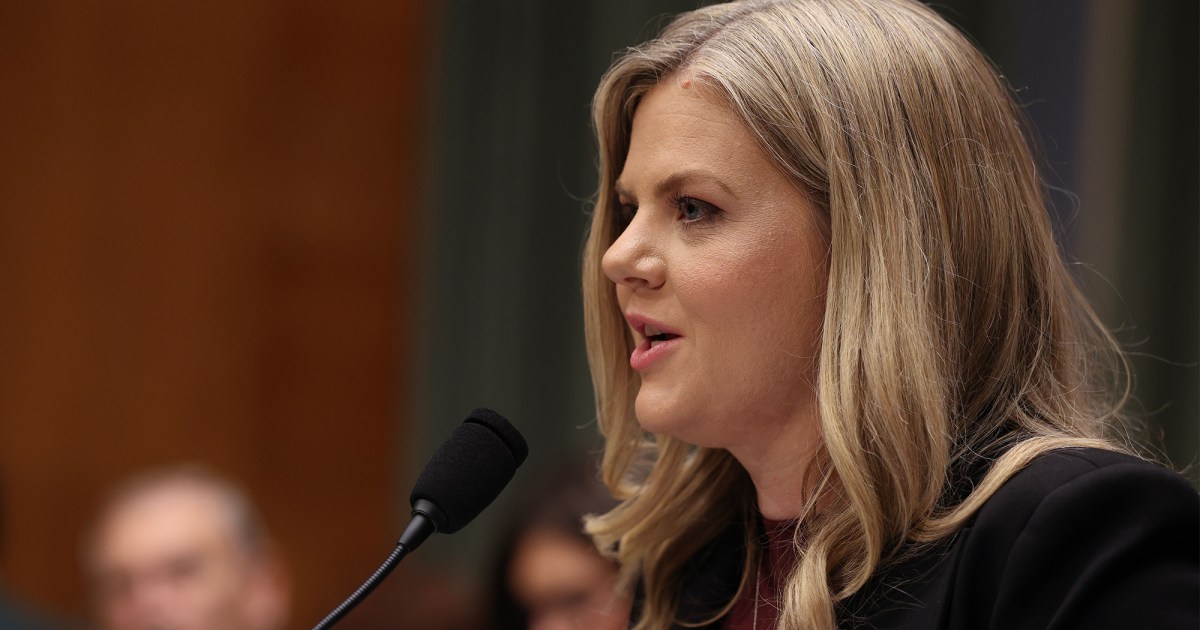
Dr. Heidi Overton at her Senate confirmation hearings on Thursday to head the Trump administration's FDA.Tasos Katopodis/Getty Get your news from a source that’s not owned and controlled by oligarchs. Sign up for the free Mother Jones Daily. This article has been republished from Autonomy News, a worker-owned publication covering reproductive rights and justice. Follow Autonomy News on Instagram, Bluesky, TikTok, Threads, and LinkedIn. Dr. Heidi Overton, Donald Trump’s nominee to be the next head of the FDA, opened a Wednesday confirmation hearing before the Senate’s Health, Education, Labor and Pensions (HELP) committee by thanking her “lord and savior, Jesus Christ.” Throughout the hearing, Overton faced many questions about vaccine safety, flavored vapes, and foodborne illness. Perhaps unsurprisingly given her past anti-abortion statements, many of Overton’s most alarming answers—and non-answers—had to do with abortion and birth control. “I wanted to know if you agree that an IUD is an abortifacient,” asked Washington Democrat Patty Murray, referencing the Trump administration’s false claims that some forms of birth control, including intrauterine devices, can cause abortion. Overton not only refused to answer, but her response even suggested that the FDA could change its stance. “If I’m confirmed as FDA commissioner, I’ll be fully briefed on all their prior decisions and make determinations according to the standards of safety and efficacy,” she said. Overton’s birth control comments are notable as Trump’s Department of Justice has refused to say in an active court case that certain forms of birth control don’t cause abortions, and because many anti-abortion groups oppose the use of IUDs and emergency contraception, claiming they are abortifacient. If confirmed, Overton—who is currently serving as a White House domestic policy advisor—will face intense pressure to roll back access to abortion pills. Murray also asked the nominee about her 2023 claim that the abortion drug mifepristone is “dangerous to women,” which Overton made in a paper written for the far-right America First Policy Institute. Murray asked Overton whether she agreed with the FDA’s approval of mifepristone, “which means the agency deems it safe and effective.” Overton said only that “mifepristone was approved by the FDA as having met its safety and efficacy standard.” Murray pressed her again on whether or not she believes the drug is safe. “I know that it has met the safety and efficacy standard,” Overton said. The nominee repeatedly used the past tense when talking about mifepristone regulations meeting FDA standards. Murray called Overton’s conclusion in the paper “alarming” because it conflicts with scientific evidence, which has repeatedly shown mifepristone to be safe and effective—including when prescribed via telehealth. Overton replied that she has always “been driven by data,” and that the paper was written “after a change was made at the FDA in how that medication was accessed.” She was referring to a 2021 regulation, formalized in 2023, that allowed mifepristone to be prescribed by telemedicine. Overton then referenced an ongoing FDA “review” of mifepristone’s safety, which she said is “very important.” Former FDA head Marty Makary reportedly slow-walked that review so it wouldn’t be complete until after the midterm elections. “I hear you changing your answer now, saying you don’t think [mifepristone] is safe,” Murray said. Later in the hearing, another Democrat, New Hampshire Senator Maggie Hassan, called for Overton to recuse herself from the mifepristone review based on her past comments about the drug. There are currently five active lawsuits challenging the FDA’s regulation of mifepristone: Three filed by abortion-hostile states that say the agency’s regulation of the drug is too lax, and two filed by abortion providers in which federal judges have ruled that the FDA maintains too many restrictions on the medication. The FDA has repeatedly cited its mifepristone safety review in these cases as a reason to pause the litigation. “As mifepristone is under scrutiny at the state and federal levels, Dr. Overton leverages her status as a physician to deceive the public about medications we know are safe.” Despite showing ignorance of some of the agency’s operations—including by failing to name a division of the FDA responsible for important food safety measures—Overton showed significant knowledge of the mifepristone litigation. In response to questions from Indiana Republican Jim Banks, who asked Overton to accelerate the review, she said that, if confirmed as commissioner, regulation of mifepristone “would immediately be on [her] desk” because the FDA is required to produce an update in early October in a case filed by Louisiana. She also cited litigation in Hawaii, one of the lawsuits that could roll back restrictions. Banks also brought up the agency’s investigatory powers. “Is it in the public interest to investigate companies that dispense abortion drugs and mislead women about their risk?” he asked. In her answer, Overton mentioned a recent report by HELP committee Republicans that purported to identify “potential concerns” about mifepristone manufacturers. “If there are issues identified … I would be committed to making sure that every company is following the law regarding the requirements,” Overton answered. In March, committee chair Bill Cassidy and four other Republicans sent a letter to the FDA calling on it to work with other federal agencies to crack down on abortion pills. It’s not yet clear when the 23-member Senate committee will hold a vote on whether to advance Overton—who is board-certified in public health and preventative medicine—to the full chamber, but Trump is reportedly pushing for her to be confirmed before the midterm elections. Maine Republican Susan Collins—who’s in a tough reelection battle this fall and claims to be pro-choice—didn’t ask a single question about abortion access, though she said she discussed the issue with Overton during a private meeting. Meanwhile, Alaska’s Lisa Murkowski, also a Republican, expressed concern that requiring in-person appointments for mifepristone would hurt rural residents of her state and said she worried that “political pressure” was at play. Murkowski didn’t ask Overton to respond, but it was striking that she highlighted possible disruptions to care when Collins did not, given that Maine also has vast rural areas. Another senator facing voters in November, Ohio GOPer John Husted, skipped the hearing entirely. Following the hearing, Dr. Ghazaleh Moayedi, a Texas OB/GYN and the board chair of Physicians for Reproductive Health, called Overton’s nomination “nothing short of insulting to a public institution entrusted with the health and safety of our nation.” Moayedi added: “As mifepristone is under scrutiny at the state and federal levels, Dr. Overton leverages her status as a physician to deceive the public about medications we know are safe.”
Trump’s FDA Pick Refuses to Say IUDs Don’t Cause Abortions
Full Article
Original Source
Read the full article at Motherjones →KhanList aggregates and links to publicly available news content. We do not host full articles from third-party sources. Always verify important information with original sources.