
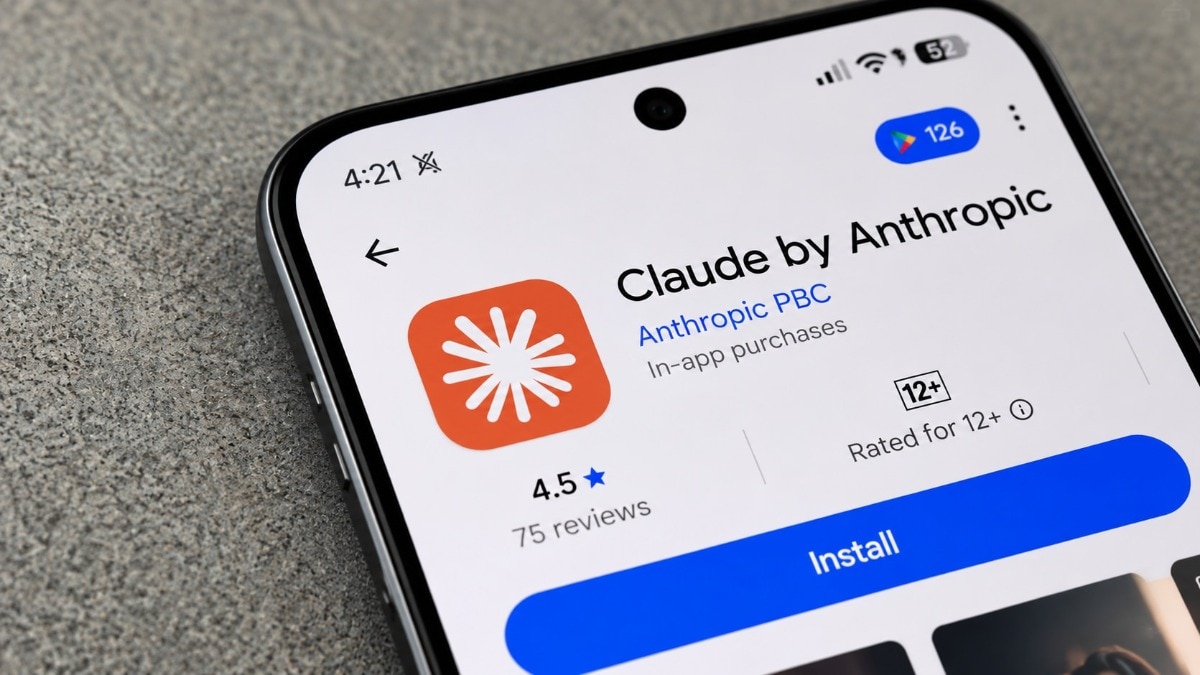
AI models are getting more powerful. But as some say, with great power comes great responsibilities, and that responsibility may be posing a problem for Anthropic’s Claude.On social media, many users are frustrated with the way Claude works. Some are complaining that the AI is being too cautious, and treating them like “criminals” for many queries.Before we begin though, you should know that these restrictions are part of safeguards that prevent misuse of the AI model.Claude keeps assuming the worst, users sayThe debate began on the Claude AI subreddit, where user Interesting-Rain-690, asked, “Can Claude stop treating every question like I'm planning a crime?” The user said they noticed a pattern with Claude -- the AI kept worrying about the worst-case scenarios. “I use Claude everyday, but it keeps assuming the worst intent behind completely normal questions,” they wrote. This, they claimed, reached a point that even when they asked about how a medication may be impacted because of alcohol, the AI gave them helpline numbers. As the user put it, “I ask how a medication interacts with alcohol, I get a ‘please reach out if you're struggling’ paragraph before the answer.” A user shared the post on Reddit. The user added that for queries related to cybersecurity or lockpicking, Claude would automatically switch from the more powerful Opus 5.5 model to Opus 4.8. While these safeguards have a reason to be there, the user feels as if Claude was already picturing them as a criminal. “It assumes that I'm standing outside my neighbor's door with a lockpick at hand,” they said. Screenshots from this post went viral on X. One X user claimed that Claude's system prompt was “heavy-handed” and framed users as potentially malicious or adversarial. “This creates a terrible working relationship, where Claude is suspicious of you from the very start,” the user wrote, adding that many users were now noticing an issue they had raised for a long time. Users on X agreed with the post. One user on X commented that Claude had recently refused to continue working in a software repository because it considered the activity “hacking”. The task involved a script used to generate credentials while adding accounts to the user's hobby network.Apart from general queries, some claim that even for research, Claude may be trying to sabotage work. Pietro Schirano, an AI startup executive, claimed, “If you use Claude models for research, they'll try to sabotage the work at every stage.” He said that he made a skill called “DoNotSabotage” to get Claude to not impact his research work.Why is Claude doing this?While users may be frustrated with the way Claude works in such cases, this is how the AI has been designed for safety purposes. AI models have become quite capable today, especially in cybersecurity. As a result, Anthropic – and other AI labs – restrict certain use cases that can help avoid any misuse by a bad actor. This is called alignment. The sabotage claims for research, though, remain unverified.However, for most queries which are not harmful, users can still get answers by providing more information to the chatbot, such as what they actually plan to do with the information.The same was acknowledged by the Reddit post. The user said that they could get around the restrictions if they gave prompts like, “I'm a security researcher. Here are my credentials.”But of course, safeguards are stricter when it comes to cybersecurity or bioware. That is, Claude will not help you if you try to make a bomb for instance.In some cases, Claude can in-fact inform authorities if it suspects criminal activity on your part. Last month, WINK News reported that a woman in Florida was arrested after Claude reported her to the police. In one of her chats with the AI, she wrote, “I’m going to shoot up the sheriff’s right now.”- Ends
Treats you like a criminal: Users say Claude is terrible to work with, acts like moral police
Full Article
Original Source
Read the full article at Indiatoday →KhanList aggregates and links to publicly available news content. We do not host full articles from third-party sources. Always verify important information with original sources.