
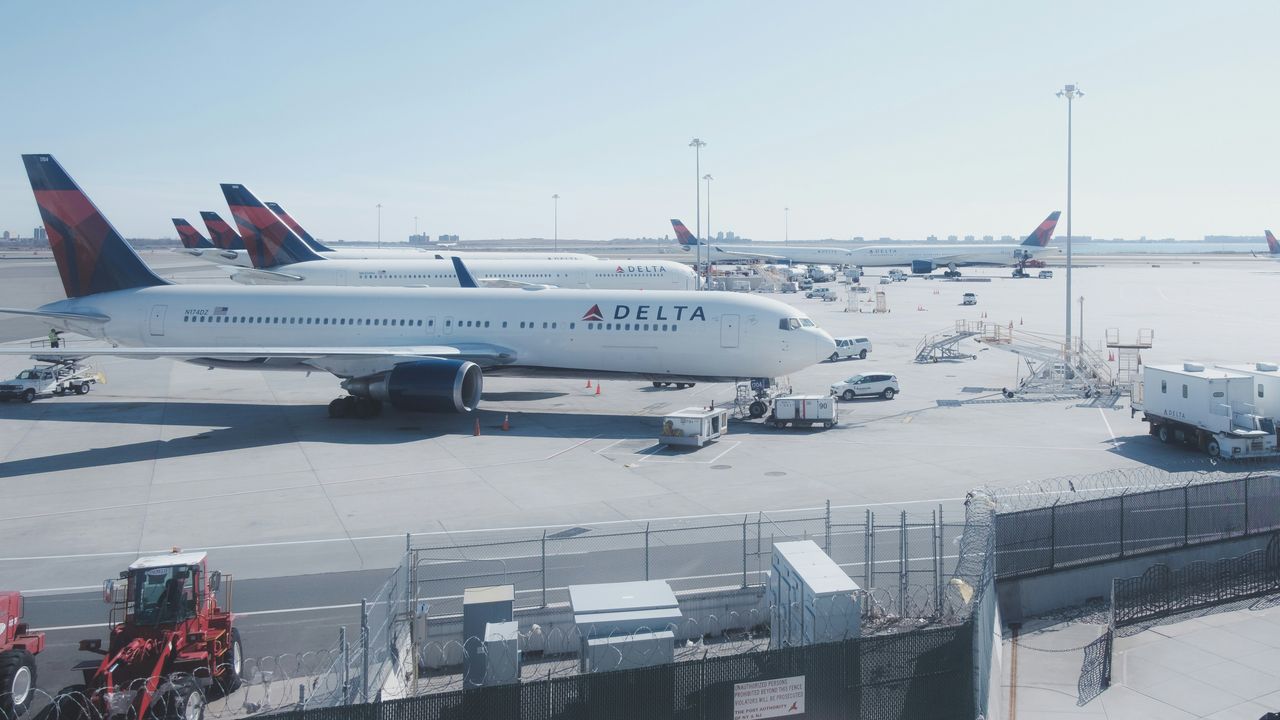
On Sunday, November 22, US travelers faced another wave of significant flight disruptions ahead of Thanksgiving.This time around, the issues occurred at the nation’s busiest hub, Atlanta’s Hartsfield-Jackson International Airport (ATL), where Delta Air Lines delayed hundreds of flights due to a problem with a critical piece of technology.The delays sent ripple effects throughout the carrier's US network, snarling travel plans for thousands of Delta fliers heading out on Thanksgiving trips. While the issue was resolved Sunday afternoon, the airline delayed 300 flights and canceled 92 flights on Monday morning, according to FlightAware.For US travelers, the timing is particularly stressful. AAA projects 5.96 million travelers will take domestic flights over the Thanksgiving holiday period. Plus, Delta’s operational difficulties came only nine days after the FAA declared a rare nationwide ground stop on November 13 that lasted more than four hours and led to multiple days of travel chaos.While Delta’s technology issues had nothing to do with the FAA systems, both incidents have travelers questioning if their Thanksgiving travel plans will be disrupted. Here’s a look at the current situation and what travelers should know before heading to the airport this week.This article has been updated with new information since its original publish date.What's the latest with Delta flight delays?On Sunday morning, Delta began having issues with its weight and balance automation system at the Atlanta airport. The system’s critical equipment assesses whether aircraft are too heavy to fly before takeoff.The airline said that while the system was out, crew were forced to use “manual workarounds” to help flights depart, the carrier told a CNN affiliate. However, the technology outage still led to thousands of delays and hundreds of cancellations.Delta had 2,194 flight delays on November 22, which is about 64% of its schedule, according to FlightAware data. The carrier also had 274 canceled flights on Sunday. Although some of those disruptions were due to other issues, like bad weather in the Northeast, Delta said that 70% of the flight changes were caused by the ATL equipment problems, according to CNN.The airline said it had restored the system by Sunday afternoon. By Monday morning, Delta’s flight schedules across the country appeared to be getting back on track. However, as of 11 a.m. ET on Monday, the carrier had accumulated more than 300 flight delays and 92 cancellations, FlightAware showed. Now that the technology issue has been resolved, travelers can expect Delta's flight schedule to progressively return to normal but should still prepare for lingering delays through Tuesday, November 24.Travelers with canceled flights can ask for a full cash refund if they no longer wish to travel. The carrier doesn’t charge passengers to change their flights if they’re booked in any fare class except basic economy (although a difference in fare may apply).Passengers should continue to check with Delta for the latest information on their flight status. When traveling for Thanksgiving, err on the side of caution and plan to arrive at the airport early: at least two hours before a domestic flight and three hours before an international one.What caused the nationwide FAA ground stop?The ground stop on November 13 was due to a separate issue with air traffic control equipment outages and the telecommunications systems that the FAA uses to track and communicate with planes while they’re flying. “The ground stop was issued out of an abundance of caution,” says the FAA’s statement. “Safety is, and will always remain, the FAA’s highest priority. We will never compromise the safety of the flying public.”On November 13, the FAA’s network service provider, L3Harris, was updating telecommunications equipment at an FAA facility in El Dorado, Arkansas, when the issues began, according to the FAA. The company was deploying a new router that also began to cause system disruptions at a radar site in Amarillo, Texas. “The FAA’s legacy equipment became unstable when data began flooding the FAA FTI network, at a rate of 1,000 connection attempts every 4 to 5 seconds,” says an FAA statement. “This disrupted the system and created instability with aircraft communications and radar feeds.”Once the inconsistencies were identified, the FAA says that L3Harris blocked those two locations, and the network stabilized. However, the exact cause of the telecommunications issues are still under investigation.Regulators are still working to identify the root cause of the issue. “The work that was done on Friday, that's been done thousands of times by L3Harris in our network,” Secretary of Transportation Sean Duffy said in a recent interview on ABC’s “This Week.” “It's been done thousands of times by other companies, and these issues haven't arisen, and so that's why we have to figure out what went wrong here.”Duffy also noted that the equipment in question is several decades old: the router was originally purchased in 2001 and was also part of a system that ran on obsolete copper wiring.Experts say that the archaic equipment underscores the urgent need to update the nation’s air traffic control system. “While the investigation continues, the incident exposed a troubling reality: America's aviation system remains vulnerable because we have relied on aging infrastructure for far too long,” says Geoff Freeman, president and CEO of US Travel Association. The “disruption was a wake-up call that Washington cannot afford to ignore.”Will this impact my Thanksgiving travel plans?For many US airlines, the busy Thanksgiving travel season began with early departures on November 19 and is expected to last through December 1.Air travel experts say that the FAA ground stop’s effects on Thanksgiving travel plans should be minimal. As of November 16, the majority of airline flight schedules were back on track. Delta was also able to restore its systems on Sunday, November 22; as of Monday, flight schedules began returning to normal but Delta fliers could still encounter lingering delays early this week.It helps that fewer travelers are expected to fly this Thanksgiving compared to recent years. According to Mike Arnot, spokesman for Cirium, an aviation analytics company, the Wednesday before Thanksgiving is usually one of the busiest air travel days of the year. But in 2026, it’s not even slated to be in the top 50 busiest days for flying.Travelers should still continue to check with their airline for the latest travel updates and plan to be at the airport at least two hours before takeoff for a domestic flight.Can I change my flight for free?Operations are largely back on track, so many airlines have ended the flexible rebooking waivers that were issued at the beginning of the ground stop.However, Delta is still allowing passengers who were scheduled to fly through Monday, November 16 to make changes to their flights at no extra cost through November 23. Customers' new departure dates must be on or before November 23, according to the airline’s rebooking policy.Even if your airline no longer has a travel waiver in place, if you’re flying with a major US carrier, you likely have the ability to change your flight without paying a fee (although a difference in fare may apply). However, these policies usually do not apply to low-cost carriers or tickets booked in basic economy class.Will another outage happen again?It’s impossible to predict if a nationwide ground stop could happen again, according to Freeman of the US Travel Association. However, modernizing the air traffic control system should reduce these types of outages in the long run.“The FAA is making progress, replacing outdated copper communications lines with high-speed fiber, upgrading radar and radio systems, and introducing technology that allows air traffic controllers to manage flights more efficiently,” Freeman says. “For travelers, these investments should mean fewer delays, more reliable flights, and greater confidence that the system can handle disruptions.”Airline executives echoed a similar sentiment regarding the state of US air traffic control systems. “This moment must be a call to action,” United Airlines CEO Scott Kirby said in a statement emailed to media. “It is critical for safety, our passengers, and our economy that we fix our nation’s Air Traffic Control system now.”Following the ground stop, the DOT requested an additional $50.1 billion from Congress to complete its overhaul of the national air traffic control system.For more information on passenger rights during airline technology outages, read our full guide.
Traveling This Thanksgiving? Here’s the Latest on Flight Delays Following Delta Outage
Full Article
Original Source
Read the full article at Cntraveler →KhanList aggregates and links to publicly available news content. We do not host full articles from third-party sources. Always verify important information with original sources.