
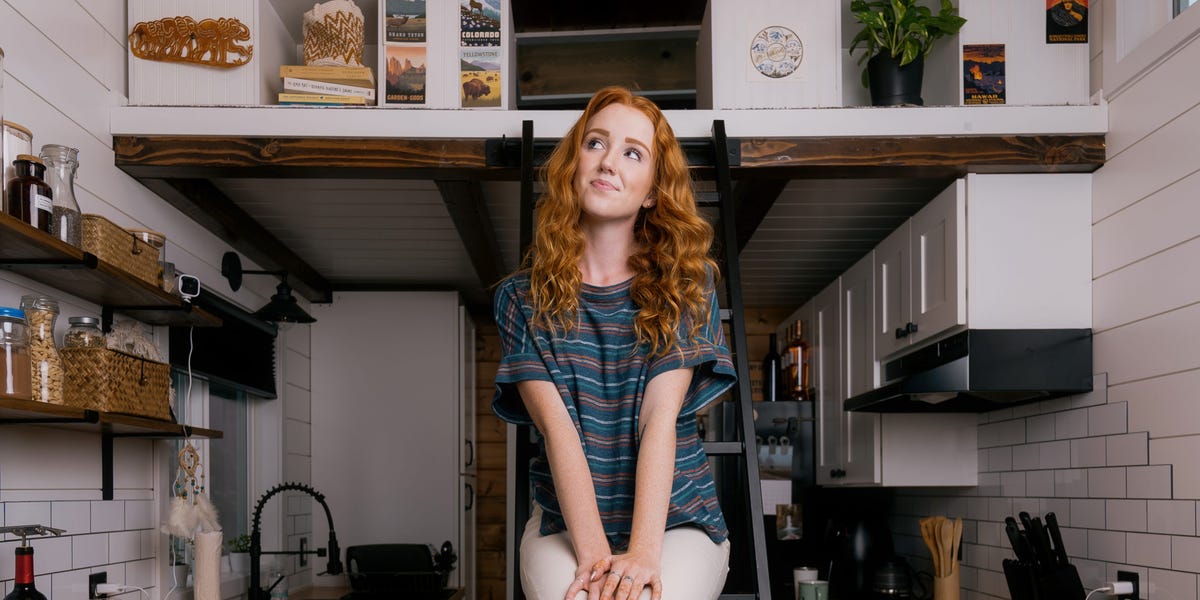
Traditional homeownership felt out of reach in my 20s, so I built a $45,000 tiny home from scratch Alejandro Sanchez Ochoa I didn't think I could buy a house in my 20s, so I built my own tiny home from scratch for $45,000. As someone in their 20s, becoming a homeowner has always felt a bit out of reach for me.For the past few years, I've wanted to own something, live a simpler life, and make a smart financial decision. There was just one problem: beyond feeling like I couldn't afford to buy a traditional house or condo, I didn't want to have a mortgage or be responsible for a big space. I also didn't want to live in an apartment, since I'd be paying rent on something I didn't even own.So, to make this dream a reality, I started thinking about building my own place in my home state of Washington. I'd seen a lot of people my age online making the jump to live in a tiny home, and I decided this was going to be my next move.After looking at prices online, I thought it might be cheaper to build one from scratch than to buy a preassembled one. I proposed the idea to my dad, knowing I would need his help with physical labor to make this goal possible. He said yes, and from there I made the biggest purchase — the trailer bed that the home would sit on.With the money in my savings and labor assistance from some family members, I built the 224-square-foot home — with an extra 149 square feet of loft space. I also took on multiple jobs to help pay for the materials as the project continued.After nearly two years of building and roughly $45,000 spent, my home was complete. Unfortunately, this price tag was just the beginning, and now, nearly five years into living in my tiny home, I still haven't fully escaped the ongoing costs of homeownership.I avoided a traditional mortgage, but not all housing expenses The rent for the plot of land my home sits on is $650 a month. Amanda Bloomquist My tiny home is about the size of a standard studio apartment, but my friends have said it feels a lot bigger.Despite it being small, I've been able to make the most out of the space. I have a full-size kitchen, a bathroom with a washer and dryer, a full-size bed in my loft, an L-shaped couch, a large projector screen, and a garden outside.But even with a comfortable setup, owning a tiny home hasn't meant escaping housing costs. The biggest ongoing expense of living in the home is renting the land it sits on. Buying just a small piece of land seemed like a steep price, and since I wasn't able to get a personal loan, I decided to rent out a piece of property instead.Fortunately, I scored a great deal on a plot of land in the Seattle area that includes utilities, WiFi, garbage service, and lawn care — for $650 a month. My home may be small, but it still has a full-size kitchen. Amanda Bloomquist Even though it's significantly cheaper than other options I found online, my rent alone has totaled roughly $39,000 over the past five years, on top of the $45,000 I spent to build the place.In addition to the property costs, I underestimated how expensive maintenance would be, even in such a small space.So far, I've resealed the wood siding, fixed a small leak in the roof, and swapped out the heated hose that supplies water to my house twice. I also have to change the water filters every three months.None of these expenses have been overwhelming on their own, but they add up over time. And unlike traditional renters, who can typically rely on a landlord to handle major repairs, I'm the only one responsible for keeping my home in good shape.It can be a lot for one person. For me, though, I'd rather handle the maintenance myself to save some money.Regardless of the extra costs, I still think my tiny house was a smart investment After nearly five years of living in my tiny home, I've spent roughly $84,000. Amanda Bloomquist When I take all this into account, I would still choose the tiny-house life, no matter the added expenses.Combining the build and the rent, I've spent roughly $84,000 in nearly five years — before accounting for maintenance and smaller repairs.For comparison, the average one-bedroom apartment in Washington state rents for roughly $1,800 a month. Over five years, that would add up to $108,000, which is significantly more than I've spent so far.For me, the appeal goes way deeper than the potential savings, though.I love being able to fully customize my space and own a place that is completely mine. I have a big vegetable garden, space for animals when the time is right, privacy, and a cozy design — all just in a few hundred square feet. And I'm not giving up any comfort or conveniences, as people may expect — since the only major item I don't have is a dishwasher. I don't think I'll live in my tiny home forever, but for now, it's great. Amanda Bloomquist I don't think I'll live in this house forever, but for the time being, I'm pretty happy with it. Depending on the market, I could eventually sell my home or, as I plan to, rent it out as a short-term rental for additional income.But for now, my low monthly property rent gives me financial freedom, so I can travel more, work less, and keep my expenses to a minimum.Tiny-house living came with expenses I didn't anticipate, but it has still been a worthwhile financial and lifestyle choice for me. Read next Business Insider tells the innovative stories you want to know Business Insider tells the innovative stories you want to know Business Insider tells the innovative stories you want to know Business Insider tells the innovative stories you want to know Amanda Bloomquist is a Washington-based travel and outdoor content creator, photographer, and writer. She spends most of her time living in WA in her self-designed and built tiny home. She aims to get outside and have adventures while sharing them through her Instagram and Blog. Real Estate Tiny House
Traditional homeownership felt out of reach in my 20s, so I built a $45,000 tiny home from scratch
Full Article
Original Source
Read the full article at Businessinsider →KhanList aggregates and links to publicly available news content. We do not host full articles from third-party sources. Always verify important information with original sources.