
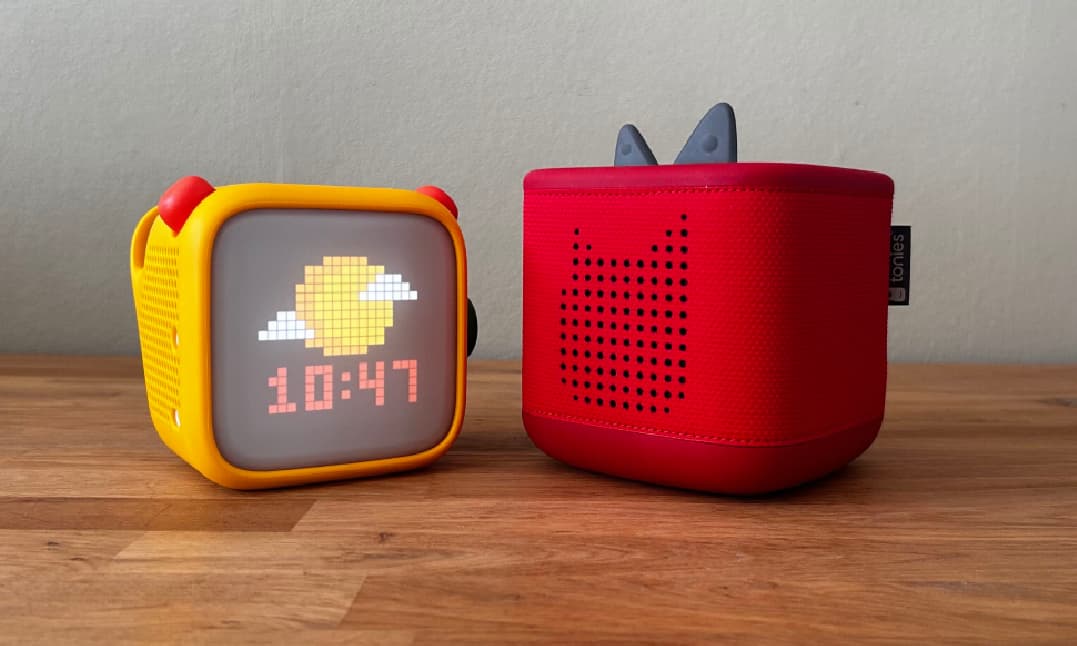
I’ve been testing two of the biggest names in screen-free entertainment with my three-year-old son, but which one deserves a place in your home?Tonies was founded by two dads who wanted to make listening to stories more engaging for their own children. The result was the Toniebox: a soft, screen-free audio player that brings stories and songs to life through collectable character figures. Similarly, Yoto was dreamed up by two fathers in 2015. The Yoto takes a slightly different approach, using physical cards to unlock its library of stories, podcasts and music.I’ve recently had the chance to test a Toniebox 2, and having used the Yoto for some time, I was keen to see how this compared with the latest full-size Yoto Player 4th Gen. They share the same basic aim of encouraging children to enjoy audio independently, without getting sucked into a screen – but the experience of using them is surprisingly different.How I testedDanielle Attwater / The StandardI’ve been using both the Toniebox 2 and Yoto Player 4th Gen daily with my three-year-old son, putting them through their paces at home and incorporating them into our usual play and bedtime routines. I looked at how easy each was for him to operate independently, the quality of the audio, the range of content available and the extra features that make a difference to family life. I also considered the cost of building up a collection of stories and characters, and how well each player might grow with a child.Toniebox 2Danielle Attwater / The Standard★★★★☆What we love: Simple, intuitive controls; screen-free design; character figures double up as toys.Take note: You need a Tonie figure to play audio; the collection can become an expensive investment.The Toniebox 2 feels very much designed with younger children in mind. It's bigger and chunkier than the Yoto, with a soft, tactile finish and a much simpler control system. There's no screen or complicated menu to navigate; children simply place a Tonie figure on top to start playing its stories or songs.We found the controls to be fairly intuitive – little ones can tap the sides to skip tracks, tilt the box to fast-forward or rewind, and adjust the volume by squeezing its soft ears. My son picked up the basics quickly, and I like that he can operate it without needing much help from me.One of the biggest differences between the two players is the way children interact with their content. With Yoto, the cards are functional, whereas Tonies are little character figures that can be played with away from the box. My little helper loves taking them off and incorporating them into his own games, which is a bonus. Being very much in the vehicles and characters phase, this extra element has been a real hit.The Toniebox 2 also introduces some useful bedtime features, including a sleep timer with light and a sunrise alarm. There's a dynamic light ring, too, while the newer Tonieplay range adds interactive games, quizzes and challenges. It's a great way to extend the experience beyond simply listening to stories, although the games (£14.99, Tonies.com) and controller (£8.99, Tonies.com) are sold separately.There is one limitation worth bearing in mind: unlike Yoto, you can't simply use the Toniebox as a standalone audio player. You need a figure on top to play its content, so the box-only version isn't much use until you've bought some Tonies. It's also worth factoring in the ongoing cost of adding to your collection.Yoto Player 4th GenDanielle Attwater / The Standard★★★★★What we love: Huge choice of audio content; Green Button for card-free listening; more scope as children get older.Take note: Controls can be a learning curve; cards are easier to misplace than chunky character figures; the player is more expensive.The newly-released Yoto Player 4th Gen is a very versatile piece of kit, and one that I think has greater longevity as children get older. Rather than placing a character on top, children insert a physical card into the slot to play their chosen story, song or activity. While not strictly screen-free – there is a small pixel display on the front - the player has no touchscreen or video content, keeping the experience firmly focused on audio. The biggest upgrade with this generation is the new Green Button, which makes it easier for children to access their favourite content without having to find the right card. You can set up custom daytime and bedtime playlists through the app, then simply twist the button to browse and press to play. It's a useful addition, particularly once your child has built up a sizeable card collection.For my family, the full-size Yoto has become a bedtime staple. We use it every night, and the full-panel night light provides a lovely ambient glow, with adjustable brightness, while the OK-to-wake clock is handy for helping little ones understand when it's time to get up. The 4th Gen also has an acoustically engineered stereo speaker, which delivers impressive sound for such a compact device.Another advantage is the breadth of content. There are hundreds of cards covering everything from stories and music to podcasts, learning and sleep sounds, as well as the option to create your own cards. The player also has 64GB of storage, enough for more than 1,000 hours of downloaded audio, and up to 16 hours of battery life.I do think the Yoto takes a little more getting used to than the Toniebox. The dials and card system aren't quite as immediately obvious to very young children, although my son has become increasingly confident using his. The cards are also less substantial than the Tonie figures, so there's a greater chance of them getting lost or damaged, but, given that it can also be controlled via the app, this isn’t too much of a concern.Toniebox 2 vs Yoto Player 4th Gen: which should you buy?Having used both with my son, I can see the appeal of each, and I wouldn't say there's a clear winner for every family. They offer slightly different experiences, so the best choice really comes down to your child's age, interests and how you plan to use it. Both are brilliant alternatives to handing over a tablet or phone, and both have earned their place in our home. For younger children, I'd lean towards the Toniebox 2 as a gentle introduction to screen-free listening. The simple controls, soft design and character figures make it immediately appealing, and I love that my son can carry on playing with the Tonies figures long after the audio has stopped. For a more versatile player that will grow with your child, however, I'd choose the Yoto Player 4th Gen. The range of content is impressive, and the sound quality is excellent. The Green Button is another welcome addition, helping children become more independent as their card collection grows.
Toniebox 2 vs Yoto Player 4th Gen: which is the best audio player for kids?
Full Article
Original Source
Read the full article at Standard →KhanList aggregates and links to publicly available news content. We do not host full articles from third-party sources. Always verify important information with original sources.