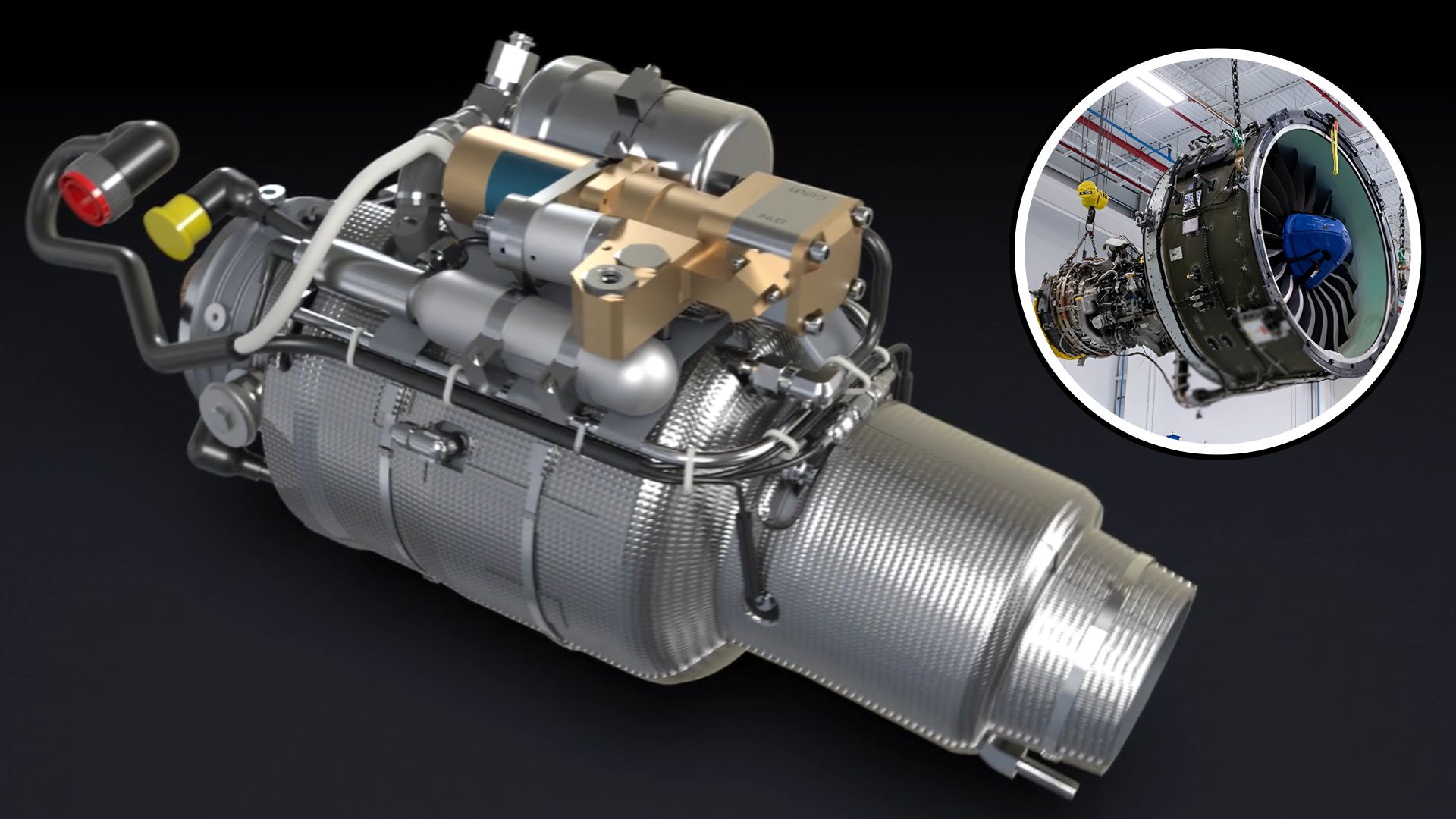
Pratt & Whitney has completed demonstration testing of an additively manufactured version of its TJ150 turbojet engine, validating a production approach that could help the company build expendable propulsion systems faster as demand for cruise missiles and autonomous weapons continues to rise. The RTX business announced the milestone ahead of the Farnborough International Airshow, saying nearly 60% of the engine by volume now consists of 3D-printed parts. Engineers used the demonstration to evaluate how the printed hardware performed under operating conditions and whether it could withstand the thermal and mechanical loads expected during a mission. Faster engine production Unlike reusable aircraft engines that must remain in service for years, the TJ150 powers expendable systems that typically operate for only minutes or hours. That design philosophy allows manufacturers to prioritize rapid production, simpler assembly and lower manufacturing costs without compromising mission performance. Pratt & Whitney believes additive manufacturing can help achieve those goals by reducing the number of parts, shortening production timelines and making it easier to scale output. “For expendable engines like the TJ150, where missions can last minutes or hours, simplifying the design and scaling production quickly is essential to meeting rising demand,” said Jill Albertelli, president of Military Engines at Pratt & Whitney. She said additive manufacturing allows the company to move new engine designs from concept to operational capability more quickly. Pratt & Whitney is also applying lessons from the TJ150 program to future propulsion projects, including its Valox engine family. Engineers have steadily expanded the use of additive manufacturing throughout the program. More than 50 individual hot-section components have been consolidated into only a handful of printed parts, reducing assembly complexity and the number of potential failure points. The team also successfully tested a 3D-printed rotating turbine wheel before integrating it into the latest engine configuration. Supporting missile programs The TJ150 is a compact turbojet that produces more than 150 pounds of thrust while operating efficiently at high altitudes. Its small size allows it to power cruise missiles and other autonomous platforms where weight, packaging and fuel efficiency directly affect range and payload capacity.The engine already supports several missile applications, with Pratt & Whitney delivering more than 2,700 units to customers worldwide. Its modular design also enables production to scale as defense programs transition from development into higher-rate manufacturing. That capability became more important in March, when Pratt & Whitney received a follow-on contract from Leidos Dynetics to supply TJ150 engines for the AGM-190A small cruise missile. The award reinforced the engine’s role in the program while reflecting growing demand for compact propulsion systems across the defense sector. The company said additive manufacturing forms a key part of its long-term production strategy for the TJ150. Beyond reducing component counts, the approach broadens supply chain options, speeds manufacturing, and provides greater flexibility when increasing output. Successful demonstration testing shows the printed engine can meet operational requirements while supporting a faster and more scalable manufacturing model for future missile propulsion systems. Recommended ArticlesGet the latest in engineering, tech, space & science - delivered daily to your inbox.Aamir is a seasoned tech journalist with experience at Exhibit Magazine, Republic World, and PR Newswire. With a deep love for all things tech and science, he has spent years decoding the latest innovations and exploring how they shape industries, lifestyles, and the future of humanity.
TJ150 missile engine completes tests with nearly 60% 3D-printed hardware
Full Article
Original Source
Read the full article at Interestingengineering →KhanList aggregates and links to publicly available news content. We do not host full articles from third-party sources. Always verify important information with original sources.