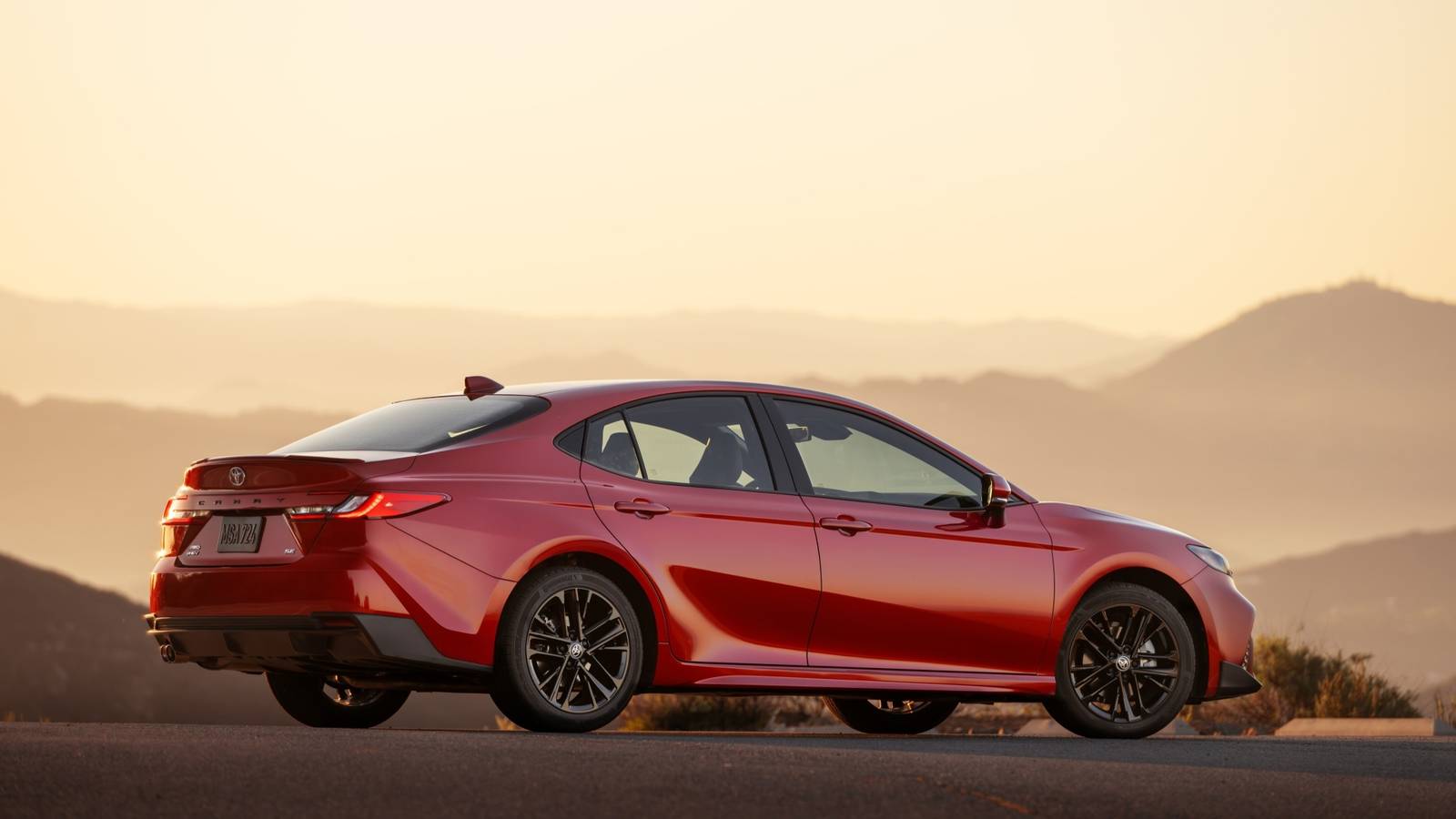
Published Aug 18, 2026, 4:00 PM EDT Adam Gray, a seasoned automotive journalist and content creator from the UK, joined the How-To Geek editorial team in January 2025. As an automotive journalist for How-To Geek, Adam breaks first-to-report news on the latest in automotive tech, as well as penning automotive features and reviews. Adam is also a contributor to one of How-To Geek's sister sites, TopSpeed, where he uses his media accrediation with manufacturers' press offices to gain access to the latest vehicles for subsequent review. Prior to joining How-To Geek, Adam worked on a freelance basis, contributing automotive content to a variety of business and lifestyle publications. His experience also includes time spent serving as senior editorial & auction content manager for SBX Cars, automotive content writer for Supercar Blondie, motoring editor for Portfolio North, and motoring editor - North East for Reach plc. When he's not putting the latest vehicle through its paces or testing out its tech, Adam can be found at his local ice rink playing ice hockey or at the Riverside Stadium supporting his beloved Middlesbrough FC. Adam also enjoys spending quality time with his three children: Ellie, Oscar, and Heidi. SUVs might be the default choice for a lot of buyers these days, but the Toyota Camry is proving there's still plenty of life left in the humble sedan. Toyota's July sales figures show the Camry is gaining ground, with year-to-date sales up 15.5 percent from the same point last year. That's especially interesting because the Camry isn't trying to reinvent the family car. It's sticking with a straightforward formula built around value, fuel efficiency, build quality, and reliability, which is exactly the sort of combination that can make a practical car hard to ignore. And with the current Camry starting at $29,600, Toyota has given buyers another reason to take a second look at a sedan instead of automatically reaching for an SUV. In order to give you the most up-to-date and accurate information possible, the data used to compile this article was sourced from Toyota and other authoritative sources, including CarEdge, iSeeCars, Edmunds, J.D. Power, and TopSpeed. The hybrid powertrain is now the Camry's only choice Toyota made efficiency part of the formula Credit: Toyota The Camry's hybrid powertrain isn't something buyers have to choose between. Toyota offers the current lineup with a hybrid setup across all five trims, giving buyers the same basic efficiency-focused formula whether they choose the entry-level LE or the range-topping XSE. The front-wheel-drive LE is the most efficient version, returning 53 mpg in the city, 50 mpg on the highway, and 51 mpg combined. It also has a 663-mile range claim from its 13-gallon tank, while its fuel costs work out to around $1.59 for every 25 miles. Even the all-wheel-drive XSE remains relatively frugal, returning 43 mpg in the city, 43 mpg on the highway, and 43 mpg combined. That means choosing a higher trim or adding all-wheel drive doesn't suddenly turn the Camry into a fuel-hungry sedan, which is a big part of why the hybrid-only approach makes sense for everyday buyers. Toyota keeps the Camry affordable A hybrid sedan that doesn't cost a fortune Credit: Toyota Toyota starts the 2026 Camry range at $29,600 for the front-wheel-drive LE, making it the most competitively priced hybrid in its segment. That's a pretty important part of the Camry's appeal, because buyers don't have to stretch into a higher trim just to get an efficient family sedan. The range tops out at $36,000 for the XSE, while all-wheel drive is available across the five trims for an additional $1,525. Toyota also keeps the options list relatively short, preferring a straightforward five-trim strategy rather than loading the lineup with expensive extras. That gives buyers a fairly simple choice. You can spend more for a higher trim or all-wheel drive, but the Camry's basic formula remains the same throughout the range, keeping the price of entry relatively accessible. The Camry's reputation still matters Reliability is part of the appeal Credit: Toyota The Camry has built its reputation around being a practical family car that buyers can count on. That matters when you're looking beyond the sticker price and thinking about what it'll be like to live with the car for years. iSeeCars gives the Camry an 8.6/10 reliability score and estimates that the model can run for 13.1 years or 171,901 miles without encountering any noteworthy mechanical issues. It also gives the Camry a 31.8-percent probability of reaching 200,000 miles. Those numbers make the Camry easier to recommend as a sensible daily driver. You're not just getting a relatively affordable hybrid sedan; you're getting one with a track record that supports the idea of keeping it for the long haul. The Camry holds its value surprisingly well Depreciation is another part of the appeal Credit: Toyota Buying a practical car is one thing, but it helps if that car doesn't lose a huge chunk of its value the moment it leaves the dealership. The Camry scores well here, with iSeeCars giving it an 8.6/10 retained value score. The model is expected to lose $9,992, or 34.3 percent of its initial sale price, after five years or 60,000 miles. That's slightly better than the average competitor in the midsize hybrid sedan segment. J.D. Power also gives the 2026 Camry a 92/100 score for resale, alongside an 82/100 overall consumer-verified score. For buyers who want a car that's sensible to own rather than simply cheap to buy, that makes the Camry's value proposition even more convincing. The Camry is becoming a sales success for Toyota Buyers are giving the sedan another look The Camry's sales numbers are perhaps the clearest sign that Toyota's formula is working. In July 2026, Toyota sold 30,536 Camrys in the U.S., a 17.2-percent increase from the same month a year earlier. That brought the Camry's year-to-date sales total to 509,580, up 15.5 percent compared with the same point last year. That's a notable result for a sedan in a market where SUVs and crossovers have become the default choice for many buyers. The comparison with Toyota's RAV4 makes the shift even more noticeable. The RAV4 sold 31,285 units in July, but its sales were down 21.3 percent year over year, while its 185,240 year-to-date sales represented a 33.7-percent decline. The Camry makes the most sense for practical buyers It's a sedan that still gets the basics right Credit: Toyota The Camry isn't trying to convince everyone to give up their SUV. It's making a case for buyers who want an efficient, affordable sedan with a reputation for reliability and strong resale value. Making the entire lineup hybrid keeps that formula simple, while the $29,600 starting price makes the Camry relatively affordable without requiring buyers to spend big. Add in its fuel economy and relatively modest depreciation, and there's a lot to like for someone who cares about the cost of ownership. The Camry may not be the obvious choice in today's SUV-heavy market, but that's part of what makes its sales performance so interesting. For buyers who want a practical hybrid sedan that makes financial sense, Toyota has shown that the old formula still has plenty of life left in it.
This Toyota sedan is quietly making a comeback
Full Article
Original Source
Read the full article at Howtogeek →KhanList aggregates and links to publicly available news content. We do not host full articles from third-party sources. Always verify important information with original sources.