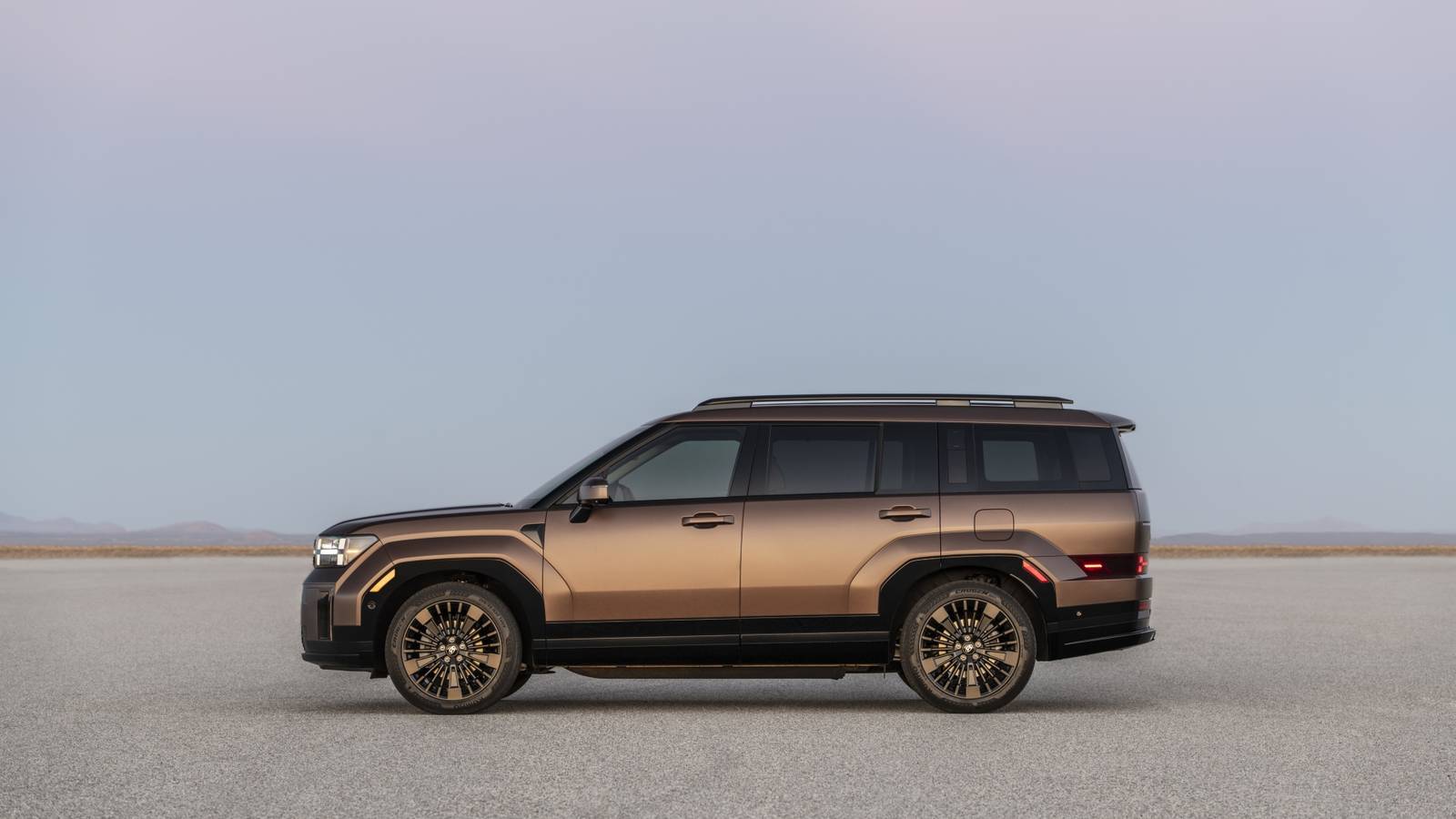
Published Jul 27, 2026, 2:30 PM EDT Adam Gray, a seasoned automotive journalist and content creator from the UK, joined the How-To Geek editorial team in January 2025. As an automotive journalist for How-To Geek, Adam breaks first-to-report news on the latest in automotive tech, as well as penning automotive features and reviews. Adam is also a contributor to one of How-To Geek's sister sites, TopSpeed, where he uses his media accrediation with manufacturers' press offices to gain access to the latest vehicles for subsequent review. Prior to joining How-To Geek, Adam worked on a freelance basis, contributing automotive content to a variety of business and lifestyle publications. His experience also includes time spent serving as senior editorial & auction content manager for SBX Cars, automotive content writer for Supercar Blondie, motoring editor for Portfolio North, and motoring editor - North East for Reach plc. When he's not putting the latest vehicle through its paces or testing out its tech, Adam can be found at his local ice rink playing ice hockey or at the Riverside Stadium supporting his beloved Middlesbrough FC. Adam also enjoys spending quality time with his three children: Ellie, Oscar, and Heidi. For years, buying a luxury SUV meant paying a premium for the badge as much as the vehicle itself. If you wanted a quieter cabin, better materials, and the latest technology, brands like BMW, Mercedes-Benz, and Cadillac were the obvious destination. That gap has narrowed dramatically. Mainstream manufacturers are now packing their flagship SUVs with the sort of comfort, refinement, and features that were once reserved for vehicles costing tens of thousands more, making it harder than ever to justify paying extra purely for prestige. Few models illustrate that shift better than the 2026 Hyundai Santa Fe. From its upscale cabin and impressive technology to its competitive running costs, it's proof that you no longer need a luxury badge to enjoy a genuinely premium driving experience. Luxury isn't exclusive anymore Mainstream SUVs have closed the gap Credit: Mercedes-Benz Luxury brands still have plenty of appeal, but they no longer have a monopoly on premium features. Heated and ventilated seats, panoramic glass roofs, premium audio systems, and high-quality cabin materials have become increasingly common in the top trims of mainstream family SUVs. Technology has followed the same path. Large digital displays, wireless Apple CarPlay and Android Auto, head-up displays, over-the-air updates, and advanced driver-assistance systems are now available on models from brands like Hyundai, Kia, and Mazda, giving buyers much of the same everyday convenience they'd expect from a far more expensive luxury SUV. Ride quality has improved too. Better sound insulation, more sophisticated suspension tuning, and quieter cabins mean many mainstream SUVs now feel remarkably refined on the road, making the traditional gap between premium and non-premium brands much smaller than it once was. The Santa Fe is leading the shift A flagship SUV without the luxury price Credit: Hyundai The 2026 Hyundai Santa Fe shows just how far mainstream SUVs have come. It may not carry the same prestige as a BMW, Mercedes-Benz, or Lexus, but it delivers much of the comfort, technology, and refinement buyers expect from those brands at a far more accessible price. The range starts at $35,050 for the Santa Fe and $36,400 for the Santa Fe Hybrid, climbing to $47,600 and $48,700 respectively for the flagship Calligraphy models. Even at the top of the range, it undercuts many luxury SUVs while offering a level of equipment that feels anything but entry-level. Base Trim Engine 2.5L Smartstream I4 ICE Base Trim Transmission 8-speed automatic Base Trim Drivetrain Front-Wheel Drive Base Trim Horsepower 277 HP @5800 RPM Base Trim Torque 311 lb.-ft. @ 1700 RPM Make Hyundai Model Santa Fe Segment Midsize SUV Buyers can also choose between two turbocharged powertrains. Gas-powered models use a 2.5-liter turbocharged four-cylinder, while hybrid versions pair a smaller turbocharged engine with electrified assistance, with front-wheel drive standard across most trims and Hyundai's HTRAC all-wheel-drive system available for drivers who want extra confidence in poor conditions. It looks more expensive than it is Bold styling gives it genuine road presence Credit: Hyundai Hyundai took a completely different approach when it redesigned the Santa Fe for 2024, and the results still stand out in 2026. Gone is the rounded styling of the previous generation, replaced by a boxier silhouette, a longer wheelbase, and crisp body lines that give it far more presence on the road. The signature H-shaped LED lighting front and rear helps the Santa Fe stand out in a crowded SUV market, while the upright tailgate isn't just there for looks. The squared-off design creates a wider opening that makes loading luggage, sports gear, or bulky shopping noticeably easier. It's a design that feels confident without trying too hard. Parked alongside many premium SUVs, the Santa Fe looks every bit as modern and distinctive, proving that strong design no longer depends on wearing a luxury badge. The cabin feels genuinely premium Comfort takes priority over flashy gimmicks Step inside the Santa Fe, and it's immediately clear where Hyundai has invested its money. Even entry-level models avoid the hard, plasticky feel that once defined mainstream SUVs, while higher trims introduce soft-touch materials, premium upholstery, and thoughtful finishes throughout the cabin. The SEL upgrades to H-Tex synthetic leather, a leather-wrapped steering wheel, and heated front seats, making it a noticeably more comfortable place to spend time. Move up to the Limited or Calligraphy, and the interior becomes even more impressive, with Nappa leather upholstery, a microfiber suede headliner, and softer materials across the dashboard and door panels. The flagship Calligraphy trim goes a step further with exclusive quilting, heated and ventilated second-row seats, and Hyundai's Ergo Motion driver's seat. It's the sort of equipment buyers would once have expected to find only in a luxury showroom, yet here it comes in a family SUV costing considerably less than many premium rivals. Technology feels thoroughly modern Features that once belonged in luxury SUVs Credit: Hyundai The Santa Fe backs up its premium feel with an impressive amount of technology across the range. Even the SE and SEL come equipped with a curved 12.3-inch display, wireless Apple CarPlay and Android Auto, over-the-air updates, and Hyundai SmartSense, which includes features such as Smart Cruise Control, Lane Following Assist, Blind-Spot Collision Warning, and Forward Collision-Avoidance Assist. Higher trims push things even further. The Limited adds a 12-inch head-up display, Blind-Spot View Monitor, Remote Parking Assist, and a 12-speaker Bose audio system, bringing the sort of equipment that used to be associated almost exclusively with premium brands. The Calligraphy model rounds things off with dual wireless phone chargers, a full-display digital rearview mirror, fingerprint authentication, and Hyundai's UV-C sterilization compartment. Rather than making buyers pay thousands in optional extras, Hyundai bundles many of its most desirable features into a well-equipped flagship trim. It's built for real family life Space and versatility add to the appeal Credit: Hyundai Despite Hyundai describing the Santa Fe as a compact crossover, its dimensions push it closer to the midsize SUV class. The generous wheelbase helps create a spacious cabin, with three rows of seating and up to 79.6 cubic feet of cargo capacity when the rear seats are folded flat. Even with every seat occupied, there's still up to 25 cubic feet of luggage space available, making it a practical choice for family holidays, airport runs, or everyday errands. The third row is better suited to children or shorter adults, but having the flexibility to carry up to seven passengers is a welcome bonus. The Santa Fe also offers respectable towing ability. The AWD XRT can tow up to 4,500 pounds with trailer brakes, while other petrol models are rated for 3,500 pounds and hybrid versions can tow up to 2,000 pounds, giving buyers plenty of capability without stepping up to a larger SUV. Lower ownership costs strengthen the case The savings continue long after you buy it Credit: Hyundai The Santa Fe's biggest advantage isn't just its purchase price. Compared with many luxury SUVs, it also promises lower running costs, making it easier to justify over the long term. Hyundai performed well in J.D. Power's 2026 Vehicle Dependability Study, recording 198 problems per 100 vehicles. That's better than the industry average and ahead of brands including Mercedes-Benz, Audi, Land Rover, and Volvo, while the Santa Fe itself earns strong reliability scores from both J.D. Power and iSeeCars. Running costs remain competitive too. RepairPal estimates average annual maintenance at $515, comfortably below the segment average, while CarEdge estimates five-year ownership costs of around $55,000. Hybrid models also help reduce fuel bills further, giving buyers another reason to choose the Santa Fe over a similarly priced luxury SUV. The verdict is surprisingly simple Premium quality no longer needs a premium badge Credit: Hyundai The Santa Fe isn't trying to beat performance SUVs like the BMW XM, nor does it claim to offer the limousine-like luxury of something like a Cadillac Escalade. Instead, it focuses on delivering the things most buyers actually use every day: comfort, technology, practicality, and refinement. When you consider the generous equipment, premium-feeling cabin, competitive running costs, and pricing that tops out below many entry-level luxury SUVs, the value proposition becomes difficult to ignore. The 2026 Santa Fe proves that thoughtful engineering and smart packaging can deliver a genuinely premium SUV experience without the premium price tag.
This Hyundai SUV delivers luxury without the premium price
Full Article
Original Source
Read the full article at Howtogeek →KhanList aggregates and links to publicly available news content. We do not host full articles from third-party sources. Always verify important information with original sources.