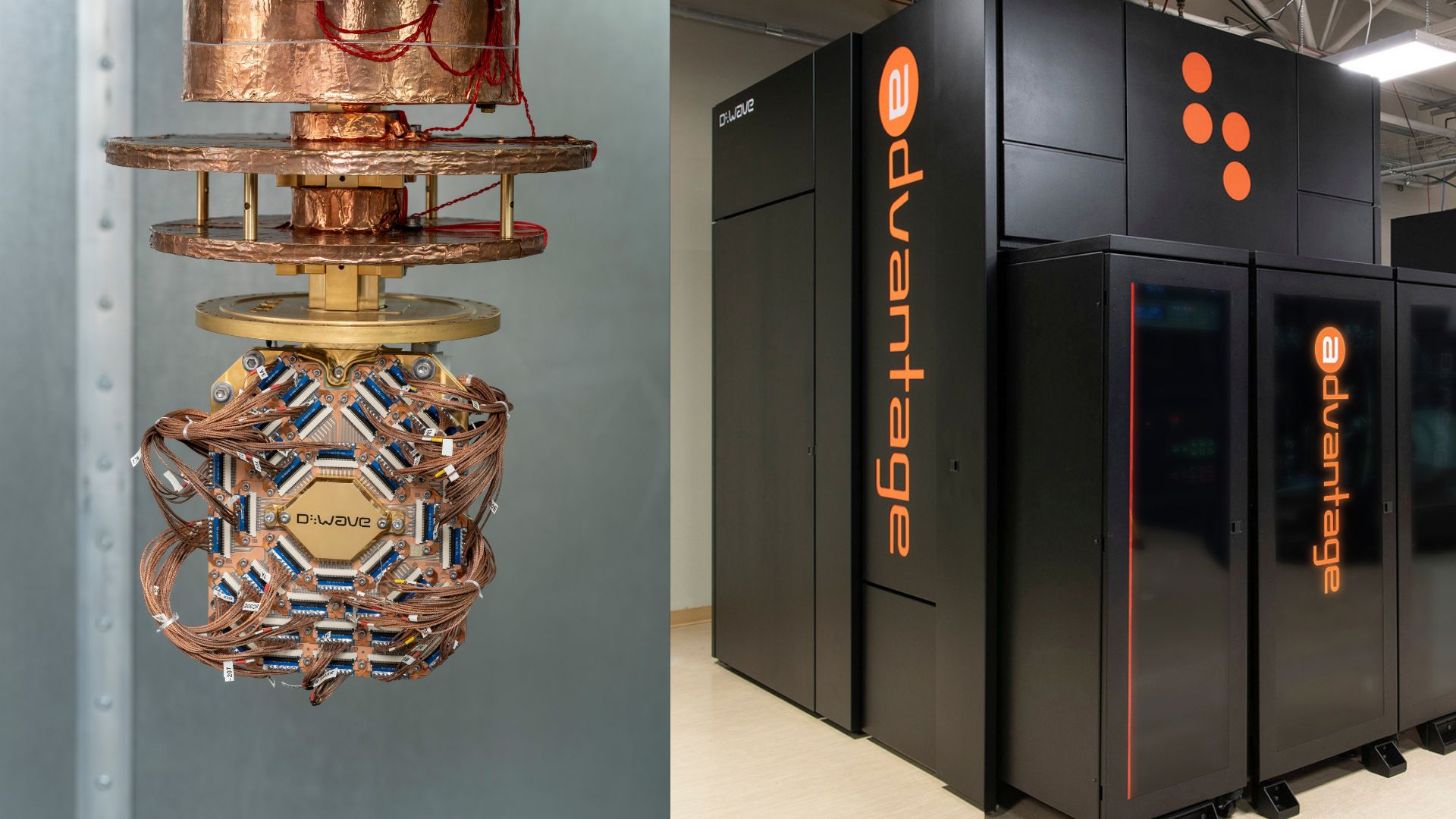
AT&T has partnered with D-Wave Quantum to use its quantum computing technology after the Palo Alto-based company’s system cut the time needed for a network optimization task from about one hour to less than 15 seconds. The telecom giant plans to use D-Wave’s quantum annealing technology to tackle complex optimization problems across its network operations. The work will initially focus on areas including outage detection and response, technician routing, network build planning and traffic management. The companies will also explore how faster processing could help AT&T plan and manage its expanding fiber and 5G networks as demand for connectivity grows. AT&T said its network operations already use agentic tools to improve outage detection and management, helping reduce customer downtime by 12 million hours in 2025. D-Wave’s quantum technology will be layered into the tools already used by AT&T’s network operations. The companies will now examine whether the speed seen in the initial workload can be applied to a wider range of real-world network challenges. Quantum speeds network planning Telecom networks involve complex decisions that require companies to determine the best way to allocate resources, manage traffic, and respond to disruptions. These problems can become harder to solve as networks grow and more devices and services depend on them. AT&T’s initial test with D-Wave showed a significant reduction in processing time for one network optimization workload. The task, which previously took around an hour, was completed in less than 15 seconds using D-Wave’s technology. The companies said the faster processing could potentially help AT&T make quicker decisions across its network. For example, faster optimization could help determine how to route technicians to sites, respond to outages or manage traffic as network conditions change. “D-Wave’s annealing quantum computing technology gives us a new way to approach optimization and high-intensity compute challenges across AT&T’s network operations,” said Lucus Haugen, director, Data Science for AT&T’s Chief Data Office. “The speed we’re seeing with D-Wave challenges what’s currently possible. It has the potential to help us optimize faster, increase efficiency and scale more real-time operations, making quantum a practical tool for advancing how we run and modernize our network.” The partnership comes as AT&T continues to expand its fiber and 5G infrastructure. The company expects network demand to rise as more computing-intensive applications require greater connectivity and capacity. Quantum moves beyond networks AT&T’s work with D-Wave will not be limited to quantum annealing. The telecom company is also evaluating D-Wave’s forthcoming gate-model quantum systems for possible uses in quantum security and quantum communications. The broader agreement forms part of AT&T’s strategy to combine quantum computing with automation, advanced analytics and software-defined infrastructure. The goal is to improve how the company’s network is built, operated and optimized. For D-Wave, the partnership adds another major enterprise use case for its quantum computing technology. The company has increasingly focused on applying quantum systems to optimization problems that businesses face in areas such as logistics, manufacturing and network operations. “AT&T’s work with D-Wave is a powerful example of how leading enterprises are beginning to turn to quantum computing for solving real business problems,” said Alan Baratz, CEO of D-Wave. “AT&T has incredibly complex optimization problems across its network operations, understands where classical computing is challenged, and is moving quickly to explore where quantum can make an impact. We’re excited to work with AT&T to help drive speed, efficiency and business value across its operations.” The companies did not disclose the financial terms of the agreement. AT&T will continue testing D-Wave’s technology across network applications to determine whether the early gains can translate into broader operational improvements. Recommended ArticlesGet the latest in engineering, tech, space & science - delivered daily to your inbox.With over a decade-long career in journalism, Neetika Walter has worked with The Economic Times, ANI, and Hindustan Times, covering politics, business, technology, and the clean energy sector. Passionate about contemporary culture, books, poetry, and storytelling, she brings depth and insight to her writing. When she isn’t chasing stories, she’s likely lost in a book or enjoying the company of her dogs.
Quantum computing cuts network optimization from one hour to under 15 seconds at AT&T
Full Article
Original Source
Read the full article at Interestingengineering →KhanList aggregates and links to publicly available news content. We do not host full articles from third-party sources. Always verify important information with original sources.