
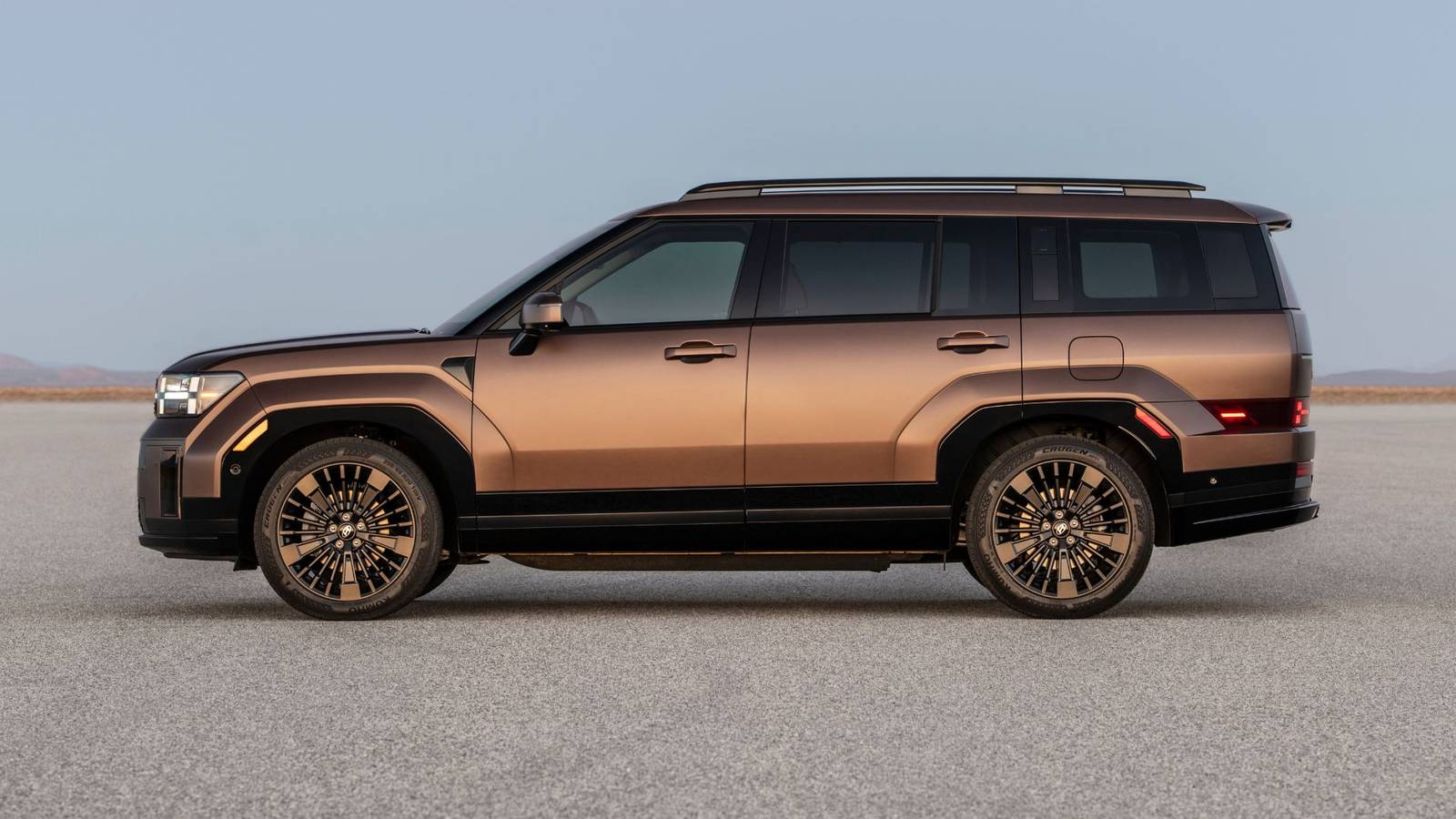
Published Aug 11, 2026, 12:30 PM EDT Adam Gray, a seasoned automotive journalist and content creator from the UK, joined the How-To Geek editorial team in January 2025. As an automotive journalist for How-To Geek, Adam breaks first-to-report news on the latest in automotive tech, as well as penning automotive features and reviews. Adam is also a contributor to one of How-To Geek's sister sites, TopSpeed, where he uses his media accrediation with manufacturers' press offices to gain access to the latest vehicles for subsequent review. Prior to joining How-To Geek, Adam worked on a freelance basis, contributing automotive content to a variety of business and lifestyle publications. His experience also includes time spent serving as senior editorial & auction content manager for SBX Cars, automotive content writer for Supercar Blondie, motoring editor for Portfolio North, and motoring editor - North East for Reach plc. When he's not putting the latest vehicle through its paces or testing out its tech, Adam can be found at his local ice rink playing ice hockey or at the Riverside Stadium supporting his beloved Middlesbrough FC. Adam also enjoys spending quality time with his three children: Ellie, Oscar, and Heidi. There are plenty of three-row SUVs that can haul a family, swallow a pile of luggage, and get everyone where they need to go. What’s harder to find is one that makes you feel like you spent considerably more than you actually did. That’s where the 2026 Hyundai Santa Fe gets interesting. It has the boxy, upscale look, roomy cabin, useful technology, and polished road manners that can make a mainstream SUV feel surprisingly close to something from a much pricier class. And you don't have to stretch into the most expensive trim to get the effect. The Santa Fe's combination of space, features, available hybrid efficiency, and relatively accessible pricing is what makes it feel like such a substantial upgrade. To give you the most up-to-date and accurate information possible, the data used to compile this article was sourced from Hyundai and other authoritative sources, including the EPA and TopSpeed. The design does most of the heavy lifting It looks like something from a pricier segment Credit: Hyundai The first thing that makes the Santa Fe feel like an upgrade is the way it looks. Hyundai went in a completely different direction with the current-generation SUV, giving it a tall, squared-off shape that looks considerably more expensive than the usual rounded family crossover. That boxy profile isn't just there for attention, either. The upright roof and large rear opening give the Santa Fe a more substantial presence while creating the kind of interior proportions that are genuinely useful when you're carrying people and all the stuff that comes with them. It also helps that the design doesn't scream "budget alternative." The crisp lighting, distinctive front end, large wheels on higher trims, and unusually clean bodywork give the Santa Fe enough visual presence to make a buyer wonder why they would need to spend luxury-SUV money instead. The interior is where the upgrade really starts to make sense More space, better materials, and fewer obvious compromises Step inside the Santa Fe, and the argument gets a lot easier to make. The cabin has the kind of clean, upscale layout that makes plenty of mainstream SUVs feel dated by comparison, especially in higher trims with nicer materials and more equipment. The boxy exterior also pays dividends here. There's useful space in all three rows, and the squared-off cargo area makes it easier to load bulky stuff without having to play Tetris around a sharply sloping rear window. Then there’s the way Hyundai has put the cabin together. The large displays and modern dashboard give it the expected tech-heavy feel, but physical controls for commonly used functions keep it from becoming one giant touchscreen experiment. That combination makes the Santa Fe feel thoughtfully designed rather than simply loaded with gadgets. The powertrain choices make the Santa Fe easier to live with Turbo power or hybrid efficiency, depending on what you need Credit: Hyundai The Santa Fe gives buyers two very different ways to approach the same SUV. The 2.5-liter turbocharged four-cylinder makes 277 horsepower and 311 lb-ft of torque, giving the gas model enough muscle for daily driving, highway passing, and towing. The hybrid takes a different approach, pairing a 1.6-liter turbocharged engine with an electric motor for 231 horsepower and 271 lb-ft of torque. It gives up some outright punch, but the instant response from the electric motor makes the Santa Fe feel surprisingly lively around town. Base Trim Engine 2.5L Smartstream I4 ICE Base Trim Transmission 8-speed automatic Base Trim Drivetrain Front-Wheel Drive Base Trim Horsepower 277 HP @5800 RPM Base Trim Torque 311 lb.-ft. @ 1700 RPM Make Hyundai Model Santa Fe Segment Midsize SUV Fuel economy is where the hybrid makes its strongest case. Front-wheel-drive versions can return up to 36 mpg combined, while all-wheel-drive models are rated at up to 34 mpg combined, which is pretty impressive for a three-row SUV with this much space. The technology makes the cabin feel a class above You don't have to pay for the top trim to get a modern SUV Credit: Hyundai The Santa Fe doesn't rely on one flashy feature to create its upscale feel. A wide digital display setup, wireless smartphone connectivity, available premium audio, and Hyundai's growing list of convenience features give the cabin the kind of tech shoppers now expect from much more expensive SUVs. Just as important, Hyundai hasn't made everything dependent on a touchscreen. Physical controls for key functions make the cabin easier to use while driving, which is one of those small details you notice every day rather than just during a test drive. Higher trims take the experience further with features such as a head-up display, surround-view monitoring, and more premium interior finishes. You can spend close to $50,000 on a Santa Fe if you want the full treatment, but the fact that the lower trims already feel well-equipped is what makes the value proposition so compelling. The Santa Fe's practicality is a bigger deal than it looks The boxy shape makes family life a little easier Credit: Hyundai A lot of SUVs look spacious until you actually start using them, but the Santa Fe's shape works in its favor. The upright roof and squared-off rear give passengers more usable room while making it easier to load everything from groceries to strollers and sports gear. That matters even more when all three rows are occupied. The Santa Fe offers 14.6 cubic feet of cargo space behind the third row and up to 79.6 cubic feet with the rear seats folded, giving families plenty of flexibility without jumping to a much larger SUV. There's also a surprising amount of thought in the smaller storage areas around the cabin. A large center console, dedicated charging areas, and available second-row captain's chairs make it easier to deal with the everyday clutter that comes with carrying a family. The safety equipment helps justify the upgrade Hyundai gives buyers plenty before they reach the expensive trims Credit: Hyundai The Santa Fe's upscale impression isn't limited to its looks and interior. Hyundai also packs its SmartSense driver-assistance technology across the lineup, so buyers don't necessarily have to climb the trim ladder to get the safety features they actually want. That includes features such as forward collision avoidance, lane-keeping assistance, blind-spot monitoring, and adaptive cruise control. Those systems have become common in the segment, but having them readily available on a mainstream SUV helps the Santa Fe feel more complete for the money. Higher trims add even more useful equipment, including a surround-view monitor and additional parking assistance. More importantly, the overall package means the Santa Fe doesn't feel like Hyundai saved all the good stuff for the version that costs nearly $50,000. The ownership costs make the Santa Fe even more appealing The upgrade doesn't have to stop when you leave the dealership Credit: Hyundai The Santa Fe's biggest advantage isn't just how much SUV you get for the money. Lower running costs can make the decision easier to live with once the novelty of a new car has worn off. The hybrid is particularly compelling for buyers who spend a lot of time commuting or hauling the family around town. Better fuel economy can chip away at one of the biggest recurring expenses of owning a large SUV, while the gas model gives buyers a simpler option if efficiency isn't the priority. Hyundai's warranty coverage also adds another layer of reassurance. When you combine that coverage with the Santa Fe's competitive pricing, available hybrid efficiency, and generous equipment list, the SUV starts to look less like a cheaper alternative and more like a smart way to avoid paying for a more expensive badge. The Santa Fe makes a strong case for skipping the luxury badge It gets surprisingly close without pretending to be something it isn't Credit: Hyundai The Santa Fe isn't going to magically turn into a luxury SUV just because it has a nicer cabin and a bold design. What it does is more interesting: it gives buyers many of the things that make pricier SUVs appealing without making them pay for the badge attached to the hood. That's especially noticeable when you look at the whole package instead of one headline feature. You get three rows, a genuinely useful cargo area, modern technology, strong safety equipment, and a choice between turbocharged power and hybrid efficiency. That's why the Santa Fe feels like such a big upgrade over what you might expect from its price. It doesn't need to beat luxury SUVs at everything; it just needs to make you wonder why you'd spend so much more, and that's exactly where Hyundai has hit the sweet spot.
This family SUV feels like a huge upgrade without the huge price
Full Article
Original Source
Read the full article at Howtogeek →KhanList aggregates and links to publicly available news content. We do not host full articles from third-party sources. Always verify important information with original sources.