
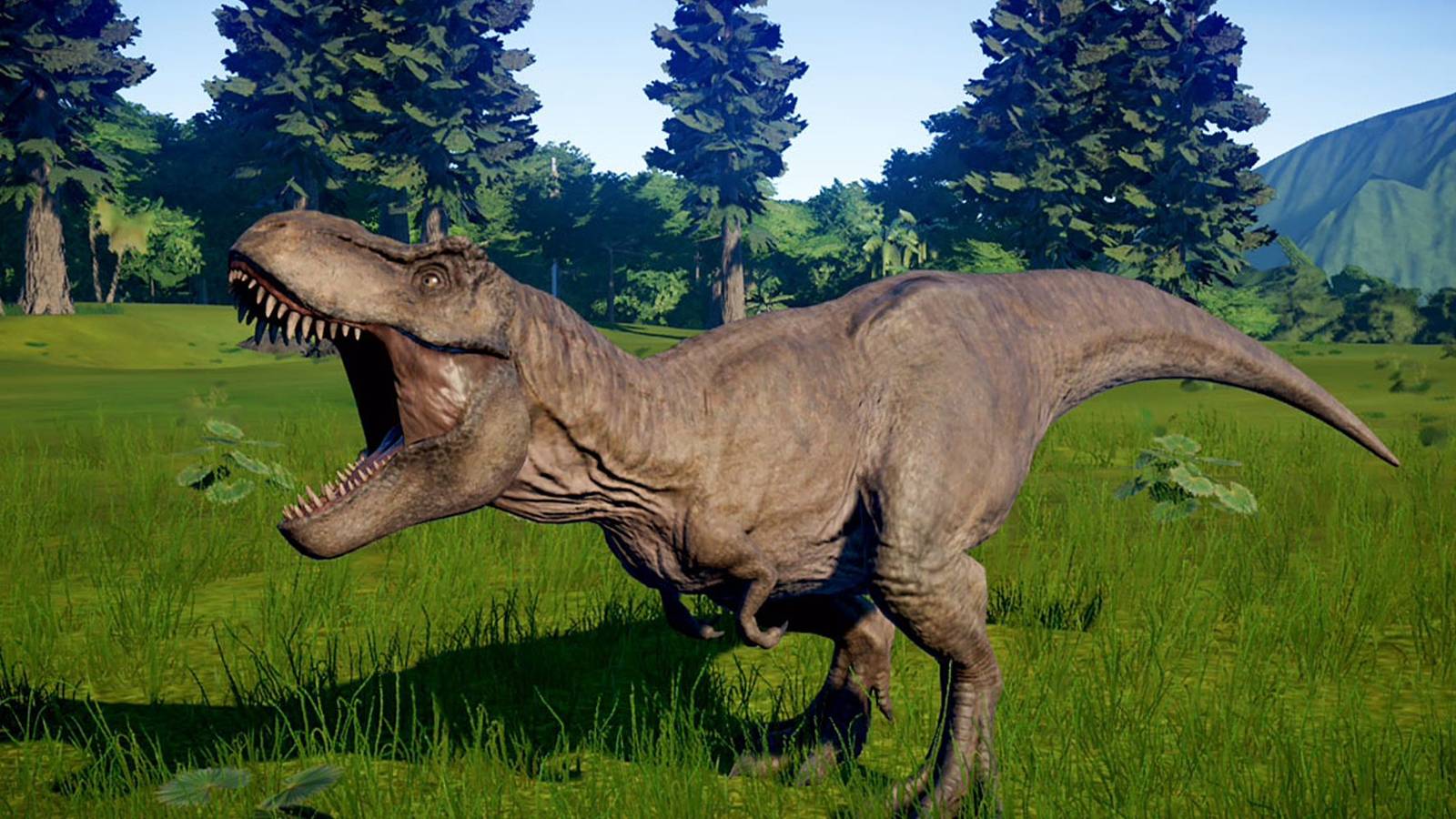
Image via Frontier Developments/ Universal Studios Published Aug 22, 2026, 6:51 PM EDT Sign in to your Collider account Jurassic Park games have chased two fantasies for decades. Sometimes you want to survive an island where the fences have failed. Other times you want Hammond’s job, preferably with enough common sense to build backup generators. The strongest games understand that dinosaurs alone cannot carry the experience. The park, the science, the characters, and that constant tension between wonder and terrible planning all have to be there too. This ranking leans toward games that let fans genuinely inhabit the franchise. That explains why management sims dominate the top four, even though each handles the Jurassic fantasy differently. Let’s get started. 5 'LEGO Jurassic World' (2015) Image via TT Fusion/ Warner Bros. Interactive Entertainment For anyone who wanted to run through the original Jurassic movies instead of merely visiting another dinosaur-themed level, LEGO Jurassic World remains an absurdly generous package. TT Games adapts Jurassic Park, The Lost World, Jurassic Park III, and Jurassic World, recreating major scenes while turning the franchise’s more horrifying moments into family-friendly LEGO comedy. Players explore Isla Nublar and Isla Sorna, swap between familiar characters, solve ability-based puzzles, collect amber, and eventually control dinosaurs themselves. LEGO officially lists 20 playable dinosaur species, along with DNA customization that allows wonderfully irresponsible hybrids such as the Dilophosaurus Rex. Its greatest strength is affection. The game understands the iconography of Jurassic Park well enough to joke with it without treating the movies as disposable material. Alan Grant’s raptor claw, Ian Malcolm’s personality, the kitchen sequence, the San Diego chaos, and the arrival of the Indominus all become pieces of one enormous interactive scrapbook. Console versions also support drop-in cooperative play, which suits the relaxed structure perfectly. Combat and puzzles are deliberately uncomplicated, so experienced players will rarely feel challenged. That is fine. LEGO Jurassic World is here because few games make loving this franchise feel this easy. 4 'Jurassic World Evolution' (2018) Image via Frontier Developments The first Jurassic World Evolution finally gave modern hardware the assignment fans had been handing developers for years. Build a functioning dinosaur park, extract DNA, incubate increasingly impressive species, satisfy visitors, research improvements, and keep enough security around the carnivores that nobody becomes an expensive legal settlement. Frontier spread its campaign across the Muertes Archipelago and divided progression among Science, Entertainment, and Security, with contracts from each branch shaping what became available as the parks developed. There is a wonderful rhythm to seeing an empty island gradually fill with viewing galleries, hotels, monorails, laboratories, and living dinosaurs. The animals remain the stars, especially when a new species leaves the creation lab for the first time and the camera gives it the entrance it deserves. Management could become repetitive, guest simulation lacked the depth of stronger tycoon games, and several systems clearly left room for sequels to improve. Even so, Evolution restored a fantasy that had been underserved since Operation Genesis. It let players stop running from Jurassic Park disasters long enough to create their own. Naturally, disaster remained available. Collider Exclusive · Sci-Fi Survival Quiz Which Sci-Fi World Would You Survive? The Matrix · Mad Max · Blade Runner · Dune · Star Wars Five universes. Five completely different ways the future went wrong — or sideways, or up in flames. Only one of them is the world your instincts were built for. Eight questions will figure out which dystopia, galaxy, or desert wasteland you'd actually make it out of alive. 💊The Matrix 🔥Mad Max 🌧️Blade Runner 🏜️Dune 🚀Star Wars TEST YOUR SURVIVAL → 01 You sense something is deeply wrong with the world around you. What do you do? The first instinct is often the truest one. APull on every thread until I understand the system — then figure out how to break it. BStop asking questions and start stockpiling — food, fuel, weapons. Questions don't keep you alive. CKeep my head down, observe carefully, and trust no one until I know who's pulling the strings. DStudy the patterns. Every system has a rhythm — learn it, and you learn how to survive it. EFind the people fighting back and join them. You can't fix a broken galaxy alone. NEXT QUESTION → 02 In a world of scarcity, what resource do you guard most fiercely? What we protect reveals what we believe survival actually requires. AKnowledge. If you understand the system, you don't need resources — you can generate them. BFuel. Everything else — movement, power, escape — runs on it. CTrust. In a world of fakes and informants, a truly reliable ally is rarer than any commodity. DWater. And after water, information — the two things empires are truly built on. EShips and credits. The galaxy is big — you survive it by being able to move through it freely. NEXT QUESTION → 03 What kind of threat keeps you up at night? Fear is useful data — if you're honest about what you're actually afraid of. AThat reality itself is a lie — that everything I experience has been constructed to keep me compliant. BA raid. No warning, no mercy — just the roar of engines and then nothing left. CBeing identified. Once someone with power decides you're a problem, you're already out of time. DBeing outmanoeuvred — losing a political game I didn't even know I was playing. EThe Empire tightening its grip until there's nowhere left to run. NEXT QUESTION → 04 How do you deal with authority you don't trust? Every dystopia has a power structure. Your approach to it determines everything. ASubvert it from the inside — learn its rules well enough to weaponise them against it. BIgnore it and stay out of its reach. The further from any power structure, the better. CAppear to comply while doing exactly what I need to do. Visibility is the enemy. DManoeuvre within it carefully. You can't beat a system you refuse to understand. EResist openly when I have to. Some things are worth the risk of being seen. NEXT QUESTION → 05 Which environment could you actually endure long-term? Survival isn't just tactical — it's physical, psychological, and very much about where you are. AUnderground bunkers and server rooms — cramped, artificial, but with access to everything that matters. BOpen wasteland — brutal sun, no shelter, constant movement. At least the threat is honest. CA dense, rain-soaked city where you can disappear into the crowd and nobody asks questions. DMerciless desert — extreme heat, no water, and something enormous living beneath the sand. EThe fringe — backwater planets and busy spaceports where the Empire's attention rarely reaches. NEXT QUESTION → 06 Who do you want in your corner when things fall apart? The company you keep is the clearest signal of who you actually are. AA tight crew of believers who've seen behind the curtain and have nothing left to lose. BOne or two people I'd trust with my life. Any more than that and someone talks. CNobody, ideally. Alliances are liabilities. I work alone unless I have no choice. DA community bound by shared hardship and mutual survival — people who need each other to last. EA ragtag team with wildly different skills and total commitment when it counts. NEXT QUESTION → 07 Where do you draw the line — if you draw one at all? Every survivor eventually faces a moment that tests what they're actually made of. AI won't harm the innocent — even the ones who'd report me without hesitation. BI do what I have to to protect the people I've chosen. Everything else is negotiable. CThe line shifts depending on who's asking and what's at stake. DI draw a long-term line — nothing that compromises my people's future, even if it'd help now. ESome lines, once crossed, can't be uncrossed. I know which ones they are. NEXT QUESTION → 08 What would actually make survival worth it? Staying alive is one thing. Having a reason to is another. AWaking others up — dismantling the illusion so no one else has to live inside it. BFinding somewhere — or someone — worth protecting. A reason to keep moving. CAnswers. Understanding what I am, what any of this means, before time runs out. DLegacy — shaping the future in a way that outlasts me by generations. EFreedom — for myself, for others, for every world still living under someone else's boot. REVEAL MY WORLD → Your Fate Has Been Calculated You'd Survive In…Your answers point to the world your instincts were built for. This is the universe your temperament, your survival instincts, and your particular brand of stubbornness were made for. The MatrixYou took the red pill a long time ago — probably before anyone offered it to you. You're a systems thinker who can't help but notice the seams in things. You're drawn to understanding how the system works before figuring out how to break it. You'd find the Resistance, or it would find you — your instinct for spotting constructed realities is the machines' worst nightmare. You function best when you have access to information and the freedom to act on it. The Matrix built an airtight prison. You'd be the one probing the walls for the door. Mad MaxThe wasteland doesn't reward the clever or the well-connected — it rewards those who are hard to kill and harder to break. That's you. You don't need comfort, community, or a cause larger than the next horizon. You need a vehicle, a clear threat, and enough fuel to outrun it — and you're good at all three. You are unsentimental enough to survive that world, and decent enough — just barely — to be something more than another raider. In the wasteland, that distinction is everything. Blade RunnerYou'd survive here because you know how to exist in moral grey areas without losing yourself completely. You read people accurately, keep your circle small, and ask the questions others prefer not to answer. In a city where humanity is a legal designation rather than a feeling, you hold onto something that keeps you functional. You're not a hero. But you're not lost, either. In Blade Runner's world, that distinction is everything. DuneArrakis is the most hostile environment in the known universe — and you are precisely the kind of person it rewards. Patience, discipline, and political awareness are your core strengths — and on Arrakis, they're survival tools. You understand that the long game matters more than any single victory. Others come to Dune and are consumed by it. You'd learn its logic and earn its respect. In time, you wouldn't just survive Arrakis — you'd begin to reshape it. Star WarsThe galaxy far, far away is vast, loud, and in a constant state of violent political upheaval — and you wouldn't have it any other way. You find meaning in being part of something larger than yourself — a cause, a crew, a rebellion. You'd gravitate toward the Rebellion, or the fringes, or whatever pocket of the galaxy still believes the Empire's grip can be broken. You fight — not because you have to, but because standing aside isn't something you're capable of. In Star Wars, that willingness is what makes all the difference. ↻ RETAKE THE QUIZ 3 'Jurassic Park: Operation Genesis' (2003) Image via Blue Tongue Entertainment Long before Frontier built its Evolution series, Jurassic Park: Operation Genesis proved that managing Jurassic Park could sustain an entire game. Blue Tongue Entertainment let players create a five-star dinosaur attraction by sending fossil teams to dig sites, extracting DNA from fossils and amber, incubating species, constructing visitor facilities, and balancing animal welfare with public safety. Viewing domes, safari tours, and balloon tours helped guests actually experience the animals rather than simply standing beside a fence. The unlockable Site B mode went in the opposite direction and removed visitors entirely, allowing dinosaurs to live across an island without the normal park infrastructure. What keeps Operation Genesis loved more than two decades later is how directly it delivers the fantasy. Dinosaurs hunt, socialize, panic, become sick, and respond to their habitats while the player slowly turns a bare island into something that actually resembles Hammond’s impossible dream. The simulation is tiny beside its modern descendants, with fewer species and far fewer construction tools, yet that compactness also gives it personality. You can understand the park at a glance and still become attached to individual animals wandering through it. Modern Jurassic games have surpassed its technology many times over. They are still chasing some of its charm. 2 'Jurassic World Evolution 3' (2025) Image via Frontier Developments/ Universal By its third park-builder, Frontier finally addressed several requests that had followed the series for years. Jurassic World Evolution 3 introduces natural breeding, male dinosaurs, juvenile animals, inherited traits, dramatically expanded terrain tools, and modular construction that gives players far more control over what their parks actually look like. The roster launched with more than 80 prehistoric species, while the campaign moves across multiple global locations rather than treating dinosaur management as an island-only problem. This is the Evolution game where a dinosaur population can finally feel like generations of animals rather than a collection repeatedly delivered from laboratories. That change adds something the earlier games were missing. Watching parents interact with juveniles gives enclosures a sense of life that cannot be replicated through another stat panel, while modular buildings and stronger terraforming finally let creative players make parks that look genuinely personal. Frontier Workshop sharing pushes that freedom further because elaborate creations no longer have to remain trapped on one machine. Evolution 3 is unquestionably the series’ biggest leap in creativity. It lands second only because the game ranked above it still has a wonderfully focused relationship with the films themselves. For pure park design, though, this is the dangerous one. 1 'Jurassic World Evolution 2' (2021) Image via Frontier Developments Jurassic World Evolution 2 takes the original game’s park-management foundation and gives it the breadth the first attempt was missing. Flying reptiles finally require aviaries, marine reptiles occupy lagoons, scientists become part of park operations, and environments extend far beyond the tropical islands associated with the earlier game. Its four main modes create genuinely different reasons to keep playing, with Campaign, Challenge, Sandbox, and Chaos Theory covering structured management, experimentation, and franchise-specific scenarios. The campaign continues after Jurassic World: Fallen Kingdom, when dinosaurs are loose in the wider world and humanity is trying to work out what coexistence actually means. Chaos Theory is the ingredient that pushes Evolution 2 to first place for me. Rather than simply giving players more land and more dinosaurs, it returns to major situations from the films and asks what might happen under different management. That connects all the excellent simulation work to the reason most people wanted a Jurassic management game in the first place. You get to participate in this world. The expanded animal roster also gives parks far more visual variety, and years of additional content turned Sandbox into an enormous Jurassic toy box. Evolution 3 is more flexible as a creative tool, but Evolution 2 remains the sweet spot where management depth, movie nostalgia, dinosaur variety, and replayability come together most naturally. This is the one that makes closing the park for the night surprisingly difficult. Jurassic World Evolution Released June 12, 2018 ESRB t Developer(s) Frontier Developments Publisher(s) Frontier Developments Engine COBRA Franchise Jurassic World Evolution
The 5 Best Jurassic Park Games, Ranked
Full Article
Original Source
Read the full article at Collider →KhanList aggregates and links to publicly available news content. We do not host full articles from third-party sources. Always verify important information with original sources.