
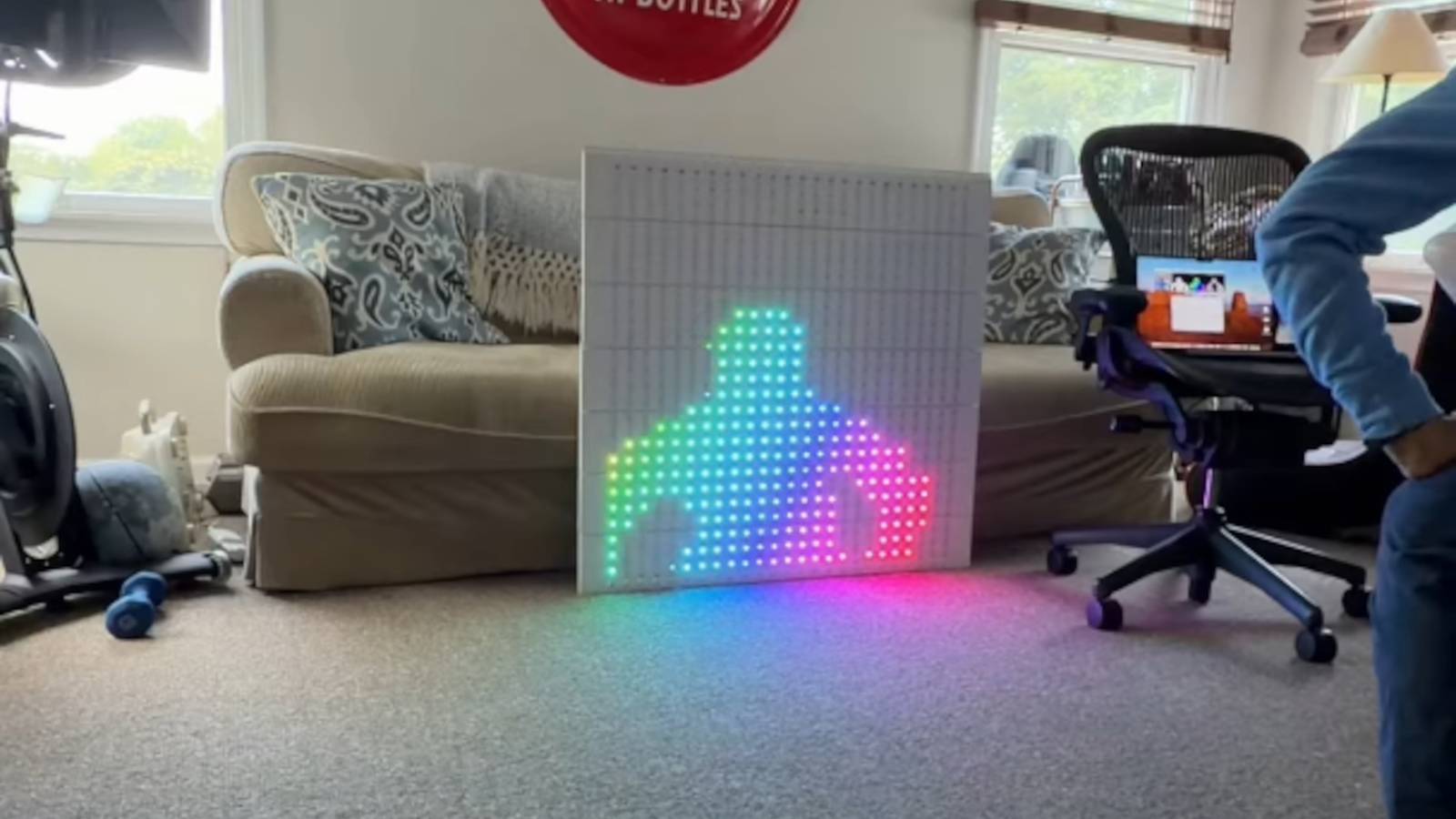
Credit: HuckleberryKey4642 Published Aug 24, 2026, 3:45 AM EDT Simon is a Computer Science BSc graduate who has been writing about technology since 2014, and using Windows machines since 3.1. After working for an indie game studio and acting as the family's go-to technician for all computer issues, he found his passion for writing and decided to use his skill set to write about all things tech. Since beginning his writing career, he has written for many different publications such as WorldStart, Listverse, and MakeTechEasier. However, after finding his home at MakeUseOf in February 2019, he would eventually move on to its sister site, XDA, to bring the latest and greatest in Windows, Linux, and DIY electronics. Sign in to your XDA account Summary 25×25 WLED matrix uses a camera to detect people and draw rainbow outlines in real time. Python + OpenCV, MediaPipe, NumPy, and sockets send 25×25 frames to WLED via DDP/UDP. Prototype runs on a Mac; ESP32‑P4 coming to handle processing on-device for a standalone rave mirror. ESP32 projects can be extremely practical, but they can also be a lot of fun. Take, for instance, this colorful display that sees you via a camera and draws your outline in rainbow colors on a WLED matrix. It may not have much use outside of a disco, but hey, it looks amazing, so who cares? This 25x25 WLED matrix shows a more colorful side of yourself Because mirrors are boring Over on the ESP32 subreddit, user HuckleberryKey4642 uploaded a video of their new project. It's a WLED display that's attached to a camera. When the camera detects movement (like you walking across the room), it takes your outline and shows it on the display as pretty rainbow colors. It has a very cool, rave-like look and feel to it. Right now, the inventor says they're using a camera hooked up to a Mac, but they do have an ESP32-P4 on the way that will do the job instead. For the time being, here's all the hardware and software they're using: Python — runs the overall camera/LED control script OpenCV (opencv-python) — captures webcam video, resizes frames, cleans masks, handles image processing, and shows preview windows MediaPipe (mediapipe) — detects/segments the person and generates the human body mask NumPy (numpy) — handles the pixel arrays and 25×25 image/mask data Python socket library — sends the finished 25×25 pixel frames over the network to WLED using DDP/UDP WLED — receives the realtime DDP pixel data and physically drives the LED matrix LED strips - SK6812/WS2814 RGBW 30/m cut to 25 pixels HuckleberryKey4642 didn't disclose any source code or instructions on how to make your own, but they did link to a video from Chris Maher where he did the same thing but with a 50x50 display instead.
This ESP32-powered WLED matrix mirrors your movements on a colorful RGB screen
Full Article
Original Source
Read the full article at Xda-developers →KhanList aggregates and links to publicly available news content. We do not host full articles from third-party sources. Always verify important information with original sources.