
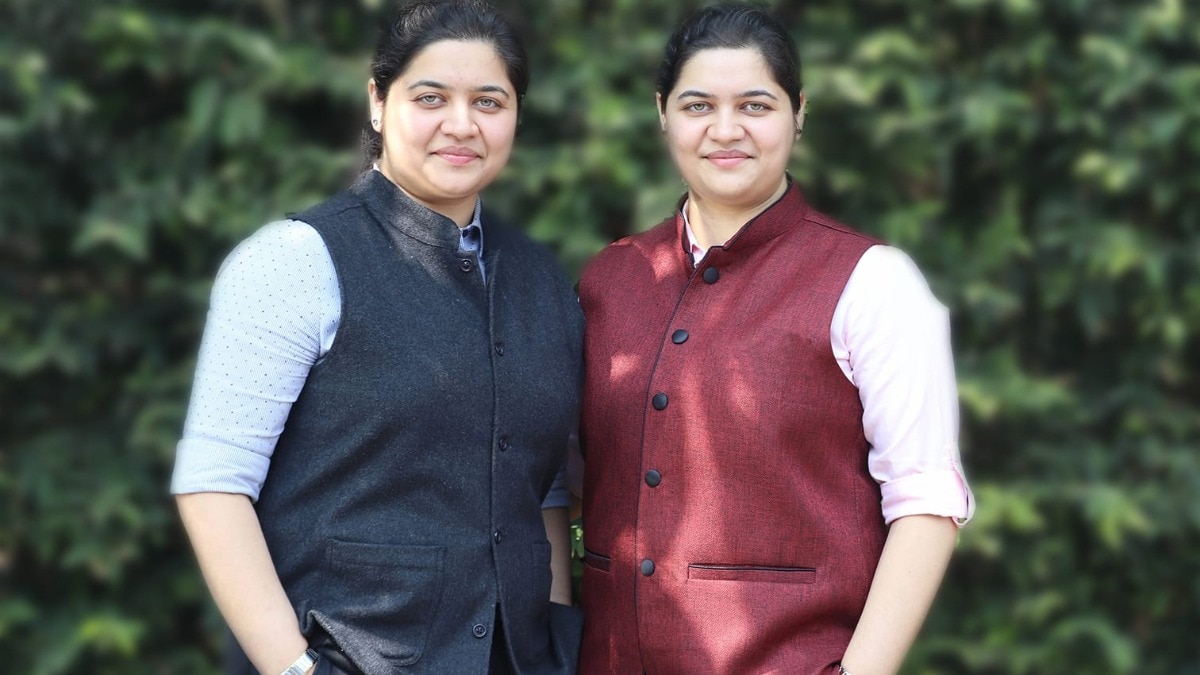
Nishita and Nikita Baliarsingh say the public story of building Nexus Power leaves out years of errors, failed experiments and uncertainty. Their account traces how school mentorship, self-taught science and steady support shaped the journey behind the Forbes Asia 30 Under 30 recognition.Twin sisters Nishita and Nikita Baliarsingh went from organising school events to building a deep-tech startup. Today, the Forbes Asia 30 Under 30 honourees are working to develop sustainable battery technology through Nexus Power.For Nishita and Nikita Baliarsingh, being featured on the "Forbes India 30 Under 30 list" in 2021 is one of the most visible milestones of their journey. But behind the recognition is a story of mistakes, uncertainty, failed experiments and years of learning that rarely makes it to social media or news profiles.The twin sisters, alumni of SAI International School, Bhubaneswar, and co-founders of deep-tech startup Nexus Power, say the polished version of their journey does not show everything that went into building the company.“A lot of things are invisible. Our mistakes, wounds and decision-making errors are probably invisible because those are not things we talk about very often. What comes out on LinkedIn or in the media is very polished when you read about us online,” Nishita said.The sisters say they also did not walk the journey alone. Family, friends, school and college friends, professors, government bodies, incubators, investors and research institutions all played a role at different stages. “There have been times when things have gone really down and we needed someone else to help us get back on track,” Nikita said. “That support could be motivation, capital, ecosystem access or just somebody believing in us.” The twin sisters with the Dr Silpi Sahoo, Chairperson of the school THEIR TEACHER SAW ENTREPRENEURS IN THEMLong before Forbes recognised their work, Nishita and Nikita were students at SAI International School, where they were given responsibilities from a young age. They participated in sports, music, inhouse radio (Radio Orange) and other school activities. They also interacted with international students through video conferences, discussing films and sharing perspectives across cultures.But it was their experience of managing school activities that gave them an early taste of leadership.The sisters were involved in organising UNWIND, a platform for students to create, perform, collaborate and lead; and handled departments such as finance, marketing, advertising, IT, resources and logistics. They worked with timelines, meetings and handovers and were given roles within a corporate-like structure.“Being called into proper conference rooms and having professional discussions at 13 or 14 also gave us a different level of confidence,” Nishita said.Their principal, Bijaya Kumar Sahoo, left an even deeper impression. When their academic performance dropped in Class 11, he called the sisters and spoke to them like a father rather than scolding them. He asked them to promise that they would improve because he knew they had the potential.“That had a big impact on us because when someone shows that much faith in you, you want to live up to that trust,” Nikita said."Bijaya Sir", as the twin sisters call him, also told them that he saw entrepreneurs in them — an idea that, according to the sisters, naturally influenced the way they thought about their future. The sisters recently signed an agreement with Aurassure to initiate battery pack trials for their advanced weather monitoring systems. FROM AN EV DREAM TO A BATTERY STARTUPThe sisters had been interested in machines, aircraft and automobiles since childhood. Around 2017–18, they initially wanted to build electric vehicles. But while working on prototypes, they realised that the bigger challenge lay in the battery.“We started with the idea of making electric vehicles. But when we started working on it, we realised that the difficult part was the battery,” Nikita said.They began researching battery cells, manufacturing and materials. That led them to the possibility of using biomaterials derived from industrial and agricultural residue in battery technology. The idea eventually became Nexus Power, founded in 2019.THEY HAD TO TEACH THEMSELVES THE SCIENCEBuilding a deep-tech company meant stepping into a field neither sister had formally studied.“We were management graduates. We had studied commerce in Classes 11 and 12 and then business management, so understanding scientific journals, the names of equipment, processes and chemicals was probably the toughest part when we started,” Nishita said.During Covid, they took six- to seven-month technical courses, read scientific papers and gradually built a team that included researchers with PhDs and years of experience.But hiring experts was not enough. They also had to understand the science themselves.“We had to build ourselves technically as well, because we needed to understand what the team was doing and be able to guide them,” Nikita said. A snap from the early days of R&D at Nexus THE ‘RAJMA-CHHOLE’ EXPERIMENTNexus was not born from one dramatic eureka moment. Instead, the sisters spent the Covid lockdown researching, discussing ideas and experimenting with materials they could find at home. One experiment became a turning point.In their ‘rajma-chhole’ experiment, they synthesised electrodes from everyday legumes and recorded a steady 5V output.That reading on the multimeter gave them confidence that the chemistry they were exploring could work and helped convince them that the idea could become the foundation of a deep-tech company.The journey, however, continued to be filled with experiments that failed.At one point, their material synthesis and cell manufacturing teams were blaming each other because the cells were not producing the expected results. Eventually, the sisters discovered that the problem was a vendor-supplied binder that had bubble formation.“Both teams were right, but there was a third-party problem that had created the mess,” Nishita said.The response was to clean up, learn and try again.“When you're doing R&D, how can you not get things wrong?” Nikita said. “We basically cleaned up the dishes and moved ahead and tried again.” During Forbes 30 under 30 award ceremony THE FORBES RECOGNITION IS ONLY ONE PART OF THE STORYEven as Nexus moves towards commercialisation, the challenges continue, from certification and licensing to manufacturing costs, supply chains and the speed at which battery technology is evolving.The sisters also continue to navigate the challenge of running a company together.“We have probably fought more during our working years than we did as children,” Nishita said.Yet their differences have also helped them work together. One is more visionary, while the other is more strategic, with responsibilities divided accordingly.For Nishita and Nikita, the Forbes recognition captures the outcome, but not the entire journey.The teacher who believed in them, the EV idea that led them to batteries, the science they had to learn from scratch, the experiments that failed and the people who helped them through difficult moments form the less visible story behind two young entrepreneurs who went on to make the Forbes 30 Under 30 list.- EndsPublished By: Mridusmita DekaPublished On: Sep 2, 2026 08:30 IST
These twins studied commerce, built a battery startup and made Forbes 30 Under 30
Full Article
Original Source
Read the full article at Indiatoday →KhanList aggregates and links to publicly available news content. We do not host full articles from third-party sources. Always verify important information with original sources.