
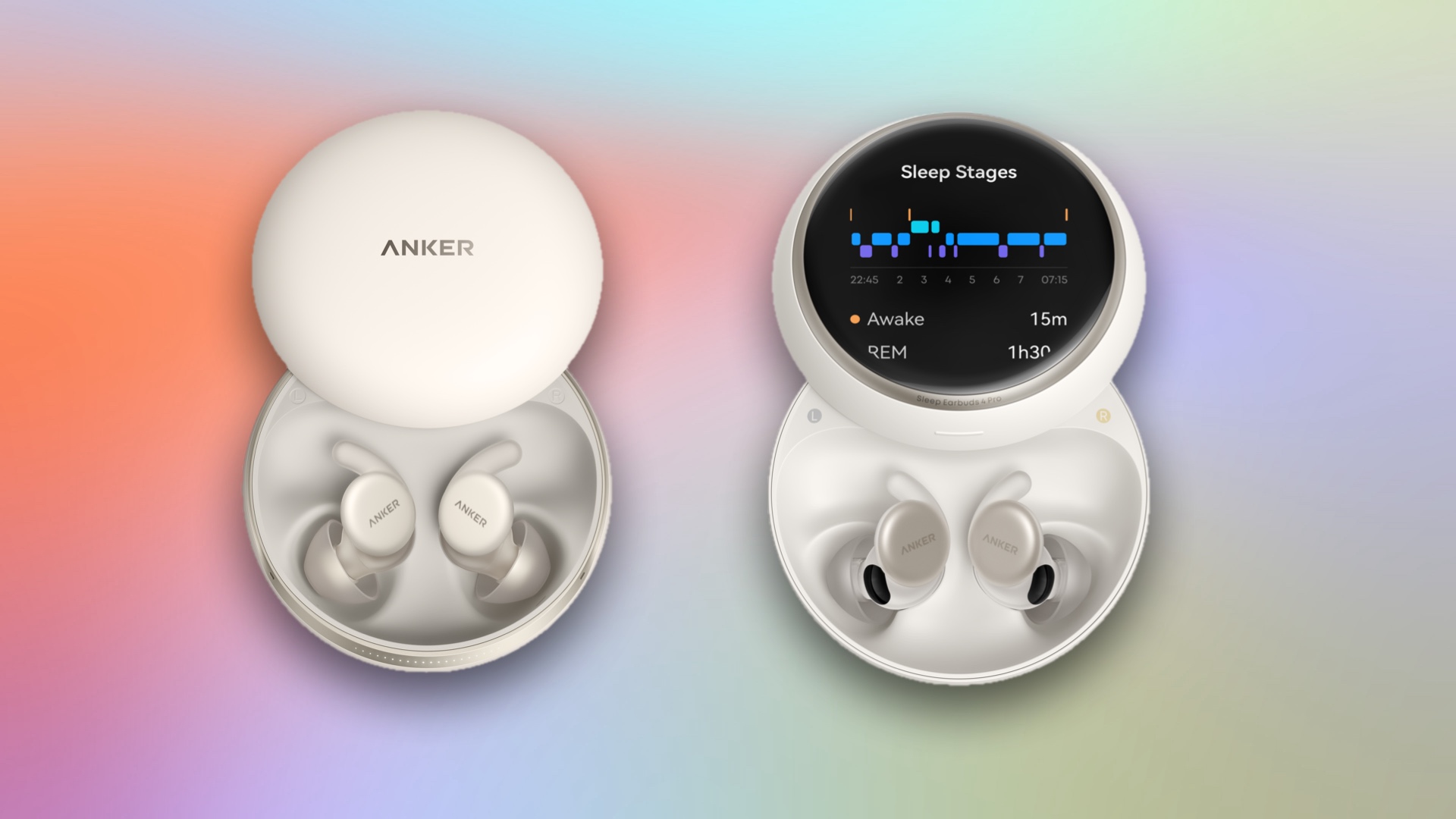
Last month, I took two back-to-back long-haul flights in economy that took me overnight from Asia to the UK. On paper, it sounded like a nightmare, and I was dreading it. But in the end, I managed to get a total of 7 hours of sleep — 5 of them on the first flight, which departed at 2 a.m. I credit Anker’s Soundcore Sleep A30 earbuds, which drowned out all of the cabin noise around me and were also comfy enough to sleep in. I’ve been searching for this magic combination for a while now, and I finally found it in the A30s. On Thursday at IFA in Berlin, Anker announced an upgrade to this holy grail product — the Sleep Earbuds 4 and Sleep Earbuds 4 Pro. The company says it’s made the earbuds even smaller, minimizing the 3D ergonomic design for even cozier sleeping. The Sleep 4 Pro also comes with a touchscreen case, allowing you to set alarms, play relaxing sounds and check insights all without touching your phone. A key feature that sets the Pro model apart from the base model is what Anker calls a “track-assess-adjustment system.” This uses the headphones’ built-in sensors to measure various factors, including PPG, heart rate and HRV and adjust the audio to find the best sleep sounds for you to have the most effective sleep. The Earbuds 4 will be available in October, with the Earbuds 4 Pro following soon after in November — though pricing is not yet available. Anker’s sleek sleep speaker would look at home on my bedside table. Anker is further building out its sleep ecosystem with a pair of stylish bedside speakers, which it also announced at IFA. The SleepLab will lull you to sleep with soft music and a nightlight, whereas the SleepLap Pro uses radar to track your sleep, heart rate and breathing, then play tailored audio to help you fall asleep and stay asleep — all with no wearables required. The speakers feature a warm, circular lamp that almost appears to float within a wider cream circle. It looks like a thoughtfully designed piece of kit that I know I’d be happy to have on my bedside table. Anker isn’t sharing pricing or availability at this stage, but says no phone or subscription is required. Anker headphones and a hearing aid In May, Anker announced its first neural-net compute-in-memory AI audio chip called Thus, which it’s now put into a slew of new audio products. Anker’s IFA headphone lineup is powered by its AI audio Thus chip. The Anker Soundcore AeroClip 2 Pro is more than a pair of clip-on earbuds — the product is actually an AI note-taker that can capture online meetings and calls, transcribing them and providing summaries (not unlike the newly announced Plaud One headphones). There’s no launch date for the AeroClip 2 Pro right now, but there is a price — it will be $230. Anker is really emphasizing clear call quality in its new audio device lineup. It’s listed as a major selling point of both the over-ear Soundcore Space 2 Pro and the Soundcore Liberty Buds 2. The Space 2 Pro comes with immersive adaptive active noise cancellation and 60 hours of listening time (30 hours with ANC on and 20 hours of talk time). The Libery Buds 2, meanwhile, pack six-sensor full-band ANC, which Anker promises will offer pure silence and block chaos so you can focus fully. Both models will be available starting Sept. 22, with the Space2 Pro priced at $200 and the Liberty Buds 2 at $130. The final audio product Anker unveiled at IFA is a little different and won’t be for everyone, but it will prove hugely useful to a select group. The Anker RIC Hearing Aids, also powered by the Thus chip, offer what the company describes as a clinical-grade hearing aid experience. Anker’s hearing aid doesn’t have an on-sale date just yet. The device will drown out unnecessary noise and amplify the voice you actually want to hear. Four beamforming microphones will lock onto the voice of the person you’re talking with, and the Thus chip will run 40 billion operations per second to isolate the sound. There’s no pricing or availability details for the RIC Hearing Aids just yet, but it’s impressive to see Anker use its proprietary tech to develop an accessibility solution. The device will offer 12 hours of battery time, or 36 hours with the case, and 5 minutes of fast charging will give 2 hours of battery life.
These Sleep Headphones Are My Best Redeye Flight Hack. They Just Got a Nifty Upgrade
Full Article
Original Source
Read the full article at Cnet →KhanList aggregates and links to publicly available news content. We do not host full articles from third-party sources. Always verify important information with original sources.