
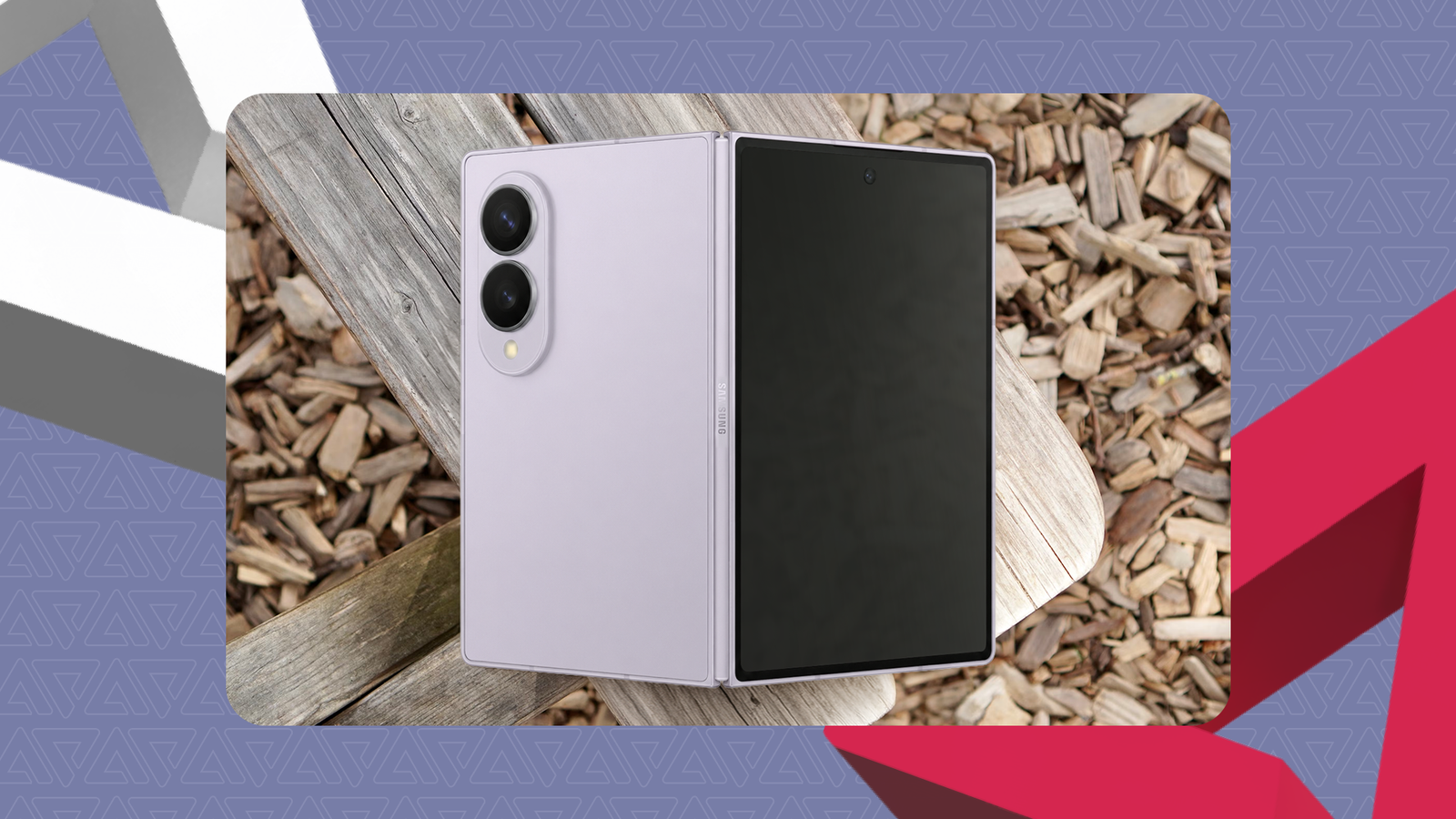
Published Sep 3, 2026, 6:00 AM EDT Jon Gilbert is a Features Writer for Android Police. I've covered Android since 2021, focusing on writing features and guides about Android apps and features that directly affect users. I've attended CES to uncover powerful hardware that isn't dominated by Google like the Mudita Kompakt. I trawl through Android news daily, hunting for stories that have real-world consequences. I hold a BA in History & Classics. It's not a controversial opinion to say that phones have become predictable. While there are always new features to look forward to, gone are the days of bizarre and unusual designs. When was the last time a big smartphone manufacturer created something truly unexpected? But unexpected is overrated. I want practical, useful devices that solve a problem. You don't need to be exciting to be innovative, and that's exactly what the Samsung Galaxy Z Fold 8 has shown us. It's a success story now, and not only for Samsung, but for all Android users. The Galaxy Z Fold 8 is exceeding Samsung's wildest expectations It's causing problems for future Galaxy phones To be fair, the Galaxy Z Fold 8's design is not new. The wider form factor for foldables has been seen before, notably on the Huawei Pura X and the Oppo Find N2. However, for Samsung purists and Android users in the US, the Z Fold 8 is the most accessible way to try the future of foldables. By all accounts, Samsung's decision to change its designs was the right one. Despite its starting price of $1,900, the Z Fold 8 sold out on Amazon shortly after launch. Other retailers maintained stocks of the phone, but it was clear that supply was struggling to keep up. Later in the month, reliable leakers shared that not only was the Z Fold 8 outselling its Ultra brother in South Korea, but it was set to become Samsung's best-selling foldable of all time. Samsung apparently was prepared for success, but despite stocking up to 40% more devices than the Z Fold 8 Ultra, it has resorted to cannibalizing the production lines for 2027's Galaxy smartphones just to keep up with demand (via ZDnet Korea). The Z Fold 8's success isn't unwarranted. AP's Andy Boxall reviewed the device and stated plainly: Yes, you should buy the Samsung Galaxy Z Fold 8. For me, this is the big surprise of 2026, and it has become the phone I've enjoyed discovering the most. So the Z Fold 8 is a big success and a great device. That's great for Samsung and buyers, but it's also important for the wider Android market. There's still room for practical innovation Android phones don't have to look the same The Galaxy Z Fold 8 is a great phone for a variety of reasons, but the most important factor in its success is the wider aspect ratio. While it might seem like an aesthetic change at first, this form factor can actually be better for everything you use a foldable phone for. It's not gimmicky, it's not silly, and somehow, it's not absurdly expensive (for a foldable). "Did you just say that a major smartphone manufacturer created a new design that worked out better for everyone without inflating the price?" Well, imaginary voice in my head, that's exactly what I was saying. The Z Fold 8 is an example of competition done right. AP's Andy Boxall compared the Z Fold 8 to its biggest competitor, the Razr Fold, and walked away conflicted. Each phone offered different benefits, making it hard to choose a winner. We've compared foldables with similar results before, but Samsung made this time feel different. While we've seen new foldables launch with unique form factors and features (see the original Pixel Fold), no new design has ever felt as impactful as the Z Fold 8. But dare I hope for more? Dare I hope that Samsung's bold decision has been noticed by other manufacturers? Could it inspire a new wave of smartphone design? It's time for change again I want each phone to feel different Early Android phones were a beautiful mess. Even before we looked at the software, each Android manufacturer gave its phones a unique look. It was obvious at a glance what was a Nexus or a Galaxy, or what was a Motorola and what was an HTC. That's no longer the case. Line up each manufacturer's flagship phone, and you'll be hard-pressed to tell them apart at a glance. Only the camera bar marks a difference, and that's an aesthetic difference, not a practical one. OnePlus 15R (left) and Google Pixel 10a The only Android phone I've seen in recent years that made practical design work was the Pixel 10a. It didn't need a camera bar, so Google kept the back completely flat. Wonderful. I hope we can see older shapes make a return. Small phones tried and failed, but what about wider phones? Not the most dramatic change, but as the Z Fold 8 proved, a simple change can be hugely beneficial. Foldables can teach the rest of the industry a lesson Every couple of years, I read headlines hoping that foldables are about to become mainstream. The problem is cost. It doesn't matter how good the Z Fold 8 is; I won't buy a $1,900 phone on principle alone. It's a luxury item. Nevertheless, I hope that the Z Fold 8 teaches phone manufacturers that making bold design choices can still be rewarding. Foldables might not be mainstream yet, but they can certainly impact the wider industry to the benefit of us all. Samsung Galaxy Z Fold 8 9/10 SoC Qualcomm Snapdragon 8 Elite Gen 5 for Galaxy RAM 12GB / 16GB Storage 256GB / 512GB / 1TB Battery 4,800mAh The Samsung Galaxy Z Fold 8 has a 4:3 aspect ratio open screen, making it great for video and reading books, and when closed the device is compact, with apps on the cover screen appearing normally. It joins Samsung's Galaxy Z Fold 8 Ultra, which has a more traditional tall-and-thin design.
The Z Fold 8's unexpected success reveals what Android phones have been missing
Full Article
Original Source
Read the full article at Androidpolice →KhanList aggregates and links to publicly available news content. We do not host full articles from third-party sources. Always verify important information with original sources.