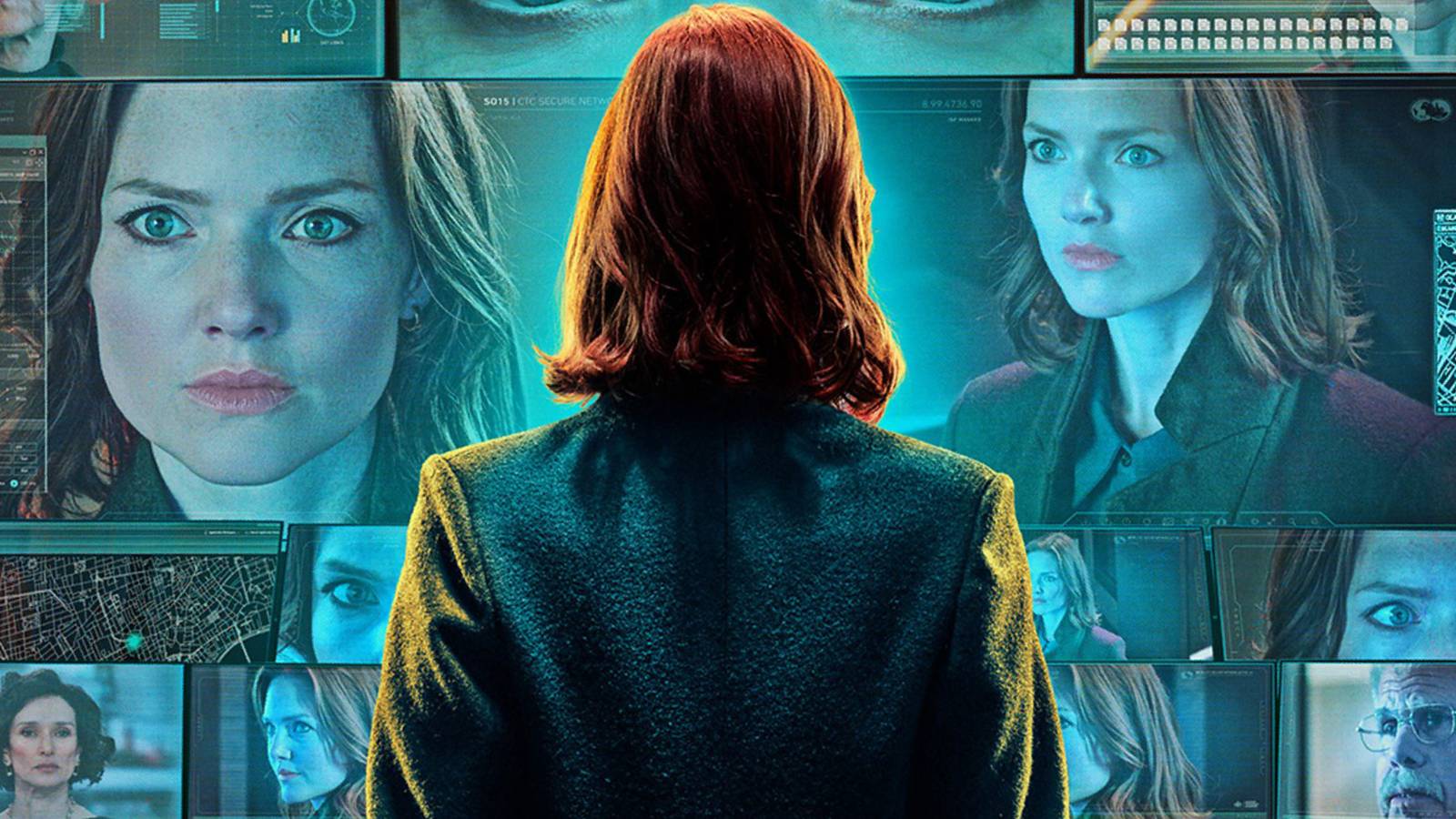
Image via BBC Published Aug 14, 2026, 11:24 PM EDT Chelsea Adelaine Hassler is an award-winning editorial, social, and creative director with two decades of media and entertainment experience and an all-consuming obsession with TV. A native New Yorker, she always completes the Sunday crossword, reads at least 100 books per year, and has Knicks season tickets. Sign in to your Collider account Doctor Who may be the longest-running science fiction series of all time, but the BBC's legacy as a pioneer of the genre goes well beyond its flagship franchise. The world's oldest national broadcaster aired the very first sci-fi television program ever, a 1938 live recording of the Czech play that first introduced the word "robot" to the world, R.U.R., or Rossum's Universal Robots, and its real-time broadcast of The Quartermass Experiment delivered the first sci-fi serial ever written for adult television audiences in 1953. A decade later, the BBC found its crown jewel when the Doctor first stepped out of the TARDIS, but it never stopped breaking new ground; Doomwatch invented the "sci-fact" genre, Blake's 7 redefined modern space opera, and Red Dwarf proved out high-concept sci-fi in sitcom form. The BBC turns 100 in October, marking a century of setting the standard for quality television as we know it. Science fiction has always been a core part of its identity, so while some of the most trailblazing programs ultimately became casualties of lost media, it continues to pioneer the genre through new shows and limited series to this day. From a dystopian domestic drama unfolding in a populist dictatorship to a police procedural where the main detective falls backwards in time, these are some of the best science fiction series in modern BBC history that you may not have heard of when they first aired, but should absolutely start watching tonight. 1 'Years and Years' Starting in an alternate but fairly true-to-life 2019, Years and Years follows the four Manchester-based Lyons siblings – Rory Kinnear, Russell Tovey, Jessica Hynes, and Ruth Madeley – and their family matriarch (Anne Reid) as they navigate an increasingly dystopian existence spanning 15 years into a speculative future. What begins with a celebrity entrepreneur (Emma Thompson) rising to political power quickly escalates to authoritarian rule in Britain, setting off a series of rapid, compounding events that upend modern life. The multi-generational Lyons act as a microcosm of Western society, their everyday domestic drama playing out against a backdrop of escalating crises, showcasing both the power of human resilience and the devastating consequences of normalizing an unstable world. It's been a little over seven years since Years and Years first premiered, halfway through the timeline that former Doctor Who showrunner Russell T. Davies explored in the six-episode series, and thankfully, we're currently nowhere near the calamitous societal collapse he imagined. But by using ordinary people to illustrate the very real ramifications of our actions as both individuals and as a society – or, conversely, our lack of action altogether on both levels – Davies removes the comforting buffer of distance between the viewer and the show's reality, forcing us to confront our own decision-making in the here-and-now. It's a cautionary tale that will continue to serve as an eerily prescient reminder of the dangers of normalized apathy, unchecked technology, and populist extremism, for years to come. 2 'The Capture' Image via BBC The Capture portrays a present-day London almost identical to our own, with one crucial difference: in its version of the hyper-surveilled city, you can no longer trust what you see. When Detective Inspector Rachel Carey (Holliday Grainger) is assigned a case where the facts don't add up, she uncovers a covert intelligence program known as Correction that enables CCTV and live broadcasts to be seamlessly altered using deepfake technology. As video evidence is the gold standard for criminal convictions, it lets security services control narratives and assign guilt by rewriting history in real time – and DI Carey finds herself caught in a vast state-sponsored conspiracy to not only manipulate footage, but justice itself on a global scale. Featuring a star-studded cast including Ron Perlman and Famke Janssen as high-ranking American intelligence personnel, Paapa Essiedu as a rising political figure, and Indira Varma as an on-air investigative journalist and news presenter, over the course of three seasons, The Capture explores what it's like to live in a post-truth society. What begins with fabricated evidence and convictions, expands into the manipulation of politics and the media to control outcomes, and ultimately exposes a military-run predictive AI that's controlling far more than anyone expected. What's so truly stunning about the series is how it all feels deeply possible, maybe even probable, and that despite the dizzying, ever-expanding web of disinformation and lies, it remains grounded in an eerily real place. 3 'Being Human' Image via BBC The premise behind Being Human almost sounds like the start of a long-winded joke: a vampire, a werewolf, and a ghost live together and attempt normal human existence. But in a world where supernatural beings can only coexist with humans in secret, they have to suppress their urges, conceal their true natures, and avoid being exposed – a task made increasingly difficult by not only their own inner demons, but the various otherworldly forces that threaten the very existence of their shared humanity. A masterclass in genre bending, it's a dark and gritty drama with a comedic backbone that subverts the tradition of romanticizing the supernatural, instead idealizing the idea of being a human in their 20s who is just trying to get by as best they can. Over the course of five seasons, the mundane and mind-blowing are interwoven; rules about drink coasters are just as important as ancient vampire texts, and maintaining low-level jobs is just as urgent as escaping purgatory. Midway through its run, a North American remake of Being Human was released on SyFy that streamlined the story, swapped the humor in favor of melodrama, and added high-budget special effects. While both versions have equally rabid fanbases, the BBC version, originally led by Aidan Turner, Russell Tovey, and Lenora Crichlow, used a heavy reliance on raw emotion to fuel the supernatural elements and dry wit to ease the tension, creating a one-of-a-kind series that truly broke the urban fantasy mold. 4 'The City and the City' Image via BBC Based on China Miéville's critically acclaimed speculative novel, The City and the City follows the investigation of a student's murder in the impoverished fictional city of Besźel. Things become complicated when it becomes apparent that the body was transported there after the crime was committed in Ul Qoma, a highly-advanced twin city that co-exists in the same geographical space yet possesses an entirely different existence. Citizens are strictly mandated to "unsee" the alternate city at all times and pretend it doesn't exist, but one headstrong detective refuses to back down – partnering with a local cop from the alternate city and going head-to-head with the mysterious force, Breach, that punishes anyone who looks too closely at the wrong place, in order to solve the case. Starring David Morrissey and Mandeep Dhillon as the two detectives from the twin cities, with a supporting cast that includes Christian Camargo and Lara Pulver, the four-episode miniseries aired in 2018 on BBC Two. It's a high-concept story that seems like it might be virtually impossible to bring to life, yet instead of depicting the overlapping cities using flashy CGI, it pits the two cities against each other, setting the entire production in a unified noir setting, but using lighting and color to contrast the crumbling 70s archaea of Besźel with the futuristic tech metropolis of UI Qoma. Much like the cities in its source material, The City and the City exists as both a high-concept sci-fi adventure and a gritty detective drama at the same time, and it's unlike everything you've ever seen or are likely to see again. 5 'Hyperdrive' Image via BBC Imagine the most dysfunctional group of people on Earth in the year 2151, then picture them being sent into space tasked with convincing alien civilizations to commit to trade, take British vacations, and relocate their businesses to rural England. So goes the plot of Hyperdrive, which saw a misfit crew explore new planets across the galaxy and, thanks to rampant ineptitude, self-inflicted chaos, and diplomatic mismanagement, almost immediately cause a crisis. It ran for two seasons on BBC Two, and was led by three of the UK's most beloved comedians; Nick Frost as optimistic, naive patriot and captain Michael Henderson, Kevin Eldon as violent, sociopathic scientist and second in command Eduardo York, and Miranda Hart as shy, awkward and hopelessly smitten diplomat Chloe Teal. Created by writer duo Kevin Cecil and Andy Riley, who would later win an Emmy for their work on Veep, the show was crafted as a spiritual successor to Red Dwarf but tonally more along the lines of The Office in space. And if it sounds like it's an early version of Avenue 5, that's because, in some ways, it was – the original pilot for the show, which was never aired, was directed by the legendary Armando Iannucci. An underrated gem of the early aughts, it's a dozen episodes of pure galaxy-based workplace humor – or, as executive producer Jon Plowman described it, a "hilarious version of Das Boot in space." 6 'Life on Mars' Image via BBC After Detective Chief Inspector Sam Tyler (John Simm) is in a car accident, he wakes up in a hospital bed and finds he's traveled back more than three decades in time to the 1970s. Unsure if he's in a coma, lost his mind, or has truly traveled through time, he returns to work where he's been demoted and must adjust to a new way of policing in an ancient version of the 2006 CID he'd always known. Under the watchful gaze of old-school DCI Gene Hunt (Philip Glenister), Tyler helps the squad solve a new case in each episode while trying to find his way home, dealing with near-constant culture clashes and increasingly encountering paranormal phenomena that cause him to hear voices from the future in his head. A groundbreaking mix of police procedural, science fiction, and psychological suspense, Life on Mars won the International Emmy for Best Drama for each of its two seasons alongside countless other awards. The surreal, gritty show was so beloved it even spawned a spin-off, Ashes to Ashes, which was set in the 80s and starred Keeley Hawes. While a second spin-off, Lazarus, failed to come to fruition with the BBC back in 2023, co-creators Ashley Pharoah and Matthew Graham have recently hinted it might still make a return; in the meantime, very few shows have ever held up as exceptionally well as this must-watch series centered on a lost-in-time cop.
These 6 Near-Perfect BBC Sci-Fi Series Deserve To Be Rediscovered
Full Article
Original Source
Read the full article at Collider →KhanList aggregates and links to publicly available news content. We do not host full articles from third-party sources. Always verify important information with original sources.