
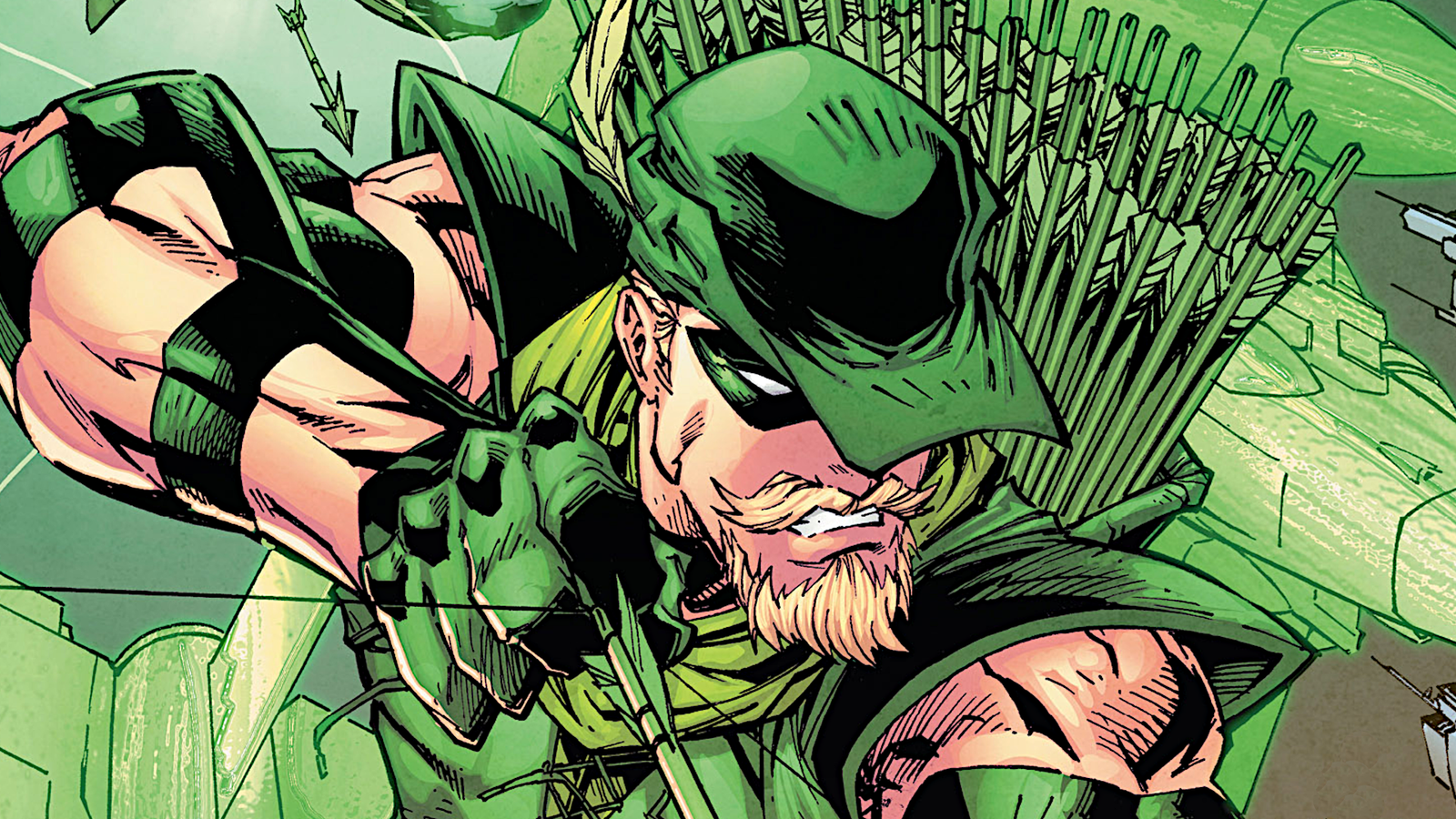
Published Aug 30, 2026, 8:00 PM EDT Emedo Ashibeze is a tenured journalist and critic specializing in the entertainment industry. Before joining ScreenRant in 2025. he wrote for several major publications, including GameRant. Spider-Man and Batman are two of the most popular superheroes on the planet, dominating pop culture. Their popularity leads fans to explore morality and what makes a “good” superhero. Long hailed as the gold standard of selflessness, their recent narrative arcs quietly invite audiences to cheer for authoritarian overreach, prompting fans to question whether these heroes still deserve such admiration. Furthermore, Batman’s citywide sonar spy networks and satellites, and Spider-Man’s reliance on satellite tracking and mass data harvesting, portray these heroes as normalizing heroic mass surveillance. Recent narratives treat trampling rights and freedoms lightly, leaving few heroes still standing up for what is right. The only person standing up for civil liberties is Oliver Queen, aka the Green Arrow. Green Arrow stands alone as the hero who calls out the moral rot of state and vigilante overreach. He looks out for the “little guy” and rightly calls ubiquitous surveillance controlled by one man a product of fascist ideology. He embodies true heroism by refusing to sacrifice citizens’ civil liberties for the illusion of safety. Heroic Lines Blurred: How Batman and Spider-Man Traded Civil Liberties for Surveillance In the modern superhero landscape, superheroes operate under an unspoken, assumed contract. Civilians place their total trust in vigilantes, and in return, the heroes gain somewhat unfettered access to people’s private lives. It is packaged as being “for the greater good” that a hero gets to obtain and look through people’s private information and lives. Moreover, nowhere is this trade-off more evident than in the cinematic trajectories of pop culture’s biggest icons, Batman and Spider-Man. Both heroes have gradually embraced high-tech, citywide surveillance as their ultimate weapon in the fight against crime. The heroes who are supposed to protect civilians’ rights have become the face of an unchecked, self-appointed surveillance state. The philosophy that the ends justify the means has taken hold in the minds of iconic heroes, blurring the lines between heroism, criminality, and morality. In Christopher Nolan’s The Dark Knight, Bruce Wayne takes warrantless wiretapping to its logical extreme to track down the Joker. While it ultimately works out in Batman’s favor, it raises many ethical red flags. In the film, Batman secretly turns Gotham’s microchips and cell phones into a real-time sonar array, converting millions of innocent citizens into involuntary tracking devices. Lucius Fox briefly objects, and a self-destruct mechanism is added, but these gestures only feebly gloss over the ethical violation; the film still presents the invasion as a necessary evil. Spider-Man’s hands are not clean when it comes to stepping on civil liberties and freedoms. In Spider-Man: Far From Home, Peter Parker inherits E.D.I.T.H., Tony Stark’s AI in high-tech sunglasses that give him access to a global satellite network, private text messages, public camera feeds, and an armada of lethal tactical drones. The film, instead of rejecting the idea of weaponized orbital dragnet tech, frames the problem entirely around who holds the remote. The narrative being pushed is that, as long as the right person wields the surveillance - a true hero and not a villain - audiences are not supposed to find a problem with it. This was only reinforced in Spider-Man: Brand New Day, when Peter uses surveillance cameras and facial recognition software to comb through the entire city of New York while investigating Jean Grey. The policewoman working with Spider-Man points out the illegality of his actions, but it is quickly brushed aside so the plot can continue. Ultimately, the framing of massive civil liberty violations as standard operating procedure by both franchises reinforces the idea that safety demands submission. Privacy is treated as merely an inconvenience to be bypassed by anyone wearing a costume in the pursuit of justice. It is an ideology that paints the iconic heroes in a not-so-heroic light. What Is Wrong Is Wrong for Everyone: Why Pop Culture Forgives Superpowered Authoritarianism The willingness to forgive heroic mass surveillance reflects a bias in favor of billionaires. Bruce Wayne is a billionaire, and that fact underpins his character. The cave, the car, the suit, the city-wide network, the contingency files on every Justice League member, and the orbital weapons platform in Tower of Babel all depend on Batman’s obscene capital. Over decades, pop culture has conditioned audiences to accept the idea that vast, unaccountable wealth, when paired with personal tragedy, grants an individual the right to bypass democratic institutions. Bruce Wayne’s military-grade technological apparatus, or Tony Stark’s automated orbital defenses isn’t treated as a systemic threat but as a public service. When private capital funds extrajudicial surveillance, audiences are taught to see it as benevolent paternalism. Civilians are seldom asked to confront the implications of surrendering privacy and civil liberties to one person for perceived safety. Bruce Wayne and Tony Stark are excused for operating outside the law because their wealth is treated as a stand-in for institutional corruption. Furthermore, despite Spider-Man historically being a working-class hero, he is subsumed by this dynamic when the story hinges on him inheriting Tony Stark’s multi-billion-dollar military tech. The message remains that real protection comes from deferring to the ultra-wealthy’s unilateral, high-tech intervention. Spider-Man and Batman are two sides of the same coin. The moment they deem it necessary, the civil liberties of the people are discarded, and the narratives fail to treat this with the weight and consequences such decisions should carry. If the narrative does not treat it as a problem, audiences are more susceptible to forgive this moral oversight. Conclusively, this bias sustains the myth that benevolent authoritarianism is safe if wielded by someone with noble intentions. Superhero stories consistently recast unchecked power as a matter of personal morality, rather than structural accountability. Audiences are taught to judge a mass surveillance network by who controls it, not whether it should exist, quietly normalizing superpowered authoritarianism. A Modern-Day Robin Hood: Green Arrow is the Last True Champion of the People If Batman is the ultimate symbol of top-down enforcement and Spider-Man is a complicit participant, Oliver Queen is the lone ideological wrench in the machine. While Green Arrow, like Bruce Wayne, is a billionaire with a tragic past, he prides himself on always looking out for the average citizen’s best interests, styling himself as a modern-day Robin Hood. Oliver Queen’s backstory differs sharply from Bruce Wayne’s: he lost his fortune and was forced to see the system from the bottom up. That perspective left him disgusted by the way the ultra-wealthy and vigilantes treat ordinary citizens. Green Arrow firmly opposes actions and attitudes that look down on citizens and trample on their rights, cementing his status as a true hero. Additionally, Oliver Queen’s refusal to accept mass surveillance reflects a core ideological boundary. In DC lore, Green Arrow is the Justice League’s moral center, often the only member willing to challenge godlike beings for acting like an oppressive, unaccountable regime. The other leaguers may think in terms of the bigger picture, but Oliver always looks out for the little guy. In Justice League Unlimited, Oliver is the first to question the Justice League’s orbital watchtower and again objects when they build intrusive global monitoring systems or consider mind-wiping villains. He is the one who raises hell because he sees what others miss: mass surveillance and systemic overreach are not moral simply because a “hero” holds the remote. In this vein, Green Arrow truly embodies what it means to be a hero, even more than Batman and Spider-Man. While the others are willing to play fast and loose with citizens’ rights when it suits them, Green Arrow is the only one who stands up for what is right, preventing the other heroes from unknowingly creating a fascist regime. When Wally West argues that he can use his speed to stop crimes in microseconds across multiple cities, Oliver quickly shuts him down, saying that the kind of “ubiquitous surveillance” controlled by one person is basically fascism. This makes a strong argument against 24/7 surveillance and invading people’s privacy for the chance of stopping crimes that haven’t happened yet. Unlike his peers, Green Arrow exemplifies what it means to be a street-level hero. He operates strictly at the street level, maintaining a consent-based relationship with the people he protects. His weapon of choice is an analog bow, staying true to his inspiration, Robin Hood. He would never rely on stealing the metadata of every citizen to stop crime. What defines Green Arrow as a hero is his unshakeable left-wing politics and his ability to listen to the neighborhood. He fights corrupt landlords, targets systemic greed, and defends civil liberties with the understanding that freedom without privacy is no freedom at all. In terms of looking out for the interests, he outshines heroes such as Batman and Spider-Man. In the end, by rejecting superhero authoritarianism, Green Arrow secures his place as the quintessential superhero. He shows that justice can be pursued without trampling the rights and freedoms heroes are sworn to protect. The ends do not always justify the means, and true heroism lies in always doing the right thing, even when it is difficult. Created By Mort Weisinger, George Papp First Appearance More Fun Comics Alias Oliver Jonas Queen Alliance Justice League, Justice League United, Queen Industries, Outsiders, Seven Soldiers of Victory, Justice League Elite, Justice League Task Force
There’s Only 1 Good Superhero, And It’s Definitely Not Spider-Man (Or Batman)
Full Article
Original Source
Read the full article at Screenrant →KhanList aggregates and links to publicly available news content. We do not host full articles from third-party sources. Always verify important information with original sources.