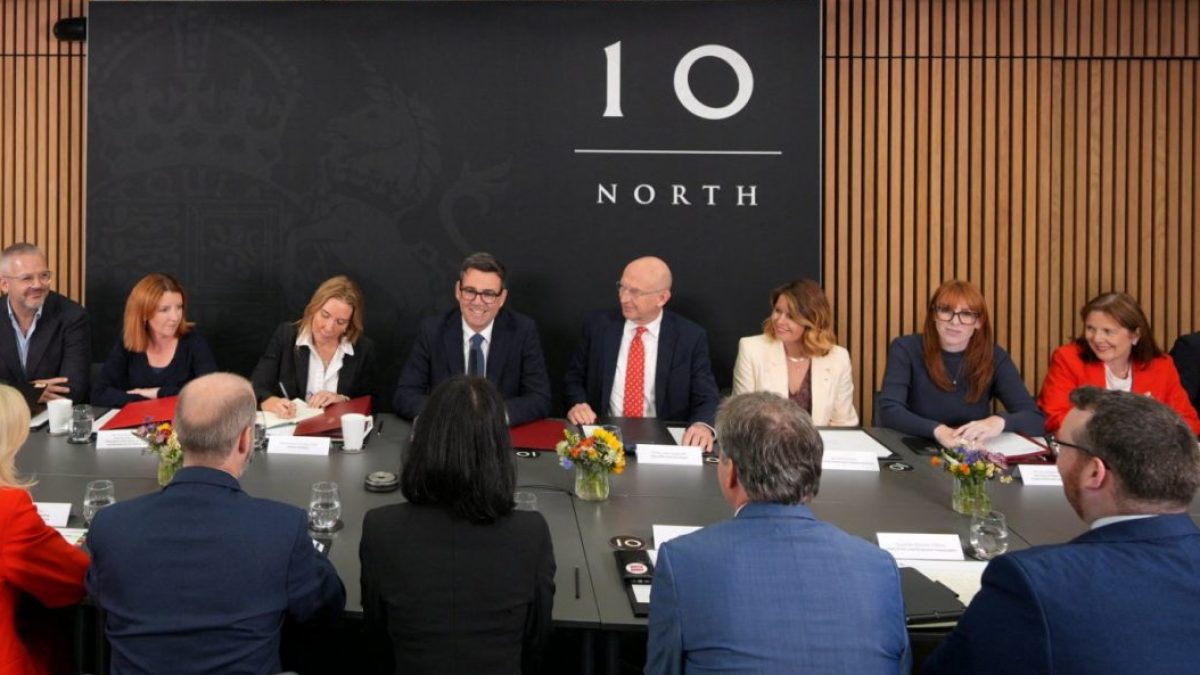
Mayors getting a share of income tax revenue to spend on their cities could lead to some areas of the UK receiving vastly larger sums than others, analysis for The i Paper shows. London, where the income tax base is far larger, would receive billions of pounds in extra cash compared to the poorest parts of the North, the analysis found. Andy Burnham is expected to set out his policy on fiscal devolution on Friday as part of his drive to deliver “growth in every postcode”. It will include giving extra spending powers to England’s mayors to invest in their areas on transport and infrastructure. Shorts The Times reports that some Tory and Reform mayors want to use their cash on handing back rebates to their residents, although most mayors are expected to use the money to pay for infrastructure and services. It is not yet known how the Prime Minister’s plan would work but one proposed model for fiscal devolution comes from Re:State, a centre-right think-tank close to Burnham, which recently published a blueprint for No 10 North, detailing how the Prime Minister’s new Manchester “nerve centre” should operate. The think-tank proposes mayoral authorities collect a flat rate of up to 2.5 per cent of the 20p rate of basic rate of income tax. Under this model, fiscal devolution would mean London gets £2.3bn in 2026-27, while Hull and East Yorkshire receives just £135m. Burnham has been warned he must come up with a fair formula for any income tax devolution or risk further deepening existing regional inequalities. The Prime Minister also risks opening up a political fight among regions if some are permitted the new tax and spending powers but not others. Ben Houchen, the Tory Mayor for Tees Valley, told The i Paper he is concerned about the prospect of regions like his being left out of fiscal devolution and that he raised this with Burnham during his first meeting at No 10 North in Manchester last week. “We can’t have a two-tier system of mayors when Burnham is so clear that mayors are the driver he wants to unleash economic growth,” he said. Share of income tax would replace ‘integrated settlement’ Income tax is collected automatically by HMRC from wages via Pay As You Earn (PAYE) or through self assessment tax returns for self-employed people. The money goes into the Government’s central pot and funds public services like health, education, and defense. At present, the Treasury distributes local funding for regions from Westminster, but under Burnham’s expected plans, mayors could be given a share of income tax revenue to distribute themselves. The method proposed by Re:State, which Burnham was involved with until he stepped down as mayor of Greater Manchester, has been endorsed by Andy Street, the former Tory mayor of the West Midlands. Street says he and Burnham “worked effectively as mayoral colleagues, and these recommendations build on much of what we worked on together”. The idea would be that this would deliver more money than the “integrated settlement” currently received by mayoral authorities and incentivise areas to increase their tax base through economic growth. But this could result in a huge variation in how much cash regions receive depending on how big their population is and how much income tax they currently pay back to the Treasury. London, for example, can draw on a population of almost nine million people and average wages that are far higher than the rest of the country. Analysis shared with The i Paper shows allowing London to retain a 2.5 per cent share of local income tax would mean it gets back more than £2.3bn in revenue in 2026-27, compared to its current integrated settlement which is only £469m. This would be more than what nine of the smaller mayoral authorities would receive combined – including Hull and East Yorkshire (£135m), Tees Valley (£150m), York and North Yorkshire (£207m), Cambridge and Peterborough (£223m), West of England (£255m), Greater Lincolnshire (£257m), South Yorkshire (£334m), Liverpool (£366m) and the North East (£459m). Alex Walker, who led the research for Re:State, conceded the imbalance does represent a “challenge” for Burnham. “This is a challenge – especially in a country with such a regionally imbalanced economy,” he said. “But it is not insurmountable. In fact, there is evidence that devolution can help address differences between places through better tailoring of policies to local needs and supplying the levers to mobilise untapped economic potential.” Walker said “some form of redistribution” would be needed in any fiscal devolution model in order to “strike a balance between allowing places to benefit from their own economic success through greater retention of tax revenues with fairness to areas that are starting with smaller tax bases and lower initial growth potential”. Will some mayors be left out? Burnham faces further difficulties in how to make fiscal devolution work for all parts of the country. There are currently 20 strategic authorities covering roughly half of England, but only seven have what the Government calls “established” mayoral authorities which means they have the greatest level of devolved power. Re:State’s plan calls for only regions with “established” status to be permitted powers to retain income tax in the short term. Walker said it is important that institutions have “sufficient administrative and analytical capacity” to take on fiscal devolution. However, he said having an integrated settlement “shouldn’t be a prerequisite”. “Instead, the institutional maturity of mayoral strategic authorities should be assessed on a case-by-case basis, with areas that believe they are ready for more fiscal firepower able to request an assessment, with a quick response from central government,” Walker added. Tees Valley is one of the mayoral authorities which does not yet have “established” status and therefore an integrated settlement despite having been in existence for more than 10 years. This is because the combined authority was recently subject to a “Best Value Notice”, which means the Government has concerns about its performance. A review did not find evidence to support allegations of corruption but did make 28 recommendations for improvement. Houchen is pushing for Tees Valley to be included in any fiscal devolution plans, arguing that if regions such as his are left out they are being treated as “second-class citizens”.
The winners and losers of Burnham’s income tax overhaul – mapped
Full Article
Original Source
Read the full article at Inews →KhanList aggregates and links to publicly available news content. We do not host full articles from third-party sources. Always verify important information with original sources.