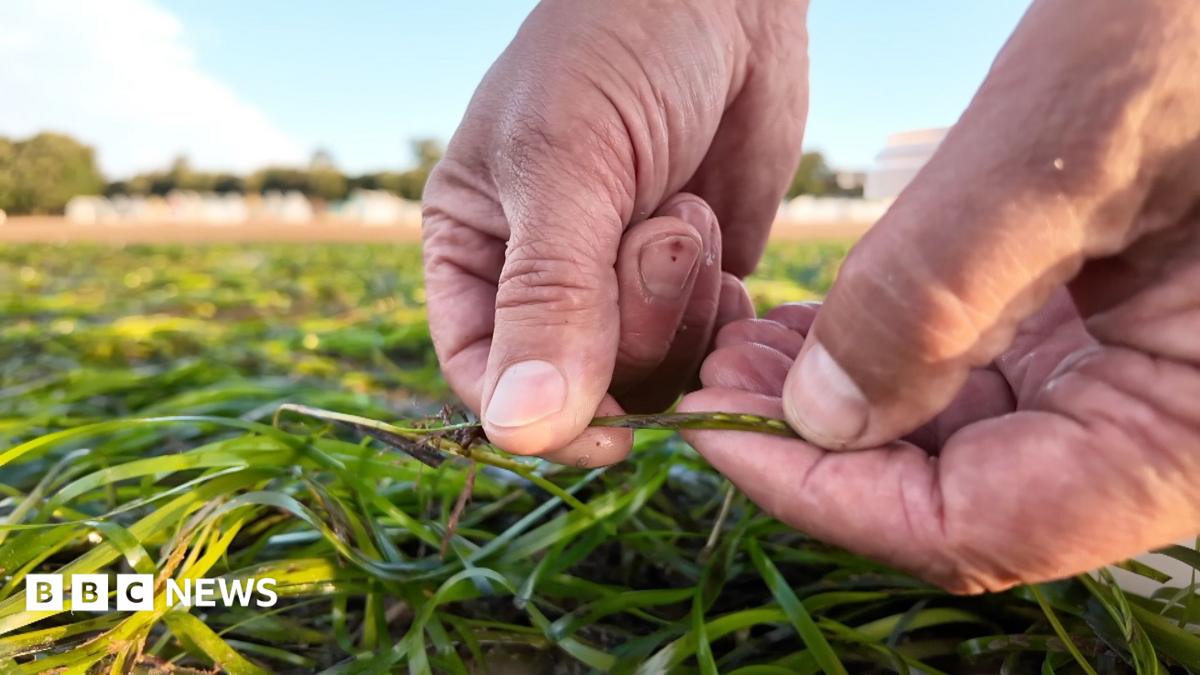
Forget the worm, this early bird was after the seed - and a very special one at that.It meant an 04:00 BST alarm and, for some of the other 20 or so volunteers I joined at Calshot Beach near Southampton, even earlier.A particularly low tide in the Solent meant the sea would reveal a crop on which conservationists are pinning their hopes to rebuild a depleted coastline.Seagrass seeds.Just like trees and plants, seagrass has a superpower - it can absorb massive amounts of carbon dioxide.The same area of seagrass can absorb 35 times the amount a tropical rain forest can.It locks in carbon and releases oxygen back in to the environment.Seagrass also creates structure and habitat for thousands of species. The UK has lost more than 90% of its seagrass meadows over the last century. Disease, disturbance and pollution have meant vast swathes of once vibrant green seabed have been left bare.For the experienced seagrass seed collectors, buckets soon begin to fill with the tips of stems.For those new to the low tide trawl, they are few and far between to begin with.Finding the right part of the plant, with seeds at the right stage for picking, takes a little while to get your eye in.The pod-like leaf called a spathe is slightly rounder and paler than the darker, flatter blades of seagrass.The seeds, when ready to pick, sit neatly in a row, slightly raised from the surface."Sometimes, it's just about feeling around and you can kind of feel these short stems that feel like they've got a pack of Tic Tacs in them," says volunteer Sophie Whitemoor.Crouching alongside is fellow volunteer James Harper."I'm still building on my personal technique," he says. "It's just a case of looking for the most round stems, really."The group are incredibly upbeat, considering the time of their early morning search."It's just a passion for me, really," says Jackie Mellan. "Any opportunity I can come out and help with restoration projects then I do."For the next hour or so, the volunteers sift through the seagrass as it lays flat on the shore.But it is a race against the clock and a turning tide means the small army of people gathering the harvest eventually beats a retreat to the shore.The buckets are gathered back in the car park and the crop is carefully placed in a barrel of cool seawater to be taken for processing.
The underwater harvest hoping for a bumper crop
Full Article
Original Source
Read the full article at Bbc →KhanList aggregates and links to publicly available news content. We do not host full articles from third-party sources. Always verify important information with original sources.