
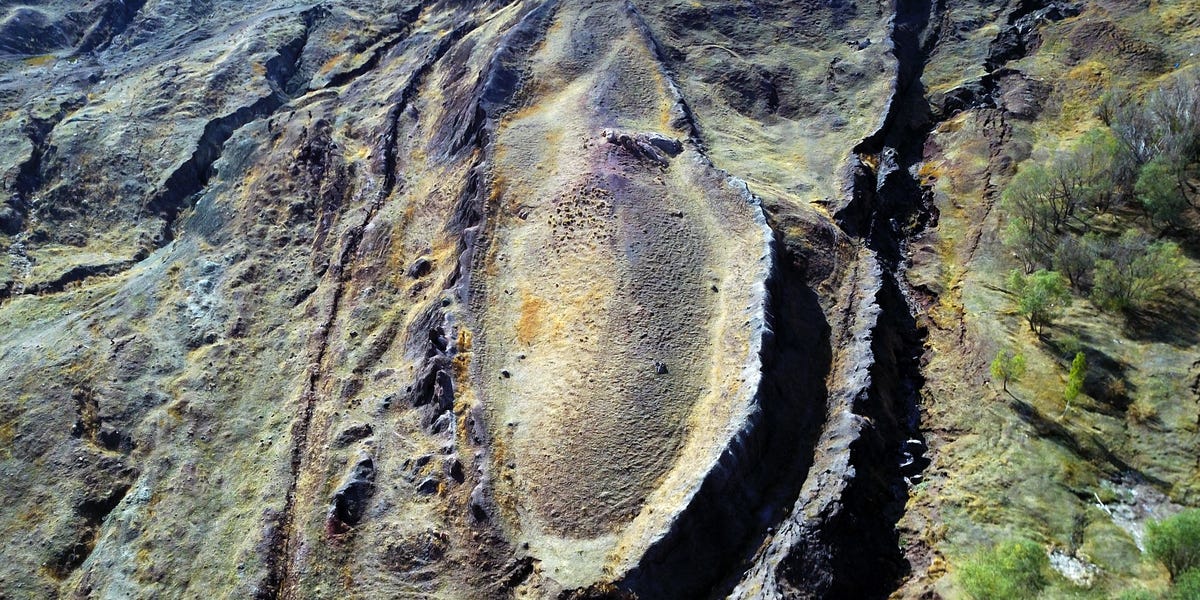
3 min readHere’s what you’ll learn when you read this story:The Durupinar formation is an enigmatic geological feature on Turkey’s Mount Ararat, and archaeologists continue to explore it as a possible resting site of Noah’s Ark.Recent soil sampling suggests the unique formation included concentrated organic material, such as wood.All tests remain preliminary, and further laboratory analysis may provide more details on the mystery of Mount Ararat.The mystery of Turkey’s Mount Ararat took another boat-shaped turn, as archaeologists dipped into the soil of the Durupinar formation in search of Noah’s Ark. The results offer a mixed bag of possibilities, with further analysis needed, but clues point toward a high concentration of organic matter that offer an intriguing possibility for the site’s history.The highest point in Turkey has fascinated researchers since they first identified the boat-shaped formation in 1959. Now, though, teams of researchers have finally drilled into the site in search of answers. With hundreds of soil samples from both inside and outside the formation, some reaching 60 feet in depth, experts said analysis will show if man-made activity or decaying wood sit in the soil.“When we drilled into the formation this year for the first time, we did not encounter any solid block of rock, of limestone [or] of any type of rock,” said Andrew Jones, Noah’s Ark Research Project vice president, according to FOX News. “We were hitting mainly soil. We’re still studying our results, but we believe that this should give [skeptics] pause when they say this is a rock formation.”The search team composed of around 20 researchers from five countries, also found pottery fragments that could predate the Noah’s Ark timing, although none of the pottery was found within the formation.The Biblical account of Noah had him building an ark 5,000 years ago to save his family and pairs of animals from an impending flood meant to destroy Earth’s growing evil. For 150 days, the floods filled the Earth, covering the mountains. As those waters receded, where did the ark end up? Some believe Mount Ararat’s the spot.Three years ago, preliminary soil samples from near the surface exposed human activity and marine life. This time, researchers wanted to go deeper.The researchers believe the carbon levels from samples within the formation were roughly 40 percent higher than those outside the formation, possibly due to a high concentration of wood. Even with the field work wrapped up for 2026, nothing’s certain until the laboratory analysis finishes over the winter.Jones said the pottery finds could tie to two ancient settlements that once existed near the formation. “You can connect the dots,” he said. “If this is Noah’s Ark, we have people living right beside it early on.”In a 1996 Journal of Geoscience Education study, researchers examined the formation and concluded it was a naturally occurring site. But now archaeologists will really find out once and for all with the samples they dug from the soil. “What excites me most is that questions debated for decades can now be investigated using physical samples from documented locations and depths,” Jones told Newsweek. “We have taken a substantial step forward in our ability to test the site, not completed the investigation.”Jones knows that folks remain skeptical of the idea, and some of the story itself. That hasn’t stopped the search. “I can understand,” he said, “because I have friends who are atheists or agnostic, and they think that I’m looking for Santa’s house or something.”Tim Newcomb is a journalist based in the Pacific Northwest. He covers stadiums, sneakers, gear, infrastructure, and more for a variety of publications, including Popular Mechanics. His favorite interviews have included sit-downs with Roger Federer in Switzerland, Kobe Bryant in Los Angeles, and Tinker Hatfield in Portland.
The Search for Noah’s Ark Just Took a Strange New Turn
Full Article
Original Source
Read the full article at Popularmechanics →KhanList aggregates and links to publicly available news content. We do not host full articles from third-party sources. Always verify important information with original sources.