
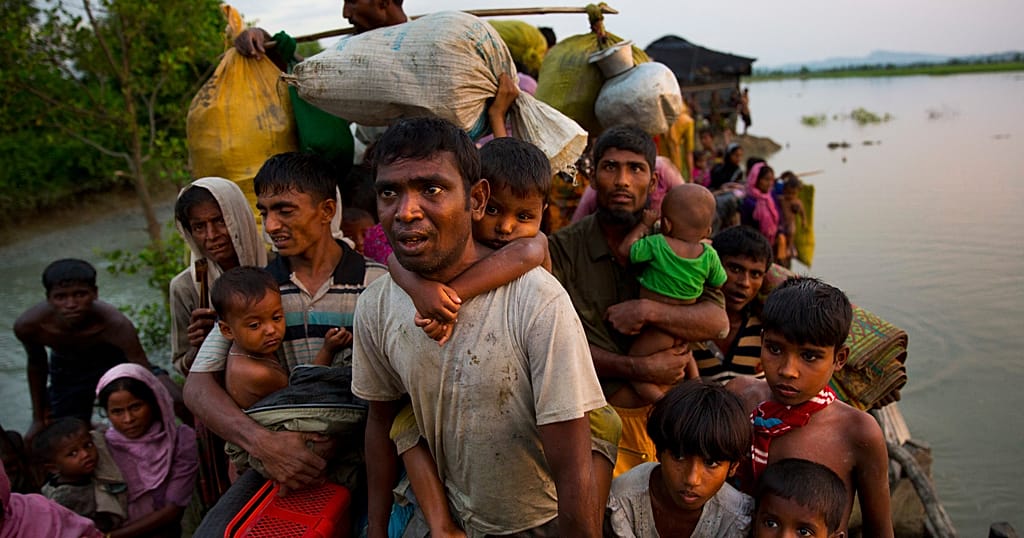
FILE -Rohingya Muslims carry their young children and belongings after crossing the border from Myanmar into Bangladesh, near Palong Khali, Bangladesh. - Copyright © africanews Copyright 2017 The Associated Press. All rights reserved. Last updated: 16 minutes ago Myanmar For decades, Myanmar’s Rohingya minority has faced persecution, discrimination and violence. But in 2016, their suffering reached a devastating new level. Myanmar’s military launched a brutal campaign in Rakhine State, claiming it was targeting Rohingya militants. What followed was a wave of violence that shocked the world. Entire villages were burned to the ground. Men, women and children were shot, families were torn apart, and survivors reported horrific cases of gang rape and mass killings. More than 700,000 Rohingya were forced to flee across the border into neighbouring Bangladesh, seeking safety in overcrowded refugee camps. Many left behind their homes, loved ones and everything they had ever known. The violence continued into 2017, with reports of massacres, children being killed and communities deliberately destroyed. For those who remained in Myanmar, life was no easier. The Rohingya faced severe restrictions on movement, access to healthcare, education and even the right to have children. Today, more than a million Rohingya refugees remain in Bangladesh, while hundreds of thousands more continue to face discrimination and hardship inside Myanmar. Related articles
The Rohingya crisis: persecution, violence and mass displacement in Myanmar
Full Article
Original Source
Read the full article at Africanews →KhanList aggregates and links to publicly available news content. We do not host full articles from third-party sources. Always verify important information with original sources.