
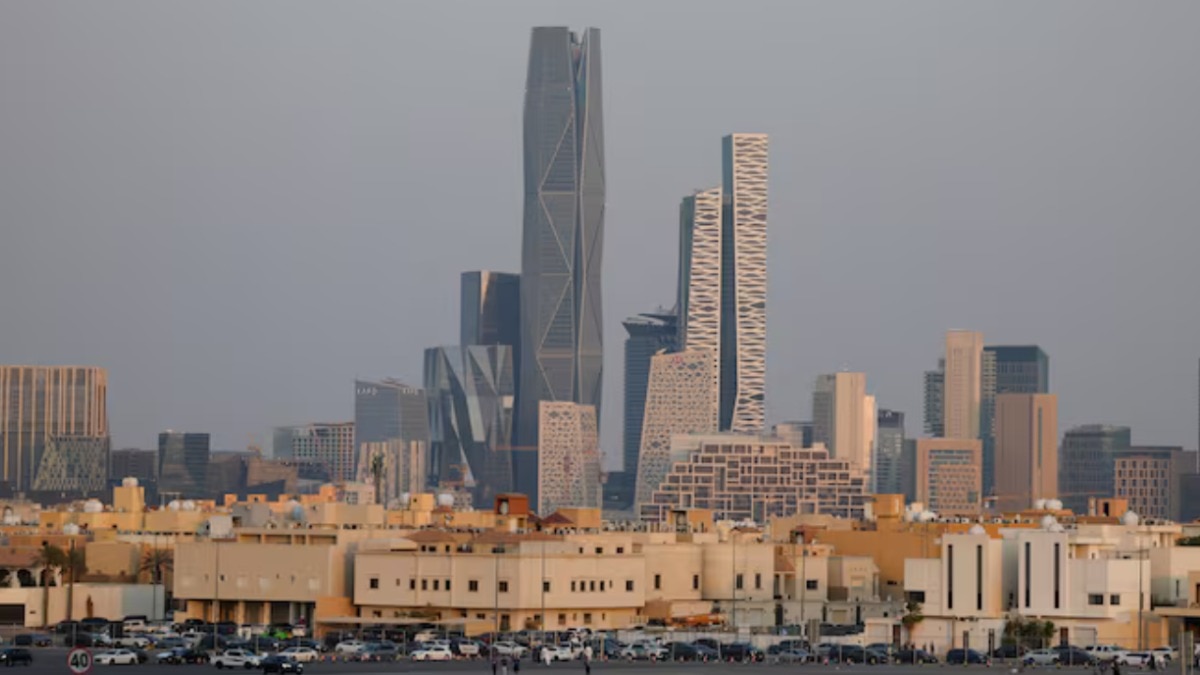
Riyadh's tallest skyscraper, which houses the headquarters of Saudi Arabia's sovereign wealth fund, was struck by a suspected Houthi missile on Thursday, marking a fresh escalation in the Iran-backed Yemeni group's war with the kingdom.Saudi Arabia's ambitions to reinvent itself as a global investment powerhouse suffered a big security setback on Thursday when a suspected Houthi missile struck Riyadh's tallest skyscraper, home to the kingdom's sovereign wealth fund.The strike hit PIF Tower in the King Abdullah Financial District (KAFD), blowing out windows across seven to eight floors and bending sections of the building's metal facade. The damage was visible across multiple levels of the skyscraper, which serves as the headquarters of the Public Investment Fund (PIF), Saudi Arabia's main sovereign wealth fund.According to Reuters, the building had been hit by an incoming Houthi missile. The Saudi-led coalition fighting the group said it had "dealt with a missile threat" launched towards Riyadh. Its initial assessment indicated that debris had fallen in the area, causing material damage. The strike prompted authorities to close entrances to the King Abdullah Financial District and evacuate people from the area. Ambulances and fire trucks were deployed as emergency services responded to the incident. The attack is particularly significant because it marks the second time in less than two weeks that a major landmark in Riyadh's financial district has suffered damage in a Houthi assault. On November 8, Saudi state oil giant Aramco's building was also hit.SECOND STRIKE ON RIYADH'S FINANCIAL DISTRICTThe latest attack highlights how the conflict, which has largely played out across Yemen and Saudi Arabia's border regions, is increasingly threatening important infrastructure and economic centres inside the kingdom. PIF Tower is not just another skyscraper on Riyadh's skyline. It houses the Public Investment Fund, one of the world's largest sovereign wealth funds and a central pillar of Crown Prince Mohammed bin Salman's economic transformation plans.The fund plays a crucial role in financing Saudi Arabia's ambitions to reduce its dependence on oil, attract international investment and develop sectors such as tourism, technology and infrastructure.An attack brings the security risks of the Yemen conflict directly into the heart of Saudi Arabia's economic and financial ambitions. Residents of Riyadh were woken by a loud explosion in the early hours of Thursday.The attack also followed reports of Saudi airstrikes on Yemen. The Houthi-run Saba news agency reported that Saudi aircraft had carried out airstrikes on the group's stronghold in the Yemeni capital, Sanaa, early on Thursday. It did not provide further details.HOUTHIS TARGET SAUDI AIRPORTS AND OIL INFRASTRUCTUREThe Houthis have stepped up attacks on Saudi airports and oil infrastructure since Yemen's previously frozen civil war reignited in July amid the wider US-Iran war. The group, backed by Iran, has been fighting Saudi Arabia and the Yemeni government it supports for years. The latest round of fighting has opened another front in an already volatile regional conflict, with the Houthis increasingly challenging Saudi Arabia both militarily and economically.The fighting has also shifted in the Houthis' favour on the ground. The group has captured large stretches of territory from the Saudi-backed government, forcing its forces into a major retreat over the weekend.This creates a difficult situation for Riyadh. While Saudi Arabia has been attempting to contain Houthi attacks on its territory, its allies in Yemen have struggled to prevent the group from expanding its control.The Houthis' territorial gains are particularly important because they extend beyond inland areas. The group has seized Yemen's entire Red Sea coastline, including the strategically important Bab el-Mandeb Strait. The Houthis have also surrounded Taiz, which is a major city in Yemen's highlands overlooking Aden, the temporary capital of the Saudi-backed government.SAUDI ARABIA PREPARES FOR A LONGER WARThe renewed fighting is also threatening Crown Prince Mohammed bin Salman's plans to transform Saudi Arabia's economy. The kingdom, the world's largest oil exporter and a close US ally, has invested heavily in diversifying its economy and reducing its dependence on oil revenues. Its ambitious development plans require foreign investment, economic stability and confidence among international businesses.However, repeated attacks on major infrastructure and financial landmarks risk undermining that confidence. Saudi officials are now preparing for the possibility that the campaign against the Houthis could continue well into 2027.Reuters reported on Wednesday, citing two Western officials briefed by Saudi Arabia, that officials in Riyadh now expect the military campaign to stretch on for as long as six months. A third source familiar with Saudi plans confirmed the accounts.The kingdom's immediate priority is reportedly to strengthen the position of its allies on the ground before entering any negotiations with the Houthis. Saudi Arabia also replaced the commander of its coalition fighting in Yemen this week, signalling a possible adjustment in its military approach.The prolonged campaign would represent a significant setback for Riyadh, which has sought to prevent Yemen's conflict from becoming a persistent security threat to its territory and economic interests.- EndsWith inputs from Reuters
Riyadh's tallest skyscraper housing Saudi wealth fund HQ hit in Houthi strike
Full Article
Original Source
Read the full article at Indiatoday →KhanList aggregates and links to publicly available news content. We do not host full articles from third-party sources. Always verify important information with original sources.