
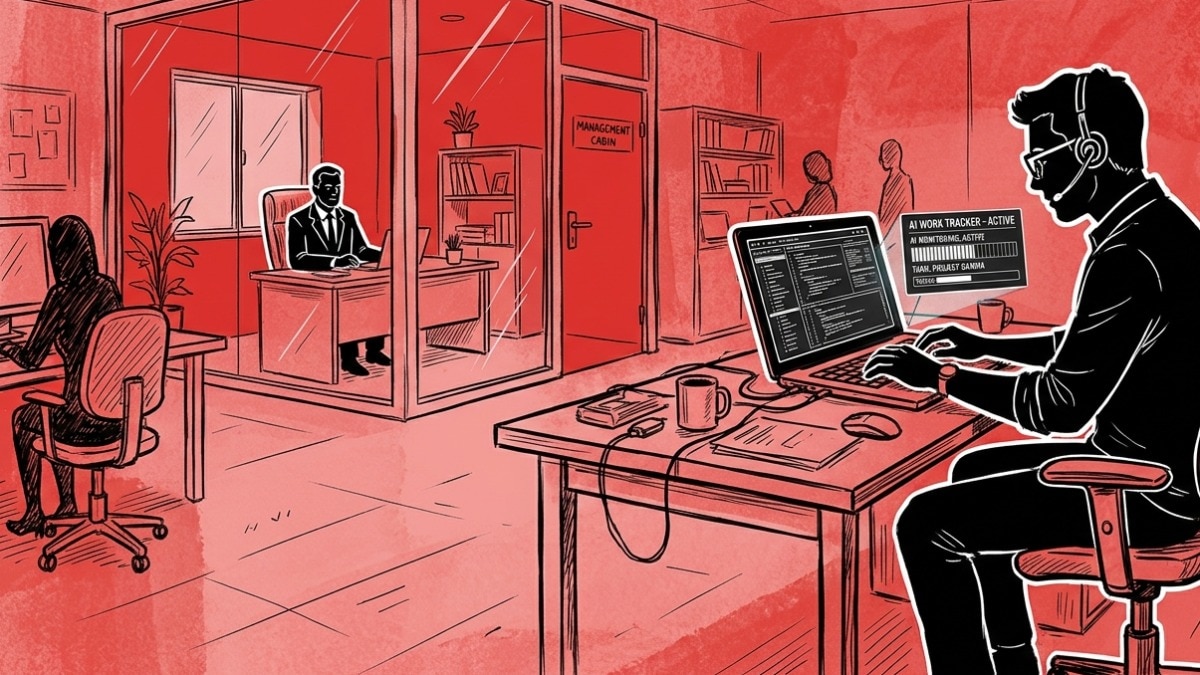
Your manager asks for an update on a project. Before you reply, an automated dashboard has already flagged that your task is running behind schedule. An AI tool has analysed your output, compared it with previous performance and recommended what should happen next.You still report to a human. But increasingly, a machine has an opinion about how well you are doing.This is the changing reality of modern workplaces, where artificial intelligence is moving beyond writing emails and summarising meetings to influence how employees are assigned work, monitored and evaluated.The question is no longer simply whether AI will replace managers. It is whether employees will increasingly find themselves answering to both a human boss and an algorithm. WHEN THE ALGORITHM BECOMES YOUR SECOND BOSSThis shift is often described as algorithmic management. It refers to using software and AI to automate or assist tasks traditionally performed by managers, including allocating work, tracking productivity, assessing performance, and making workforce decisions.An OECD working paper published in February 2025 examined how these systems are changing workplace management. While they can improve the speed and consistency of decisions, they also raise concerns around accountability, transparency and workers' well-being. In India, the debate is already visible in workplace monitoring. TCS's reported move to install monitoring tools on employees' laptops highlights the growing tension between productivity tracking and employee privacy.The bigger question is what happens when monitoring data begins influencing how managers judge individual employees.DOES AI MAKE A BETTER BOSS?AI has an obvious advantage over human managers: it can process large volumes of information, track deadlines and identify patterns without relying entirely on subjective impressions.But efficiency does not automatically translate into trust. A 2025 study by researchers Mingyu Li and T. Bradford Bitterly, involving more than 800 workers across the US and China, found that participants trusted AI managers less than human managers, even when both made exactly the same decisions.Human involvement mattered. Workers were more likely to trust the system when managers could explain decisions, correct unfair assignments and intervene when automated assessments went wrong.A dashboard may flag poor performance, but it cannot always understand a difficult client, an unexpected workload or personal circumstances affecting an employee.INDIA'S WORKPLACE HAS A WARNINGA 2026 study published in Frontiers in Artificial Intelligence, involving 290 employees in Indian organisations using AI-enabled HR systems, examined transparency, fairness, human oversight and employee autonomy.It found that transparency, perceived fairness and human oversight strengthened employees' trust in AI. Human oversight also helped reduce technology-related stress.This becomes particularly important when AI influences career progression. Deloitte's Talent Readiness Study 2025 found that 74% of organisations reported no AI use in succession management, suggesting companies remain cautious about letting algorithms determine who moves up the corporate ladder.THE FUTURE MAY HAVE TWO BOSSESAs AI takes over routine coordination and analytical work, managerial responsibilities could change. AI is already reshaping India's middle-management layer, pushing managers towards supervising human-AI teams rather than simply tracking everyday tasks.The shift is also changing how employees approach their own productivity. An employee who automated 60% of their work using AI faced a different dilemma: whether telling their boss about it was a mistake.Ultimately, employees may not have to choose between a human boss and an AI boss. They may have to learn to work with both.But when an algorithm flags an employee, recommends a poor rating or influences a promotion, someone must still explain the decision. That responsibility cannot disappear behind a dashboard.The future manager may use AI to make decisions faster. The real test will be whether employees still have a human being they can turn to when those decisions go wrong.- Ends
The race between a manager and AI: Who are you reporting to?
Full Article
Original Source
Read the full article at Indiatoday →KhanList aggregates and links to publicly available news content. We do not host full articles from third-party sources. Always verify important information with original sources.