
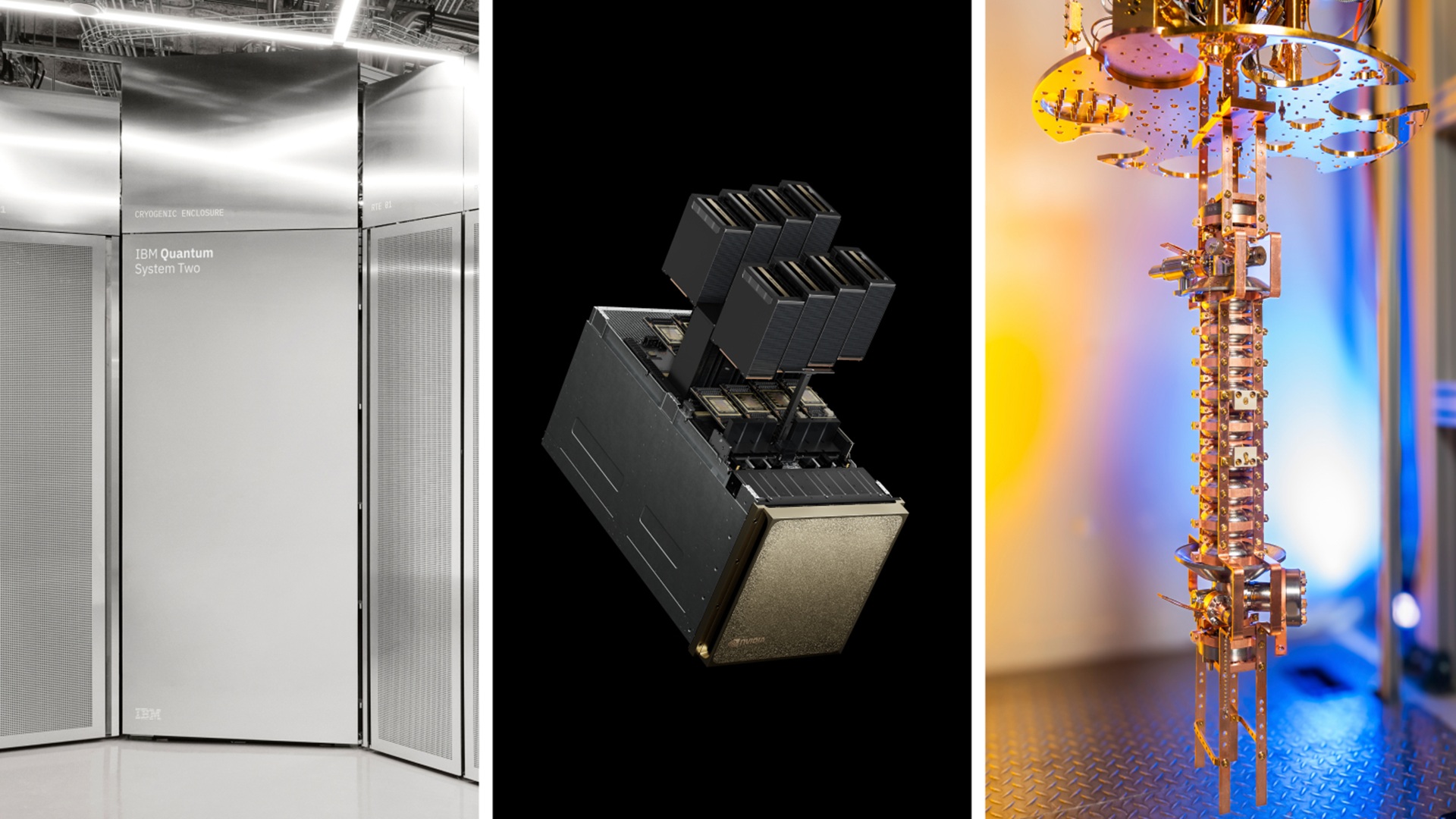
NVIDIA has introduced a new quantum error-correction decoding algorithm that it says can accelerate research workloads by up to 13,000 times, potentially helping scientists investigate designs for more practical fault-tolerant quantum computers. The TCBP-JOBS algorithm, available through the NVIDIA CUDA-Q QEC 0.9.0 library, reduces the computation time for studying new quantum computing designs from 12 weeks to just 45 minutes, according to the company. The development comes as NVIDIA expands its quantum-computing collaboration with IBM and the US Department of Energy’s Fermi National Accelerator Laboratory (Fermilab). The three organizations also plan to establish a modular quantum-computing codesign platform to investigate how quantum processors and conventional computing systems can work together. Faster decoding tackles errors Quantum processors are vulnerable to errors that can limit the complexity and duration of computations. Unlike conventional bits, quantum bits, or qubits, can exist in combinations of states, making them particularly sensitive to disturbances. Quantum error correction protects information by distributing it across multiple physical qubits. A classical computing algorithm called a decoder then analyses measurement data to identify likely errors so they can be corrected. NVIDIA’s TCBP-JOBS algorithm accelerates this decoding process for research workloads. The company says it delivers up to 13,000 times faster decoding than existing leading algorithms while maintaining high accuracy. Faster decoding could allow researchers to test different error-correction codes and decoder configurations more efficiently. It may also help scientists identify designs that use physical qubits more effectively, an important consideration as researchers work towards fault-tolerant quantum systems. The algorithm is designed to accelerate research rather than demonstrate that quantum processors have already achieved fault-tolerant operation. Quantum joins supercomputing workflows Separately, IBM, NVIDIA and Fermilab plan to develop a modular quantum-computing codesign platform by colocating NVIDIA DGX B200 systems with IBM quantum computers, including those powered by its Nighthawk processor. The platform will allow researchers to investigate error-correction codes, decoding algorithms, and quantum-classical applications. Fermilab will contribute expertise in high-energy and nuclear physics, helping researchers explore scientific problems that could benefit from future quantum systems. The collaboration also aims to examine how classical computing resources can scale alongside multiple interconnected quantum processors. Another part of the effort focuses on integrating quantum processors into supercomputing workflows. NVIDIA is expanding the open-source Slurm workload manager with a quantum interface, while IBM is contributing through its Quantum Resource Management Interface. Slurm already helps supercomputing centers allocate computing resources, including CPUs and GPUs. The new capabilities are intended to let researchers schedule quantum processors using familiar commands and resource-management policies, without maintaining separate workflows. IBM, RIKEN and NVIDIA are also exploring quantum-classical computing for scientific simulations. In separate research involving an iron-sulfur cluster found in proteins, the team reported a 79-fold improvement in accuracy over earlier runs of the same experiment. The researchers used circuits involving up to 72 qubits and 4,000 two-qubit operations, combining quantum processing with NVIDIA GPU-accelerated calculations. The results came within 4.3 millihartree of the accuracy achieved using density-matrix renormalization group, a leading classical simulation method. Together, the developments highlight efforts to combine quantum processors with accelerated classical computing, addressing challenges in error correction, system integration and scientific applications. Get the latest in engineering, tech, space & science - delivered daily to your inbox.With over a decade-long career in journalism, Neetika Walter has worked with The Economic Times, ANI, and Hindustan Times, covering politics, business, technology, and the clean energy sector. Passionate about contemporary culture, books, poetry, and storytelling, she brings depth and insight to her writing. When she isn’t chasing stories, she’s likely lost in a book or enjoying the company of her dogs.
NVIDIA claims 13,000x faster decoding for practical quantum computing research
Full Article
Original Source
Read the full article at Interestingengineering →KhanList aggregates and links to publicly available news content. We do not host full articles from third-party sources. Always verify important information with original sources.