
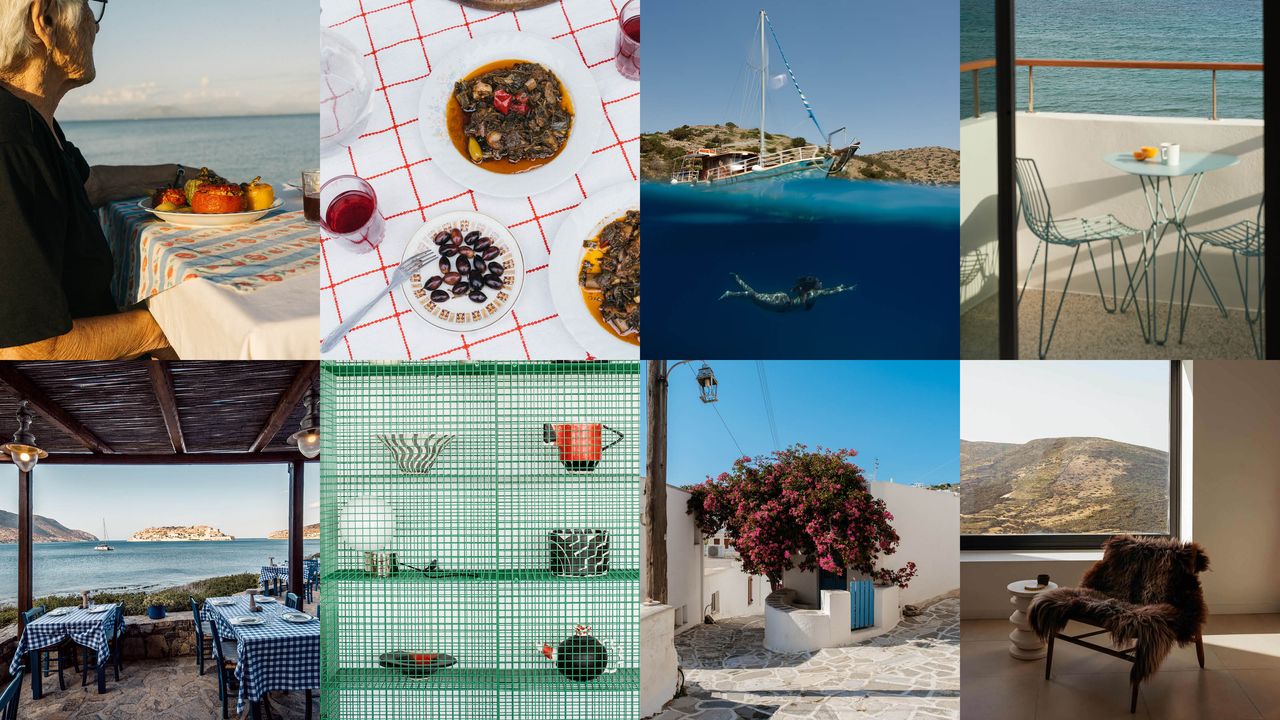
We speak to our favorite local tastemakers about the year-round appeal of Greece—and where there's plenty to discover once the peak summer crowds disappear.Few eras of Greek history compare to the ancient times that the country has become so synonymous with—the cinematic fables of Odysseus, comic-book lore of Leonidas, and philosophic creeds of Socrates are ever-present in pop culture. But anyone who’s been to Hellas in the past few years can tell you that something new is brewing here—current-day Greece is coming close to a similar precipice, one that could be nearly as definitive as the Bronze Age, as visitors arrive in droves higher than ever before. Arrivals to the nation of 10 million people were up by 38% in the first months of 2026, the highest increase on the continent by far. Now, more than ever, it feels like everyone is planning a seafaring escape or mountain adventure to Athens and the islands—or, if you’re in-the-know, to the serene coastal towns of the Peloponnese peninsula or the northern Aegean’s sparkling Thermaic Gulf.One decade after the country’s financial crisis peaked, and a half decade since the pandemic-era halt in tourism that had so many here pleading for the long-despised cruise ships to return, you would think this is good news for a state as tourism-dependent as Greece. And you could be right—but the unfortunate reality, according to the Bank of Greece, is that the crescendo coincides with mounting climate disasters that threaten the infrastructure of a nation still in the throes of recovery; a particularly harrowing warning ahead of this year’s El Niño; not to mention during their Mediterranean neighbors' unprecedented fire seasons. The seasonal pressure has become a balancing act. The good news, though, is that summer is far from the only time to visit.Outside the grip of sweltering summer heat lies some of Greece’s most delicious adventures: tasting early spring’s olive oils straight from the groves right after harvest; fall parties with small-island locals celebrating another season of panigiria wrapped; perusing the treasures of Athens’ open-air ruins in the soft, pre-winter light. There is so much more to Greece than the postcard islands—and the packed ferries to get to them—and with the mainland about to have its moment in the sun (we’re looking at you, Christopher Nolan), there’s no better time than the off-season to uncover every corner’s most spectacular self—the one without the heaving crowds. To prove it, we’ve tapped the best local creators to share how they do it, and how you can, too, siga siga (more slowly). —Shannon McMahon, senior destinations editorChatzimichali Ntaliani Street in the old town of Chania, on Crete Getty ImagesTo Avoid the Crowds on Crete, Hike and Ski in Early SpringOver the last 30 years, Nikos Tsepetis has made Ammos Hotel (and its beloved on-site Red Jane Bakery) one of Crete’s most talked-about hotels. Born and raised in Chania, the owner’s joyful, design-led approach to hospitality is rooted in his hometown, with 80% of his staff also locals. From its high-quality cuisine to its warm, home-away-from-home atmosphere, Ammos reflects Tsepetis’s deep connection to Chania. Here, he shares why spring is his favorite time to experience the city.A sailboat at sunset in Paros Getty ImagesShoulder Season on Paros: Ceramicist Christiane Smit Finds Inspiration at a Slower PaceFor Dutch artist Christiane Smit, a vacation on Paros in 2008 changed the course of her life. Drawn instinctively to the Cycladic island, she stayed and has lived in villages across Paros ever since. Today, she runs a ceramics atelier in Lefkes and owns minimalist clifftop villa Moonhouse, while restoring a century-old stone house in Kostos. Here, Smit shares the shoulder-season pleasures that keep her on the island year-round, and where to eat and stay.Blue domes of an orthodox church in Monolithos Getty ImagesFall in Santorini Through the Eyes of Winemaker Michael KouloglouFor winemaker Michael Kouloglou, moving to Santorini from Greece's mainland 11 years ago was an easy choice: “It is the mecca of Greek white wine.” Since then, he has worked across the island’s wineries before launching Orycton, a small-batch Assyrtiko made with grapes from old vines. Now based in quiet Monolithos, Kouloglou has lived throughout Santorini, gaining an intimate understanding of its villages, landscapes, and rhythms. Here, he shares why autumn is his favorite season to explore the island.Stuffed vegetables, or gemista, from Anastasia's cookbook Yia Yia Marco ArguelloWhy Spring Is the Best Time to Savor CorfuGreek family recipes are often passed down by instinct rather than instruction—a pinch here, a glug there, learned at the kitchen table. Food writer Anastasia Miari has spent nearly a decade documenting these dishes and the older generations and remote villages that have kept them alive. Her cooking celebrates Greece’s culinary traditions, while her latest book, Mediterranea, expands the journey across the region, from Moroccan tagines and Turkish breakfasts to Sicilian pasta.A boat hired via Agapi's hotel company Phāea Blue Fampiano KraniotisAthens Comes Alive in Fall, According to Hotelier Agapi Sbokou“Alive. That’s how Athens feels to me,” says Agapi Sbokou, co-owner and CEO of Greek hotel brand Phāea. Having lived in the capital since she was 18, Sbokou has watched the city continually evolve, while retaining its irresistible energy. For her, the joy of visiting somewhere lies in understanding its local rhythm. Here, she shares why autumn is so magical in Athens, alongside some of her favorite places to explore in the city.Lead editors: Sarah Allard, Shannon McMahon, Arati Menon, Lisa RiehlWriters: Shannon McMahon, Chadner Navarro, Noo Saro-Wiwa, Olivia MorelliVisuals and social media: Sophie Knight, Mercedes Bleth, Lucy BrutonSyndication editors: Kat Chen, Skyli AlvarezThis article was originally published in Condé Nast Traveller UK.
The Quiet Magic of Greece in the Off Season
Full Article
Original Source
Read the full article at Cntraveler →KhanList aggregates and links to publicly available news content. We do not host full articles from third-party sources. Always verify important information with original sources.