
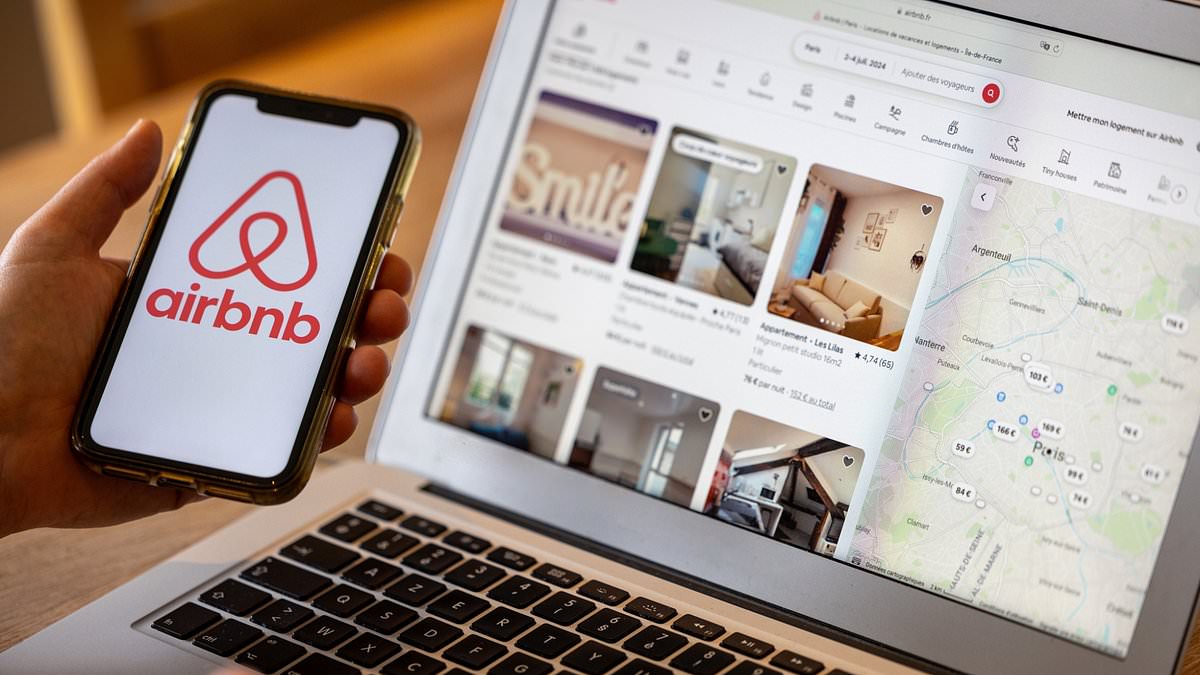
Airbnb and other short-term holiday lets are set to face more restrictions as the European Commission has proposed rules to help authorities tackle a housing crunch in key tourism destinations.While this type of accommodation is popular among holidaymakers, it has pushed up the price of homes in many areas, depriving locals of affordable property. The Affordable Housing Act aims to provide cities with legal cover, making clear the rules authorities must follow to limit short-term holiday lets.'A year ago, I promised to tackle Europe's housing affordability,' Commission President Ursula von der Leyen said in a statement.'Today, we are taking one step in this direction. By providing more clarity and support to local authorities and communities, anchored in local realities,' she said.The new proposal will need to be agreed with EU countries and the European Parliament before it can become law.Executive Vice-President Teresa Ribera said: 'Today, we adopted the Affordable Housing Act. It is a European framework to give a legal umbrella to mayors from across the European Union that need certainty to tackle the housing problem. The Affordable Housing Act aims to help tighten the rules on short-term holiday lets'Today, with the Affordable Housing Act, we provide legal architecture, enabling tools, not prescribing one size-fits-all solutions for those authorities that want to act to protect their citizens.'So, what are we doing with the Affordable Housing Act? For the first time in Europe, we are setting technical criteria to define what constitutes an area under housing stress. 'This will give mayors the legal certainty and the tools to act with measures that may be justified, necessary, and proportionate.'This includes measures addressing short-term rentals. Short-term rentals have a place in Europe's tourism economy, but their impact in some cities is devastating.'She went on to say: 'In some of Europe's most popular tourist destinations and city centers, short-term rentals can account for up to 20 percent of homes. There is also solid evidence that they impact prices and rents of housing stock in that area.'We also include other measures targeted at second homes. These are restrictions on buying or using residential properties for purposes other than as a primary home, for instance, as short-term rentals or investment properties.'We're not imposing obligations. Whether to act, and which measures to use, remains entirely a matter for the competent authority under national law, needs and local contexts.'Today, we have also adopted a recommendation on housing affordability and supply in areas under housing stress: it's a guidance on how to increase housing supply, with a particular focus on housing below market prices. It comes after the popularity of holiday lets on platforms such as Airbnb has pushed up housing prices'It covers practical action on planning, renovation, repurposing existing buildings, new methods of construction, and investment.'The Commission said authorities can identify areas with a housing squeeze by checking whether the price-to-income level is high or if there has been an upward trend for the past 10 years.It said any subsequent restrictions against short-term rental must be based on evidence, necessary and limited to the affected areas, and not be retroactive.George Mavros, head of government affairs for the European Union at Airbnb, said: 'The Act sets out the right principles. It now needs to include real guardrails that turn them into certainty for the hosts, guests and small businesses who depend on this activity.' 'Making housing more affordable is a goal we share, and we stand ready to work with Members of the European Parliament and the Council to get this Act right,' he said. 'That means focusing it where the shortage actually is: construction, renovation, and the homes standing empty across Europe today.'
Holiday homes and Airbnbs in popular tourist spots under serious threat following EU crackdown
Full Article
Original Source
Read the full article at Dailymail →KhanList aggregates and links to publicly available news content. We do not host full articles from third-party sources. Always verify important information with original sources.