
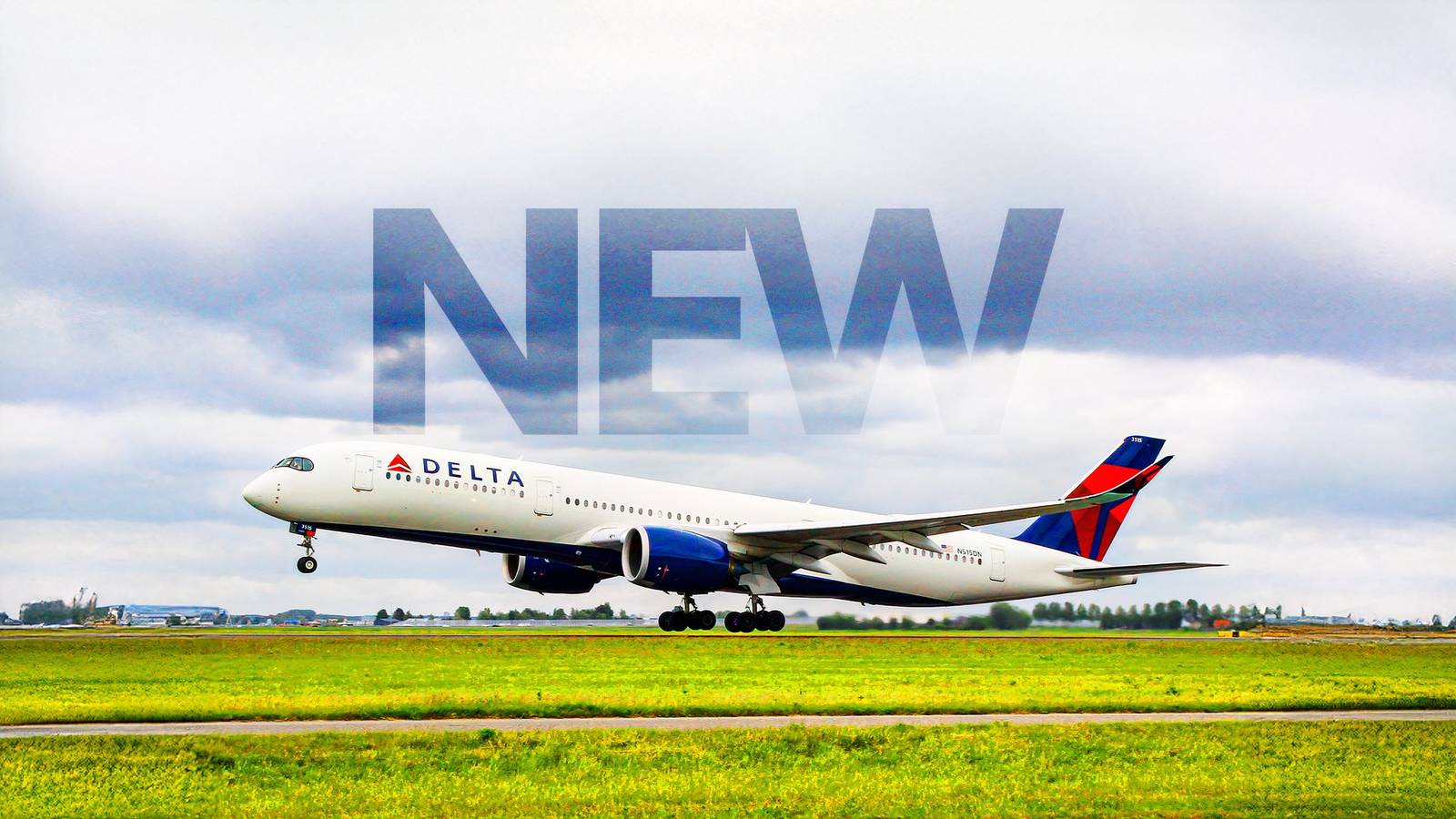
Published Nov 29, 2026, 1:01 PM EST An aviation writer, pilot, and flight operations professional who sees aviation from both sides of the cockpit door. With a background in aeronautics, safety, and human factors, she brings curiosity, firsthand experience, and a love of the details that turn aircraft and airports into stories worth telling. A Mediterranean island, Croatia's Adriatic coastline, and Portugal's second-largest city might not be the first destinations that come to mind when thinking about America's biggest international airlines. Yet in 2026, these places became part of a growing network of nonstop flights from the US, giving travelers new ways to reach Europe without routing through its busiest aviation hubs. Delta Air Lines, United Airlines, and American Airlines each expanded their international schedules, with some of the most notable additions aimed at destinations beyond the usual transatlantic gateways. The bigger story is not simply how many new routes appeared on the map, but where the airlines chose to fly and how they plan to serve those markets. Seasonal European connections sit alongside longer-distance services to Asia and the Middle East, while newer long-range aircraft give airlines more options for matching capacity to demand. With most summer additions now operating or having begun their scheduled seasons, and further services planned for the autumn, the 2026 expansion offers a timely look at how America's largest carriers are reshaping their international networks. Why US Airlines Looked Beyond Europe's Biggest Cities Credit: Denis Kilmov 3000|shutterstock London, Paris, Amsterdam, and Frankfurt remain major gateways for travelers crossing the Atlantic. Their extensive onward connections make them useful destinations in their own right and convenient transfer points for passengers traveling elsewhere. However, not every traveler wants to land at a major hub before boarding another flight. Direct services to smaller European cities can remove that extra step, making regional destinations easier to reach from the United States. That opportunity is particularly clear in the Mediterranean and Southern Europe. Olbia provides access to Sardinia, while Malta offers an island destination in the central Mediterranean. Porto opens a direct route to northern Portugal, and Split provides access to Croatia's Adriatic coast. These markets appeal to travelers looking for holidays beyond Europe's largest capitals, giving airlines an opportunity to offer a more direct journey while distinguishing their networks from competitors. The timing matters as much as the destination. European leisure demand typically rises during the Northern Hemisphere's summer, creating an opportunity for airlines to introduce or expand seasonal services. Rather than committing every route to year-round operations, carriers can align schedules with the period when travelers are most likely to visit. Delta, United, and American have taken different approaches to this opportunity, using their existing hubs and fleets to connect US passengers with a broader range of European cities. Delta Added Mediterranean Destinations And Major Global Connections Credit: billinphotos|shutterstock Delta's 2026 international expansion included new European services from John F. Kennedy International Airport (JFK), Boston Logan International Airport (BOS), and Seattle-Tacoma International Airport (SEA). From JFK, the airline launched flights to Olbia on May 20, Porto on May 21, and Malta on June 7. The Olbia and Malta routes were selected through Delta's first Route Race, which invited SkyMiles members and employees to vote on potential destinations. All three JFK services use Boeing 767-300ER aircraft, giving travelers direct access to destinations that previously lacked nonstop service from the United States. The airline also added Boston-Madrid and Boston-Nice, alongside Seattle-Rome and Seattle-Barcelona. These routes broadened the choice of European destinations available from the three US gateways. Madrid and Barcelona provide access to major Spanish cities, while Nice serves the French Riviera and Rome remains a major destination for cultural and leisure travel. Porto, Olbia, and Malta add a different dimension, connecting travelers directly with places that may otherwise require a transfer through another European airport. Delta's expansion extended beyond Europe. The airline resumed daily nonstop service between Los Angeles and Hong Kong on June 6, reconnecting the Southern California gateway with a major Asian aviation and commercial center. It also scheduled Atlanta-Riyadh to begin on October 23 using the Airbus A350-900. The Riyadh service is planned to start with daily flights during its opening week before moving to three flights per week. As of October 11, the Atlanta-Riyadh service has not yet launched, so it should be treated as a forthcoming addition rather than an operating route. Aircraft Choice Helps Determine Which Routes Are Practical Credit: Eliyahu Yosef Parypa|shutterstock A destination's appeal is only one part of the decision to launch a route. Airlines must also consider distance, aircraft range, passenger demand, operating costs, and the number of seats a market can support. A widebody aircraft can offer substantial passenger and cargo capacity, but that capacity may be more than a particular route needs. A smaller long-range aircraft can give an airline another way to serve a market while keeping the scale of the operation more closely matched to expected demand. American's New York-JFK-Edinburgh service demonstrates how aircraft capability can influence route planning. The airline introduced the route using the A321XLR, a long-range single-aisle aircraft designed to operate routes that would otherwise require careful consideration of widebody capacity and economics. It gives American another option for transatlantic flying, linking New York with Scotland without deploying a larger twin-aisle aircraft on the route. The A321XLR is not a replacement for widebodies on every long-haul service, but it expands the range of routes airlines can consider. Widebody aircraft remain central to services such as Los Angeles-Hong Kong and the planned Atlanta-Riyadh route. These long-distance markets require aircraft capable of carrying passengers over extended sectors, and their business cases can depend on a mix of local demand, connecting traffic, premium-cabin revenue, and cargo. The aircraft must suit the route, but the route must also generate enough demand to justify the service. This is why long-range narrowbodies and widebodies are best understood as complementary tools rather than competing solutions. United & American Expanded Their European Networks From Different Hubs Credit: Tada Images|shutterstock United added routes connecting US gateways with a range of European destinations outside the continent's largest hubs. Its 2026 additions included Newark to Split in Croatia, Bari in Italy, Glasgow in Scotland, and Santiago de Compostela in Spain. Washington Dulles also gained a new connection to Reykjavík, Iceland. Together, these routes give passengers more direct options to reach destinations that otherwise require a transfer, while adding variety to United's existing transatlantic network. American Airlines also introduced several new European services for the summer. The airline began seasonal flights from Philadelphia to Budapest and Prague, and from Dallas/Fort Worth to Athens and Zurich, with the four routes launching on May 21. The Zurich service was scheduled as a limited seasonal operation, running through August 4, rather than a year-round addition. American's New York-JFK–Edinburgh service also broadened its European network, using the A321XLR to serve Scotland from New York. The airlines' hub strategies help explain why the route announcements differ. Newark and Washington Dulles provide United with connecting traffic from across the United States, while Philadelphia and Dallas/Fort Worth give American ways to link European destinations with its own domestic network. These flights can serve travelers originating in the departure cities as well as passengers connecting from other US airports. Their success, however, will depend on how demand develops and whether the airlines can match schedules and capacity to the markets they serve. Seasonal Routes & Year-Round Growth Serve Different Purposes Credit: EvaL Miko|shutterstock A route appearing in an airline's summer schedule does not automatically mean it will operate throughout the year. Services to leisure destinations can be concentrated in months when demand is strongest, allowing airlines to offer nonstop flights during the peak travel season without maintaining the same schedule during quieter periods. For travelers, that can mean more convenient options in summer, but fewer choices when planning a trip in autumn or winter. Seasonal flying is not necessarily a sign that a route is weak. Airlines can use seasonal schedules to match capacity with expected demand, particularly when a destination's appeal is concentrated around summer holidays. A service may return in a subsequent season, operate longer, or change frequency based on how bookings and revenue develop. That makes it important to distinguish a route's launch from any assumption that it will become a permanent fixture in an airline's network. Route What Makes It Notable What Travelers Gain New York-JFK-Olbia Direct access to Sardinia A simpler journey to one of the Mediterranean's popular island destinations New York-JFK-Porto A new nonstop link to northern Portugal Easier access to Porto without a European connection Newark-Split Direct access to Croatia's Adriatic coast A more convenient starting point for exploring the Dalmatian coast Philadelphia-Budapest A new seasonal transatlantic connection Direct access to Hungary's capital from a major American hub Seattle-Barcelona Adds another European destination from the Pacific Northwest More choice for travelers departing the Seattle area Los Angeles-Hong Kong A daily long-haul connection to Asia A nonstop option between Southern California and Hong Kong Atlanta-Riyadh A new route scheduled for October 23 A planned nonstop link between Delta's Atlanta hub and Saudi Arabia's capital The distinction also applies to the wider mix of routes launched or scheduled in 2026. Flights to Mediterranean destinations are strongly associated with summer leisure travel, while connections such as Los Angeles-Hong Kong serve a major international market with different travel patterns. Atlanta–Riyadh, meanwhile, is scheduled to begin in late October. These routes expand the network in different ways, and their future schedules will depend on demand, operational requirements, and airline planning rather than on the fact that they were announced in the same year. The Next Test Is Which Routes Stay BalkansCat|shutterstock A route launch is only the beginning of an airline's decision-making process. Once a service is operating, the carrier can assess bookings, passenger loads, revenue, connecting traffic, and demand changes throughout the season. Those results help determine whether a route should return the following year, operate longer, gain additional frequencies, or be adjusted. A new destination can attract considerable attention at launch without necessarily becoming a permanent part of the schedule. Seasonal flying can be a practical way to match capacity with demand, particularly for destinations whose strongest travel periods fall during the summer. The trade-off is that passengers may not find the same nonstop option outside the operating season and could need to connect through another airport. Routes with different purposes, such as transpacific services or flights serving business and connecting markets, face different demand patterns. Each service must prove its value within the airline's wider network. The 2026 expansion gives travelers more nonstop choices across Europe and beyond, but it should be viewed as a developing schedule rather than a guarantee that every route will continue indefinitely. Delta has added Mediterranean destinations and long-distance connections, United has broadened access to several European cities, and American has paired new European services with long-range narrowbody operations. The real measure of these additions will be whether they provide useful connections that airlines can sustain. For travelers, the practical lesson is to look beyond the most familiar hubs, check each route's operating dates, and confirm the latest schedule before booking.
The New Long-Haul Routes US Airlines Launched In 2026
Full Article
Original Source
Read the full article at Simpleflying →KhanList aggregates and links to publicly available news content. We do not host full articles from third-party sources. Always verify important information with original sources.