
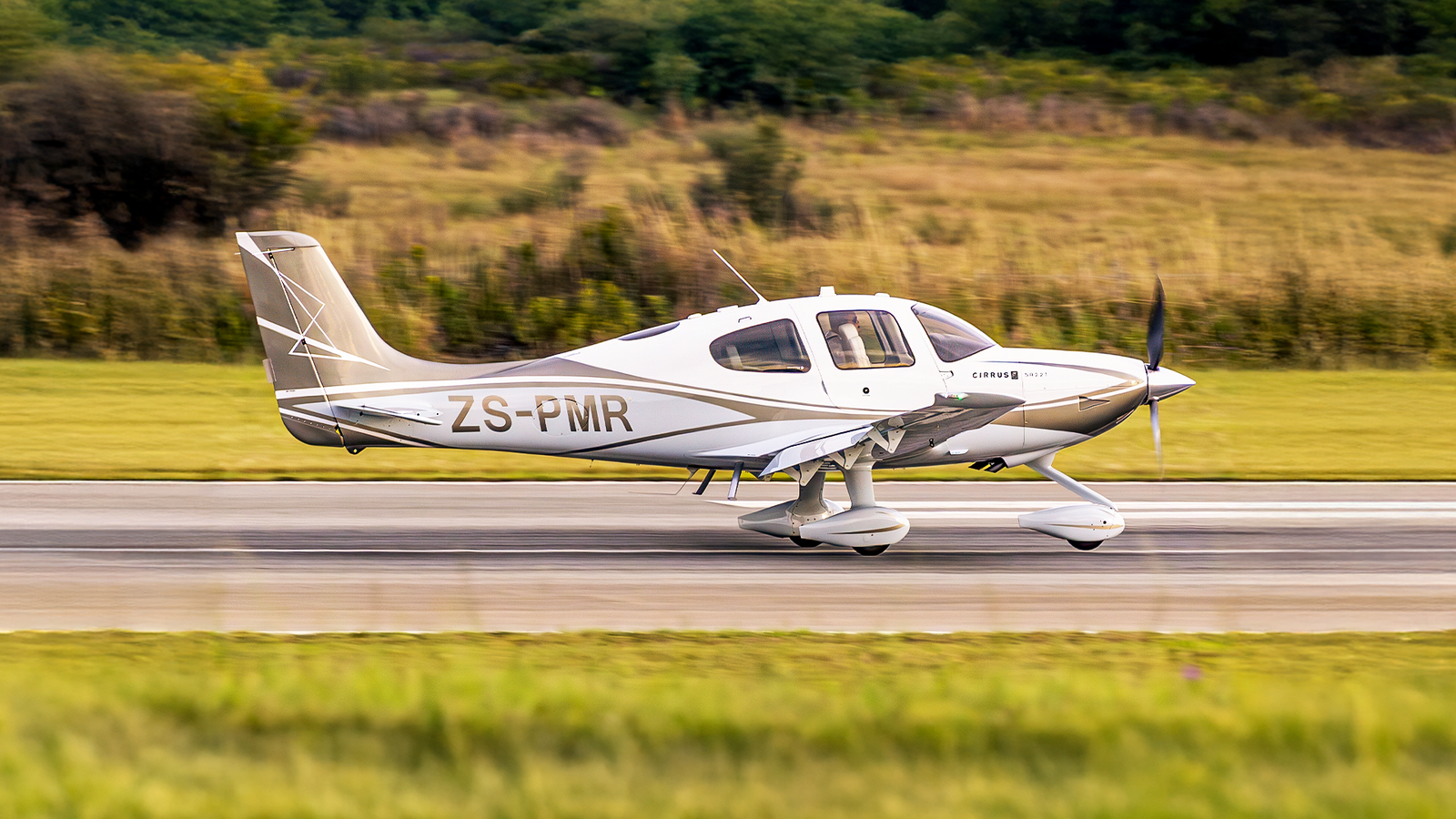
Published Nov 29, 2026, 12:00 PM EST Luke Diaz is a freelance military writer with experience with active duty experience in the US Navy as well as defense and industrial engineering. He is a former Naval Flight Officer who performed tactical air control on the carrier-based E-2 Hawkeye. The Cirrus SR22 has taken general aviation to new heights of performance and safety since it was introduced in 2001 as a successor to its previous SR20 design. The newer variant of the single-engine propeller plane features some of the best technology in its market segment, which has made it one of the most popular planes in the US for private flyers. Sales have reflected that with Cirrus delivering 691 SR Series airplanes in 2025. The company says the family has been the best-selling high-performance single-engine piston aircraft for 24 years in a row, since the SR22's launch, Flying Magazine reported. Top among the qualities that have made the plane so popular are the all-composite airframe and the Cirrus Airframe Parachute System. It was also the first light aircraft to be factory-equipped with a full glass cockpit. As of September, the CAPS system documented 152 saved planes, according to the Cirrus Owners and Pilots Association. It preserved the lives of 305 survivors across the SR20, SR22, and Vision Jet fleets, proving the value and reliability of whole-plane ballistic recovery systems. Yet it doesn't take a crisis to feel the difference from the cockpit between the plane's class-leading cross-country performance thanks to its high cruising speed, automated navigation features, and commercial airliner-style flight deck. How Cirrus' Composite Construction Changed The Game Credit: Cirrus The SR22 was a clean sheet design, but more than that, it broke away from decades of sheet metal manufacturing that dominated the airframes found in the GA community. Prior to its arrival, the market was dominated by riveted aluminum designs from the 1970s and 1980s. Cirrus uses molded fiberglass and carbon fiber to achieve aerodynamics and structural strength that is drastically superior to the legacy rivals of the SR22. Traditional aluminum airplanes require thousands of rivets, lap joints, and seams, all of which create parasitic aerodynamic drag. The composite construction of the SR22 enabled a completely seamless, rivet-free exterior. Molding the fuselage out of composites allowed the cabin to be built wide, tall, and spacious, explicitly mirroring luxury automotive design. Additionally, the composite matrix delivers exceptional strength-to-weight ratios. This 21st-century manufacturing process and material choice not only improves the performance of the plane, which is what makes it possible for the CAPS system to be seamlessly integrated on the assembly line. The plane's airframe is purpose-built for its emergency backup chute, instead of trying to retroactively structuralize an existing metal frame to withstand the violent forces of a rocket-deployed deployment. The Cockpit That Sent Rival Makers Scrambling To Catch Up Cirrus used the Avidyne Entegra display for the SR22's main flight information. Before that, the technology had appeared only in airliners and multi-engine aircraft, or as separate components added piece by piece. In 2003, the plane became the first single-engine piston airplane certified by the Federal Aviation Administration with a glass panel, according to the Smithsonian. In a legacy GA plane's cockpit, a pilot had to look at one instrument for airspeed, another for altitude, and a third for the artificial horizon, manually building a mental model of the flight path. The Avidyne Entegra Primary Flight Display fused all of these critical parameters into a single cohesive visual interface. Meanwhile, the Multi-Function Display superimposes the aircraft’s real-time GPS position over an electronic moving map; it fundamentally eliminates the high-workload process of manual navigation using paper charts and radio beacons. Specification Cirrus SR22 Cessna 172S Skyhawk Engine Power 310 horsepower (231 kW) 180 horsepower (134 kW) Cruise Speed 183 knots (339 km/h) 124 knots (230 km/h) Maximum Takeoff Weight 3,600 lb (1,633 kg) 2,550 lb (1,157 kg) Service Ceiling 17,500 feet (5,334 meters) 14,000 feet (4,267 meters) Takeoff Distance Over 50 Foot Obstacle 1,868 feet (569 meters) 1,630 feet (497 meters) The SR22 also has high-resolution NEXRAD radar that can detect storm cells and receives regional updates over data link, so pilots can proactively navigate around severe turbulence and convective weather. The plane's traffic alert systems provide real-time data from nearby transponders, visually warning pilots of conflicting aircraft, vastly improving safety after searching the sky blindly. Additionally, its color-coded topographical maps highlighted dangerous peaks and obstacles, mitigating the risk of controlled flight into terrain at night or on low-visibility flights. Flying magazine explained that the large electronic displays had been normal in jets for years at that point, but the cost made them impractical for piston airplanes until Avidyne and Cirrus broke the price barrier. Those electronic instruments replace mechanical ones with computers that have no moving parts, which improves reliability as well as making them easier to use. Cirrus also gave the flight display redundant electrical power and kept conventional backup instruments for attitude, altitude, and airspeed. Autoland Gives Passengers Peace Of Mind Credit: Cirrus The Safe Return emergency autoland system on the Cirrus G7+ platform provides an absolute safety net for the ultimate general aviation nightmare: complete pilot incapacitation due to a medical emergency like hypoxia. While the capsule parachute system can safely lower the entire plane under a canopy, it may still total the airframe on impact if the touchdown is too rough. Autoland instead ensures a controlled, precise return to a hard-surfaced runway with local emergency crews already dispatched and waiting. For a non-pilot passenger, sudden pilot incapacitation historically meant a near-certain fatal crash. Autoland completely removes the need for a passenger to know how to fly, navigate, or talk to air traffic control. With a single press of the overhead emergency button, the system reconfigures the cockpit screens to display simplified passenger updates, cross-references real-time weather and terrain data to select the optimal nearby airport, and flies a precise autonomous approach profile down to a smooth touchdown. The system manages the entire arrival by controlling the flight surfaces, lowering the landing gear, and applying the physical brakes to bring the airplane to a complete stop on the runway centerline. Simultaneously, it broadcasts automated digital voice messages to air traffic controllers to ensure emergency vehicles meet the aircraft. For the pilot, it serves as an exceptional fail-safe layer, featuring automated activation if the computer detects that the pilot has become completely unresponsive due to high-altitude oxygen deprivation. Importantly, this technology can also safely recover the multi-million-dollar plane. Operating in integration with Garmin avionics, the system maintains strict pilot-in-command authority through a simple fail-safe mechanism. If a passenger accidentally triggers the overhead button, the pilot can instantly override and disengage the entire autonomous protocol by pressing the standard autopilot disconnect button on the yoke, delivering reliable and intuitive multi-layered safety. The Parachute That Inspired An Airframe Credit: Cirrus CAPS introduced a completely new paradigm to general aviation safety by offering a built-in second chance during historically fatal scenarios. Before Cirrus pioneered standard ballistic extraction systems in light aircraft, emergencies like midair collisions or total pilot incapacitation left occupants with virtually zero options. CAPS redefined the entire safety culture of private flying by treating the composite aircraft itself as a survivable capsule, proving that mechanical innovation could overcome catastrophic aerodynamic failures. Traditional training focused on gliding an airplane toward a field if an engine quit, but legacy designs offered no protection if a pilot encountered a scenario where gliding was impossible. CAPS changed this by providing a reliable resolution for extreme emergencies like midair impacts that shred a wing or destroy flight controls. It also stabilizes unrecoverable spirals caused by spatial disorientation in zero-visibility weather and cushions vertical descents over inhospitable terrain like jagged mountains or urban metropolitan areas. Unlike aftermarket kits, CAPS was integrated into the initial composite engineering phase of the SR series airframe. Pulling the overhead handle fires a solid-fuel rocket that deploys a massive canopy suspended by ultra-strong Kevlar straps embedded in the fuselage. To protect occupants upon ground impact, the landing gear legs, a specialized crushable cabin floor matrix, and internal energy-absorbing seats work in unison to dissipate vertical kinetic energy, ensuring impact forces stay within survivable human limits. Overcoming Doubts To Make GA Pilots Safer Credit: Cirrus Even with all the promise of the CAPS system, the path to making the Cirrus SR22 the world's most popular single-engine piston aircraft was fiercely resisted. In the early 2000s, the general aviation community was deeply traditional, and introducing a whole-plane ballistic parachute system triggered skepticism, mockery, and even a safety crisis before Cirrus successfully turned the tide. The system initially faced fierce skepticism from legacy purists who viewed the parachute as a crutch for poor piloting skills. Over time, real-world survival metrics silenced critics; by May 2026, CAPS achieved 148 documented saves and 297 survivors. This stellar track record created a massive psychological shift among consumers, transforming the Cirrus brand into a premium market leaderby alleviating safety anxieties and fundamentally altering aircraft resale economics across the second-hand market. Critics labeled the system a crutch for subpar pilots who lacked traditional spin-recovery skills, arguing it would encourage dangerous complacency among inexperienced buyers. Furthermore, rumors circulated that the unique composite airframe only included the parachute because it could not pass standard FAA spin-recovery certifications. In response, Cirrus launched an aggressive cultural overhaul through its specialized Cirrus Approach training curriculum. The strategy worked. As of this September, CAPS has officially achieved 152 documented saves, cementing the SR22 as modern piston aviation's undisputed safety leader as well as its top performance choice and technology powerhouse.
How The Best-Selling Piston Plane Changed Private Flying
Full Article
Original Source
Read the full article at Simpleflying →KhanList aggregates and links to publicly available news content. We do not host full articles from third-party sources. Always verify important information with original sources.