
Credit: Bluebearwing | Shutterstock, Simple Flying Published Nov 18, 2026, 5:00 PM EST Chris earned a Master’s degree in Defense and Strategic Studies (Highest Honors) from the University of Texas at El Paso. His graduate work concentrated on Global and National Security, Low-Intensity Conflict, Modern Warfare, and US grand strategy. He also undertook extensive regional studies, analyzing how key regions integrate into the broader US security architecture. This rigorous program provided him with a comprehensive understanding of U.S. military operations, global strategy, and weapons systems. Additionally, he gained a strong appreciation for great power competition.—an increasingly central force shaping international relations and conflict for the foreseeable future. Sign in to your Simple Flying account The United States Air Force is exploring a concept that could fundamentally change how it generates long-range strike capabilities by turning conventional cargo aircraft into formidable missile-launching platforms. Known initially as Rapid Dragon and now progressing under the Dragon Cart initiative, the program uses specially configured pallets to deploy multiple air-launched cruise missiles from aircraft such as the Lockheed Martin C-130J Super Hercules and Boeing C-17 Globemaster III. Rather than developing entirely new combat aircraft, the concept leverages the existing air mobility fleet to provide commanders with additional precision-strike capacity. With growing demand for affordable, mass-produced munitions and the need to expand the US military's weapons stockpile, this approach could give the Air Force a significant advantage in future high-intensity conflicts. "Rapid Dragon": Could A Cargo Aircraft Become a Precision Strike Aircraft? Credit: US Air Force In 2019, the Air Force Research Laboratory (AFRL) initiated experiments that could, if successful, transform conventional transport aircraft such as the C-17 and C-130 into dual-use aircraft with immense firepower. Once deployed, these cargo haulers will be able to carry significant numbers of rapidly producible cruise missiles and saturate a battlespace, augmenting strike aircraft and heavy bombers. The AFRL noted that the program has brought together more than "30 stakeholders, including Air Force Major Commands, the Test and Evaluation Enterprise, Program Offices, Mission Planners, other Services, Foreign Partners & Allies, and Industry to develop and demonstrate the capability through modeling, simulation, analysis, demonstration, and flight tests." The project began as Rapid Dragon and is now known as Dragon Cart. The project tested the possibility of loading palletized munitions, such as JASSM-ER cruise missiles, into C-130s and C-17s. Air & Space Forces Magazine states that the "Rapid Dragon program performed several tests on the C-130 and C-17, including a live-fire test at Eglin Air Force Base, Florida, in December 2021." AFRL has also stated that Rapid Dragon has employed the palletized munitions concept on three separate continents, including the EUCOM and INDOPACOM theaters. According to CENTCOM Citadel, a C-130J Super Hercules can carry two pallets, each containing six missile tubes, enabling the aircraft to deploy up to 12 air-launched cruise missiles. Meanwhile, the C-17 Globemaster III, with a maximum payload capacity of 170,900 lb (77,519 kg), could theoretically accommodate five nine-missile pallets carrying up to 45 JASSMs. This substantial weapons payload could temporarily transform the cargo aircraft into a formidable standoff strike platform. The Need For "Affordable Mass" Credit: Anduril As demonstrated by Operation Epic Fury, during which US strike aircraft deployed approximately 1,100 JASSMs, from an estimated inventory of 4,400, the need for affordable mass in this category of munitions has become increasingly apparent. Further, the ability to deploy these weapons flexibly would allow US commanders to strike targets without placing additional demands on bomber, fighter, and strike aircraft crews. Due to the need for an expanded stockpile of missiles, particularly more affordable varieties, Dragon Cart dovetails with the Air Force's investment in its Family of Affordable Mass Missiles (FAMM) program. This initiative is designed to expand the service's munitions stockpile with comparatively inexpensive, less exquisite air-to-ground missiles. To this point, Air&Space Forces Magazine reports that just last July, the "Pentagon announced framework agreements for multiyear deals with three companies to produce and develop two versions of FAMM weapons—FAMM-Lugged, for fighter aircraft, and FAMM-Palletized, for airlifters." As part of this plan, the Air Force has requested $355 million in its FY2027 budget to procure 1,000 weapons under the broader FAMM program. Its five-year budget projections call for the purchase of 28,000 missiles for $12.6 billion, as detailed by Defence Industry Europe. The massive buildup of precision missiles will be supported by companies such as Anduril, whose Barracuda cruise missile recently received certification as the Air Force's first large-scale production munition compliant with open systems architecture. This certification provides a clear path forward for the new weapon, which offers commanders greater flexibility, as technicians can swap out payloads and reconfigure other features depending on mission requirements. Under the FAMM program, Air&Space Forces Magazine states that "Anduril, CoAspire, and Zone 5 Technologies were selected. The agreements call for the three companies to produce 8,000 missiles annually once production ramps up. That timeline targets 5,300 missiles in 2028, rising to 8,000 by 2031." Anduril is slated to deliver its first Barracuda missiles to the Pentagon in early 2027. Dragon Cart Is Coming To A Theater Near You Credit: US Air National Guard With the missiles getting ever closer to delivery and the capability already within the Air Force's grasp, the service is planning to field this new weapon system in 2027, according to Defence Blog. Regarding the impending deployment of the missile delivery system, General Kenneth S. Wilsbach, US Air Force Chief of Staff, stated: “As you might gather, capabilities like FAMM-P blur the distinction between our combat air forces and mobility air force mission sets. That’s a cultural shift we need to be prepared for, and I need every mobility Airman in the room to embrace that change.” Regarding this blurring of the line between combat and air mobility, this new weapons capability could potentially turn suitably equipped C-130s and C-17s into platforms capable of striking targets across a given theater. Between its active-duty, Air National Guard, and Reserve units, the Air Force operates 428 C-130s and 222 C-17s. That's a substantial number of potential missile-launching platforms. Another consideration is that any adversary will now have to devote resources and plan for the possibility that cargo aircraft operating in the area could be carrying a devastating payload of cruise missiles, placing high-value targets under potential threat. C-130J Production Variants Mission Type C-130J Manufactured with a longer fuselage, C-130J-30 for combat delivery KC-130J Aerial and ground refueling MC-130J Special Operations; aerial and ground refueling (US Air Force-only variant) HC-130J Search and rescue support missions; aerial and ground refueling (US Air Force-only variant) HC-130J Search and rescue/maritime support missions (US Coast Guard–only variant) LM-100J Civil-certified multipurpose air freighter If the aircraft are called upon to strike hostile military sites, the missile pallets are loaded like standard cargo through the aircraft's Cargo Handling System and secured in place using pallet locks and a restraint system. Once over the designated launch area, the crew pushes the pallet or pallets out through the rear cargo door, much like any other airdropped load. Once clear of the aircraft, the pallet deploys a parachute, allowing the missiles to be released into the air. Their engines then activate, and the missiles maneuver toward their designated targets. One of the program's greatest advantages is that, during contingency operations or high-intensity conflicts, the Air Force could support ground operations and provide substantial follow-on strikes without placing additional demands on its dedicated strike aircraft and heavy bomber crews. Further, using cargo aircraft as precision-strike platforms could provide commanders with highly accurate firepower against multiple targets, offering considerable value in support of ground operations. The Challenges Of Turning Cargo Aircraft Into Bombers Credit: US Air Force Despite the advantages of converting transport aircraft into missile-launching platforms, the concept is not without operational challenges. The C-130J Super Hercules and C-17 Globemaster III were designed primarily for air mobility, not penetrating heavily defended airspace. Consequently, these aircraft would need to operate at considerable standoff distances from hostile air defense systems, relying on the extended range of their cruise missiles to engage targets without entering contested airspace. This places greater importance on missile range, accuracy, and mission planning. Further, deploying palletized munitions requires coordination between aircraft crews, mission planners, intelligence personnel, and weapons operators. Although the Cargo Handling System allows missile pallets to be loaded using conventional cargo procedures, aircraft must accommodate specialized release equipment, parachute deployment, and systems to coordinate missile launches. Additionally, cargo aircraft assigned to strike missions would temporarily be unavailable for traditional responsibilities, potentially placing additional demands on an already heavily tasked air mobility fleet. Another consideration is the availability of suitable weapons and the ability to integrate different missile systems across multiple aircraft platforms. Rapid Dragon and the broader Dragon Cart initiative aim to make this process more flexible through palletized configurations and modular weapons architectures. However, individual aircraft and missile combinations still require testing, integration, and operational certification. The Air Force also has to ensure sufficient missile inventories are available to support conventional strike operations and expanded palletized weapons deployment. These considerations will determine how effectively the concept transitions from experimental demonstrations into a dependable component of US long-range strike capabilities. A New Role For America's Cargo Aircraft Credit: US Air Force The Rapid Dragon concept represents a significant shift in how the US Air Force could generate and deploy long-range strike capabilities. By adapting existing cargo aircraft to launch palletized cruise missiles, the service could substantially expand its available weapons-delivery platforms without relying exclusively on traditional bombers and fighter aircraft. The transition toward Dragon Cart, alongside the development of affordable, mass-produced munitions such as Anduril's Barracuda, further demonstrates the growing importance of flexible weapons deployment. Although operational challenges involving aircraft availability, weapons integration, and survivability remain, the potential benefits are considerable. With hundreds of C-130s and C-17s across its active-duty, Air National Guard, and Reserve fleets, the Air Force has a substantial transportation infrastructure that could serve an additional combat role. Ultimately, Dragon Cart could reshape how the US generates strike capacity in future conflicts.
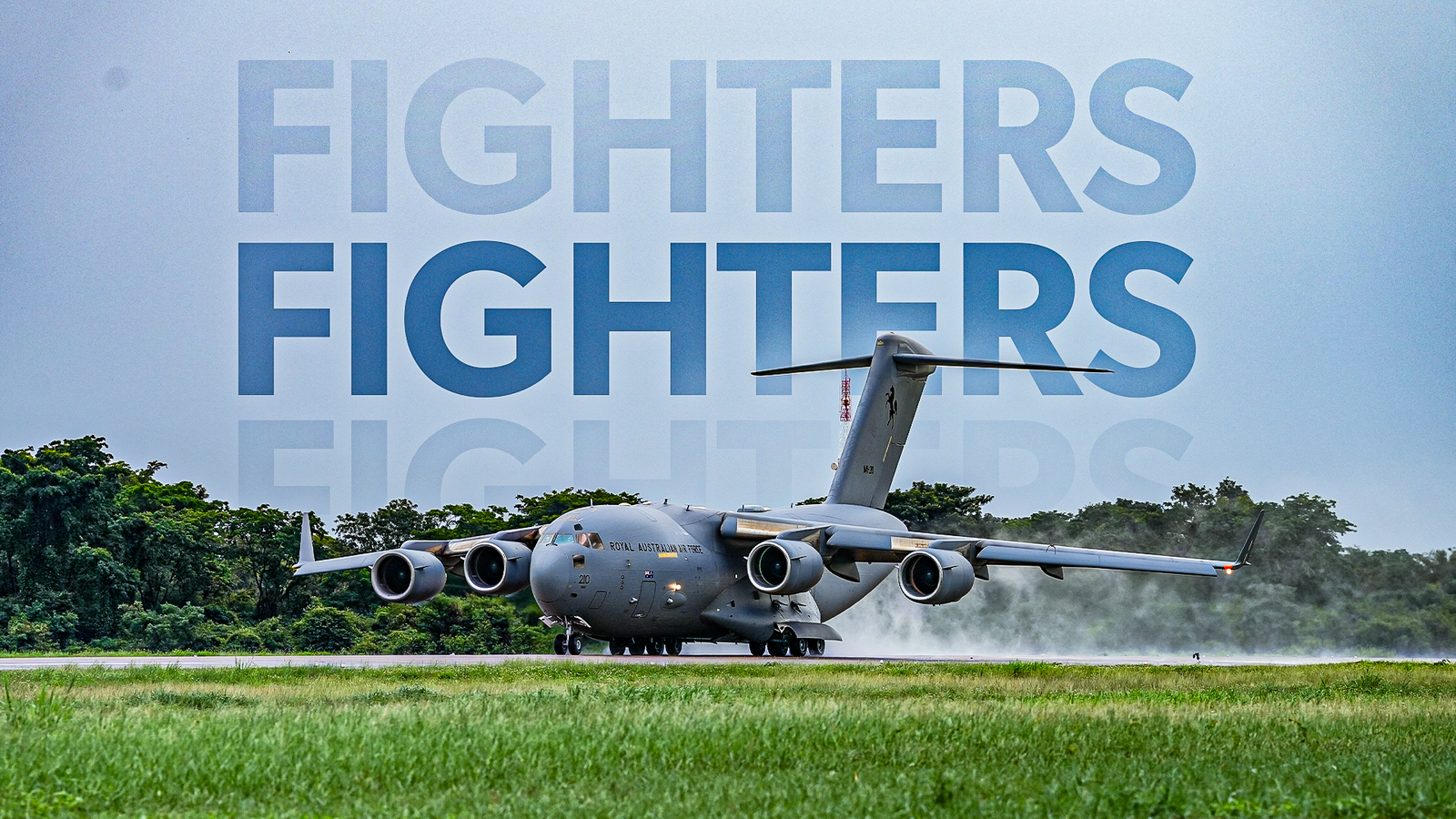
The New Changes That Could Make The US Air Force's C-17 Globemasters Become Fighters Instead Of Transport Aircraft
Full Article
Original Source
Read the full article at Simpleflying →KhanList aggregates and links to publicly available news content. We do not host full articles from third-party sources. Always verify important information with original sources.