
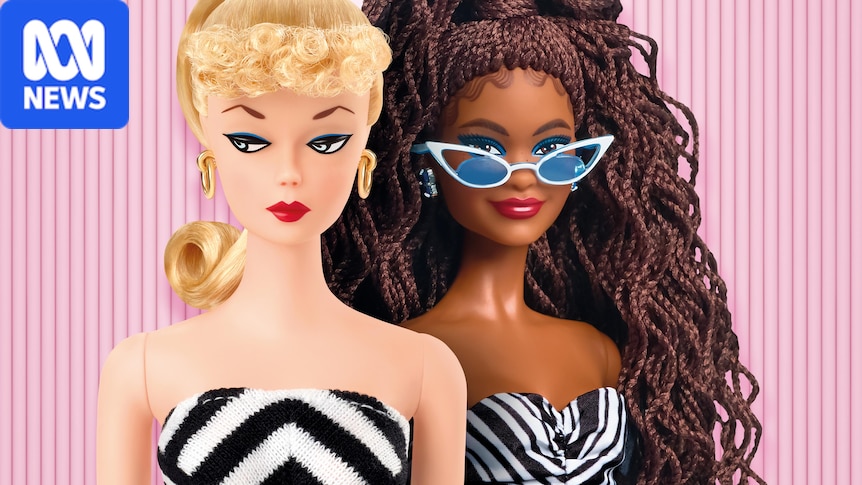
In a society obsessed with anti-aging, has Barbie found the elixir of eternal youth? Or dare we ask, might the plastic-fantastic doll have dabbled in a little, er, Botox?"I mean, she's looking good for 67, I will say that. And that's all I'll say on that," wryly notes Danielle Thom, who curated Barbie: The Exhibition for London's Design Museum.The exhibition will open at Melbourne Museum on state election day, with Barbie's many eras (not to mention faces) celebrated and psychoanalysed for Australian enthusiasts.Nostalgia turned up: Melbourne Museum's Barbie exhibition will cover the history of the doll. (Supplied: Jo Underhill for the Design Musuem)Its Australian debut will feature more than 250 objects, including 150 dolls, houses, vehicles, fashion and friends. And of course, Barbie's on-again, off-again male accessory, Ken.Australia can lay claim to producing the world's most famous Barbie in human form, Margot Robbie.But Melbourne curator Michael Reason says there will also be a few surprise Barbies in the local exhibition, including one-off versions of the doll created to immortalise tennis stars Evonne Goolagong Cawley and Ash Barty for International Women's Day last year."And there will also be the doll who represents, shall we say, a Melbourne icon who's been kicking (AFL grand final) goals recently," he says.As with the London exhibition, a first edition Barbie from 1959, which Reason describes as "very elegant", is set to be a show stopper."She has lovely painted eyes and she came in a black and white sort of zebra style one-piece swimsuit," he says.How Barbie and pink came to be synonymousThe exhibition tracks the history and design of the world-famous doll, and explores the enduring influence of Barbie as a brand, which Danielle Thom describes as "one of the most successful branding exercises of the 20th and 21st centuries".Margot Robbie, star and producer of Barbie, has downplayed chatter of the film's Oscars snubs. (Courtesy Warner Bros)Part of that, she believes, is the way in which the company behind Barbie managed to build up such a culturally entrenched relationship between Barbie and the colour pink.Thom says this was a conscious decision by Mattel at the end of the 1970s."Prior to that, Barbie wasn't really associated with a specific colour. The packaging designs varied for each doll — there was no kind of signature Barbie look; it was very varied."Thom says that at that time, Mattel redesigned Barbie with a face that anyone who played with the dolls in the 80s or 90s will remember, kicking off with Superstar Barbie."She came out with a pink disco dress and a pink box, and from then on there was this deliberate shift so that everything was consistently pink — all the packaging, all the accessories."If you visited a toy megastore of that era, like Toys 'R' Us, or a big department store, Barbie stood out in wall-to-wall rows of pink boxes.The exhibition includes the very first Barbie Dreamhouse from 1962. (Supplied: Jo Underhill for Design Museum)"Everything else is crowded out. It's very clever in a retail environment," says Thom.Barbie as a cipher for historyThom says Barbie, in her many forms, has always echoed our own mainstream tastes. Barbie is progressive — she was an astronaut four years before Neil Armstrong's 1969 moonwalk — but not too progressive.Her cars, clothes and homes, including a rare first edition Barbie Dream House from 1962 featured in the exhibition, also reflect her somewhat feminist credentials."It's cardboard. It folds out and sort of slots together, but it's effectively a studio apartment for a young single woman," says Thom.There's a single bed and, gasp, no kitchen."There's a TV and a wardrobe, and there's a framed picture of Ken on the wall. But there's no sign that Ken actually lives there," says Thom.She believes hitting the sweet spot in the trend cycle has been key to the brand's longevity."If you think about it, how many other toys or toy brands can you name that have been consistently around for that long? The only other one I can think of is Lego."Thom says Barbie can't be behind the trends, or too far ahead of the curve, as neither are desirable to children."The history of Barbie is kind of a history of our own mainstream taste in miniature. That's like the thesis of the exhibition."Feminists versus BarbieIn London, Barbie was the Design Museum's fourth most popular exhibition ever, with about 144,000 visitors, including many first-timers.The show was created by London's Design Museum in partnership with toy company Mattel. (Supplied: Jo Underhill for the Design Museum)Michael Reason hopes the story of Barbie's evolution will also draw in people of all ages who may not usually visit the Melbourne Museum.He's sure that will include many people who weren't allowed to own one of the longed-for dolls in their own childhoods, perhaps because they were boys, or their mothers were strong feminists."At the time they [many feminists] saw Barbie as representing everything they didn't like," says Reason."I do know there's a lot of women of a certain age who'll be coming to make up for that thing missing from their childhood."Barbie: The Exhibition runs at Melbourne Museum from November 28 until May 16.
The many faces and fashions of Barbie star in new Melbourne exhibition
Full Article
Original Source
Read the full article at Abc →KhanList aggregates and links to publicly available news content. We do not host full articles from third-party sources. Always verify important information with original sources.