
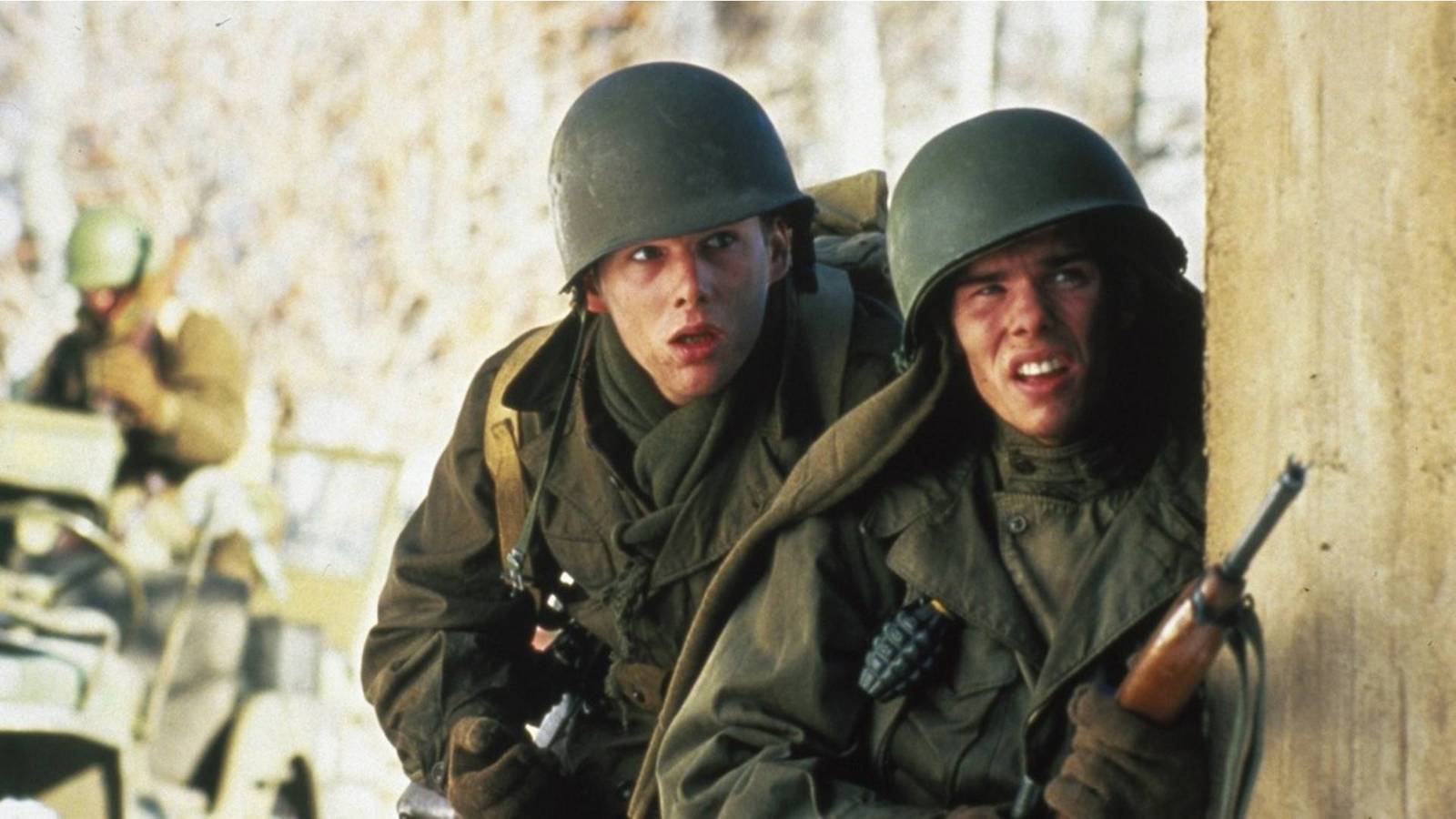
Published Nov 26, 2026, 2:03 PM EST Senior Music Editor at Screen Rant, Sarah's love of sound and story drive the beat. A globetrotting brand whisperer and award-winning journalist, she’s built cross-cultural narratives around the world—but music has always been her true north. She launched DJ Mag North America, successfully introducing the iconic UK brand to the U.S. market. Previously, she carved a space for EDM inside the pages of VIBE, blending electronic and hip-hop culture long before it was trendy. World War II has inspired some of the most celebrated films ever made. Saving Private Ryan, Schindler's List, and Dunkirk have become fixtures of the genre, frequently appearing in discussions about the greatest war movies of all time. Yet their enormous reputations can overshadow equally accomplished films that rarely receive the same attention. The Second World War also produced an extraordinary range of cinematic perspectives. Not every filmmaker approached the conflict through enormous battles or heroic military campaigns. Some focused on people trapped behind enemy lines, while others examined the choices made by ordinary civilians whose lives were destroyed by circumstances beyond their control. The best World War II movies to watch after Band of Brothers demonstrate how effectively the genre can portray combat and camaraderie. However, some of its most revealing stories unfold far from recognizable battlefields. A handful even challenge the conventional distinction between heroism and survival. Many of these lesser-known productions received considerable critical acclaim upon release, while others were rediscovered decades later. Their absence from mainstream conversations has little to do with their artistic merits. In some cases, limited theatrical distribution and changing audience tastes simply allowed them to disappear beneath more commercially successful productions. These six near-perfect World War II movies deserve renewed attention for their exceptional filmmaking, compelling characters, and distinctive approaches to the conflict. They may lack the name recognition of Hollywood's biggest war epics, but their achievements belong in the same conversation as the greatest war movies of the 20th century. A Midnight Clear (1992) Keith Gordon's A Midnight Clear is one of those movies that makes its relative obscurity particularly frustrating. Set in December 1944, the film follows a small group of American intelligence soldiers stationed in the snowy Ardennes forest. Ethan Hawke leads an impressive young ensemble that also includes Gary Sinise, Frank Whaley, and Peter Berg. Their mission takes an unexpected turn when they encounter German soldiers who appear considerably more interested in surrendering than fighting. Rather than building toward another enormous confrontation, Gordon creates tension through the possibility of avoiding one. The Americans and Germans attempt to arrange a peaceful surrender, but their fragile understanding becomes increasingly complicated. Adapted from William Wharton's novel, the story finds genuine humanity in soldiers who have grown weary of killing people they barely understand. The performances are wonderfully restrained, while the beautiful winter cinematography gives the film an atmosphere that feels almost otherworldly. Roger Ebert praised the film's haunting atmosphere, although he considered some of its symbolism overly deliberate. That minor reservation hardly diminishes a remarkable antiwar drama that received far less attention than it deserved. A Midnight Clear understands that the most devastating wartime tragedies can arise from moments when people are desperately trying to do the right thing. The Train (1964) A World War II thriller starring Burt Lancaster, directed by John Frankenheimer, and featuring enormous practical-action sequences involving actual locomotives sounds like a movie that should be far more famous. Yet The Train rarely receives the recognition afforded to the director's other major achievements. Set during the final stages of the German occupation of France, it follows railway inspector Paul Labiche (Lancaster), who becomes involved in an elaborate effort to prevent a Nazi officer from transporting stolen French artworks to Germany. Frankenheimer turns the seemingly straightforward mission into a superbly constructed thriller, using the railway system itself as an essential part of the suspense. Lancaster gives an impressively physical performance, while Paul Scofield makes Colonel von Waldheim a formidable antagonist. The action sequences are spectacular, particularly considering how much was accomplished without modern visual effects. However, the film's real strength lies in its increasingly uncomfortable central question: how many lives should be sacrificed to preserve works of art? Rather than offering an easy answer, The Train allows that question to become more troubling as the casualties accumulate. Lancaster's character gradually recognizes that his mission carries consequences far beyond its apparent objective. Frankenheimer combines intelligent storytelling with exceptional practical filmmaking, producing a war thriller that remains thrilling more than six decades later. Its relative absence from modern discussions of the genre is difficult to justify. The Cranes Are Flying (1957) Mikhail Kalatozov's The Cranes Are Flying won the Palme d'Or at the 1958 Cannes Film Festival, yet the Soviet drama remains unfamiliar to many contemporary moviegoers. Set against the devastation of World War II, it follows Veronika (Tatiana Samoilova), whose relationship with Boris (Aleksey Batalov) is torn apart when he volunteers for military service. As the conflict continues, Veronika faces increasingly difficult circumstances that challenge the conventions of traditional wartime romance. What distinguishes the film is its remarkable cinematography. Sergei Urusevsky's camera moves with extraordinary freedom, capturing emotional turmoil through ambitious tracking shots and expressive compositions. A particularly memorable sequence follows Boris as he prepares to leave for the front, creating a sense of urgency that conventional dialogue could never adequately communicate. Samoilova's performance is equally powerful, allowing Veronika's grief and isolation to emerge without excessive sentimentality. At a time when Soviet war cinema frequently emphasized patriotic sacrifice, The Cranes Are Flying offered a more intimate perspective on the conflict's consequences. Its characters are vulnerable and imperfect, and their suffering cannot be reduced to an inspirational story about national triumph. The film's technical innovation remains astonishing, but its emotional honesty is what makes it such an enduring achievement. The Counterfeiters (2007) Few World War II movies examine the moral compromises of survival as effectively as Stefan Ruzowitzky's The Counterfeiters. Inspired by the Nazi operation to produce counterfeit foreign currency during the war, the Austrian drama follows Salomon Sorowitsch (Karl Markovics), a talented Jewish forger imprisoned in a concentration camp. His expertise makes him valuable to his captors, who transfer him to a specialized operation designed to undermine the Allied economies. Sorowitsch and his fellow prisoners receive comparatively better treatment because their work benefits the Nazis. That privilege creates a terrible dilemma. Cooperating may prolong their lives, but every successful counterfeit note contributes to the German war effort. Some prisoners become increasingly determined to sabotage the operation, while others recognize that resistance could mean immediate execution. Ruzowitzky refuses to simplify the situation into a reassuring story about uncompromising moral courage. The film won the Academy Award for Best Foreign Language Film, an impressive achievement for a production that has subsequently received relatively little mainstream attention. Markovics gives an extraordinary performance, portraying a man whose determination to survive becomes increasingly difficult to separate from his conscience. The Counterfeiters succeeds because it understands how meaningless conventional judgments can become under circumstances of systematic brutality. Its restrained approach makes the story considerably more unsettling than a more sensational treatment might have been. The Bridge (1959) Bernhard Wicki's The Bridge presents one of the most devastating examinations of youthful patriotism ever committed to film. Set during the final days of World War II, the German drama follows a group of teenage boys drafted into military service as Allied forces approach their hometown. Their assignment is to defend a strategically unimportant bridge, a mission that gradually reveals the grotesque futility of their government's determination to continue fighting. The boys initially approach their military responsibilities with a mixture of enthusiasm and youthful bravado. They're desperate to prove themselves, having absorbed years of nationalist propaganda that presents sacrifice as the ultimate expression of courage. Wicki dismantles those beliefs with devastating precision. As the reality of combat becomes unavoidable, their romantic understanding of military service collapses, leaving frightened children attempting to fulfill an increasingly meaningless obligation. The Bridge received an Academy Award nomination for Best Foreign Language Film and remains an essential example of postwar German cinema. Its emotional impact comes from watching the boys gradually discover that the heroic ideals they've been taught offer no protection from the consequences of war. It belongs alongside the most hopeless war movies ever made, although its relatively restrained storytelling makes the tragedy especially difficult to shake. Few films have so effectively exposed the cruelty of sending children to fight a war that has already been lost. Army Of Shadows (1969) Jean-Pierre Melville's Army of Shadows may be the most extraordinary forgotten masterpiece on this list, particularly because American audiences were denied a proper theatrical release until 2006. Originally released in France in 1969, the film follows members of the French Resistance attempting to survive under Nazi occupation. Lino Ventura plays Philippe Gerbier, a committed resistance operative whose increasingly dangerous activities expose him to betrayal, capture, and the constant possibility of execution. Melville approaches the material with the precision of a crime thriller, emphasizing secrecy, suspicion, and the terrible consequences of misplaced trust. The resistance fighters rarely enjoy conventional moments of triumph. Their victories are temporary, their relationships are strained, and even seemingly successful operations carry devastating personal costs. Simone Signoret is particularly compelling as Mathilde, a resourceful operative whose courage becomes increasingly difficult to separate from the dangers surrounding her. When the film finally reached American theaters, it received extraordinary critical acclaim, with several prominent critics recognizing it among the year's finest releases. Roger Ebert subsequently included it in his Great Movies series. Its reputation now places it alongside war films that can challenge even Apocalypse Now for artistic achievement, despite its comparatively limited mainstream recognition. What makes Army of Shadows so exceptional is its refusal to romanticize resistance. Melville, who had personal experience in the French Resistance, understood that courage rarely guarantees survival and that loyalty can demand unbearable sacrifices. The result is a quietly devastating portrait of people fighting an overwhelming enemy while knowing that history may never remember their individual contributions. Release Date September 10, 1969 Cast Lino Ventura Philippe Gerbier Jean-Pierre Cassel Jean-François Jardie Runtime 145 minutes Director Jean-Pierre Melville Writers Jean-Pierre Melville, Joseph Kessel Producers Jacques Dorfmann
6 Near-Perfect World War 2 Movies That Nobody Remembers Today
Full Article
Original Source
Read the full article at Screenrant →KhanList aggregates and links to publicly available news content. We do not host full articles from third-party sources. Always verify important information with original sources.