
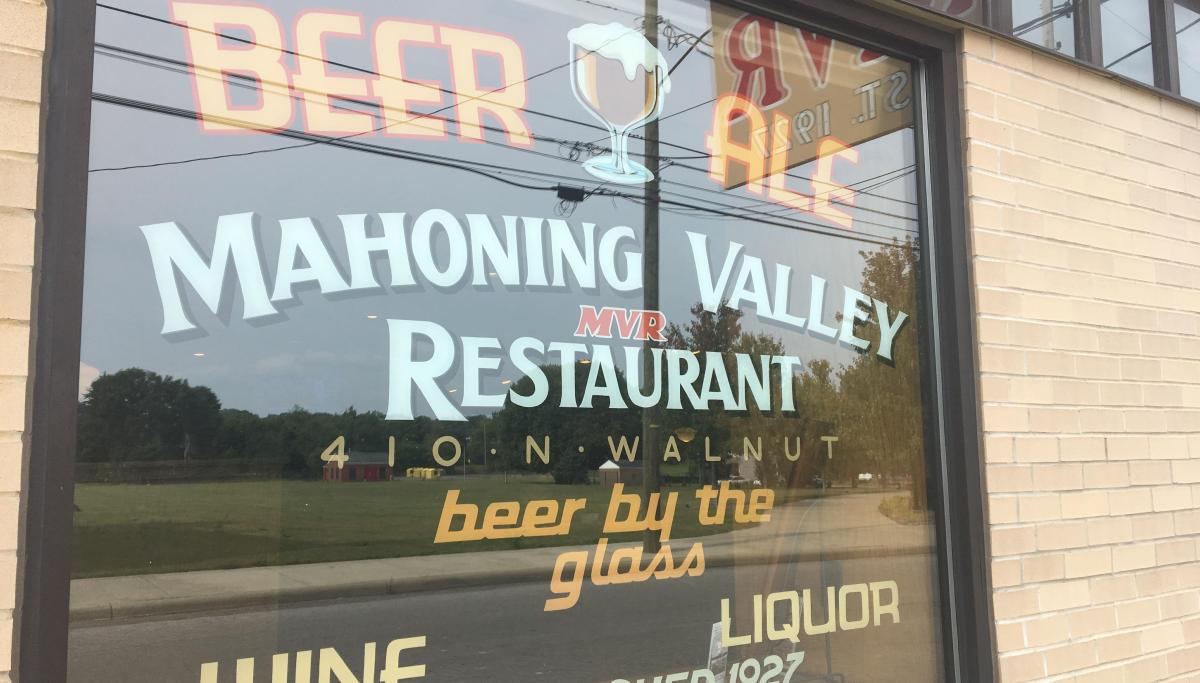
On Tuesday, the valley said it again. This time, it was talking to Republicans. Amy Acton, the Democrat elected governor Tuesday, did even better, taking Mahoning by 12 points and Trumbull by 7 over Vivek Ramaswamy, those same results show.Brown defeated Husted statewide in a race that the Associated Press called shortly after 11 p.m. He becomes the seventh former U.S. senator since 1946 to lose his seat and later return to the chamber.Two years ago, Brown was politically finished. Now he is the senator-elect from Ohio, and the steel towns that buried him are the ones that dug him back out.To understand what happened Tuesday, you have to understand what started here a decade ago.The Mahoning Valley — Mahoning, Trumbull, Stark and Columbiana counties, with Ashtabula running north to Lake Erie — has been the beating heart of the working class for over 100 years. For 92 of those years, Democrats had its votes.This is where the steel left. On the morning of Sept. 19, 1977, thousands of men walked into the Campbell Works of Youngstown Sheet and Tube and learned the plant was closing. More than 5,000 workers were furloughed in a single day. People here still call it Black Monday.For decades after that, the valley kept voting Democratic. In 2012, Barack Obama won Mahoning County with 63% of the vote, beating Mitt Romney by 28 points. He won Trumbull by 23 and Ashtabula by nearly 13. He even edged out Romney in Stark County.Then came 2016.Hillary Clinton held Mahoning County, but only 49.5% to 46.2% — a 25-point collapse from Obama’s margin four years earlier. Trumbull went to Donald Trump by 6. Stark went to Trump by 17. Ashtabula, an Obama county, went to Trump by nearly 19. Columbiana, already Republican, went to him by 41.It was the beginning of a political earthquake that few noticed. A month after the election, a Trump sign still stood in Boardman, defiantly reminding passersby who had won in a place described then as the most concentrated area in the country to go from Obama to Trump.In July 2017, six months after his inauguration, Trump returned to Youngstown and received a hero’s welcome for the ages. Rep. Tim Ryan, then the Democratic congressman from Niles, later explained why he kept coming: “That imagery of him, showing up in a place few politicians do, projected to voters across the country that live in places like the Mahoning Valley that he shows up and hears their concerns.”The 2018 midterm was supposed to be the correction. In much of the country, it was. Not here.Brown won reelection statewide and carried Mahoning County with 60.5% of the vote, but he lost Stark County and won Ashtabula by just 2 points. Further down the ballot, Republicans broke through. Michael Rulli eked out a win in the 33rd state Senate district, and Don Manning won the 59th House district, sending two Republicans from the valley to Columbus.Paul Sracic, who spent years as a Youngstown State political scientist, saw history repeating itself. Mahoning County had voted Republican before Franklin D. Roosevelt.“The change didn’t take place overnight,” he said that week. “Support for the Republican candidate had dropped steadily through the 1928 and 1932 contests. The trajectory was clear. And it looks like we are seeing the same thing now.”Then, the valley took two more blows. In 2019, the General Motors plant in Lordstown turned out the lights, and weeks later, the Vindicator, the 150-year-old family newspaper, stopped its presses. The question that hung over the valley was simple: How much collapse can one region take?In 2020, the trajectory arrived. Trump won Mahoning County 50.3% to 48.4%, the first Republican presidential win there since Richard Nixon in 1972. He won Trumbull by nearly 11 points, Stark by 18 and Ashtabula by 23. The whole valley was his.That same year, Ryan nearly lost the congressional seat he had held for almost two decades. He beat Republican Christina Hagan 173,631 to 148,648 — roughly 52% to 45%. He lost his home county of Trumbull for the first time in his 20-year career. Four years earlier, he had won it by 59 points.In 2022, the theory that this was all about Trump got its test. Trump was not on the ballot. The Democrat in the Senate race was Ryan himself, the valley’s own son, running as a working-class populist. JD Vance won Mahoning County by 3.5 points, Trumbull by 7, Stark by 16, and Ashtabula by 18.5. Every Mahoning Valley county went for Vance.“This was the home of the working class, the rooted people who lived here for generations, who prided themselves on making this country,” Sracic said during that race. “It was dark blue in politics because of the deep ties between organized labor and the Democratic Party.”Their values had not changed. The parties had.In 2024, Trump won Mahoning County by more than 9 points, Trumbull by nearly 17, and Stark by 22. Brown, who worked the closing weeks of that race at Teamsters Local 377 in Youngstown and with autoworkers in Lordstown, lost statewide by 3.5 points, running far ahead of Kamala Harris, who lost Ohio by 11. Bernie Moreno beat him in Mahoning County by 220 votes and in Trumbull by nearly 6 points. It was the first time Brown had ever lost either county.“Soon as I saw the Mahoning Valley went down, I thought it was done,” Brown later told Dave Green, president of United Auto Workers Local 1112 at Lordstown, in a phone call Green recounted to the New Yorker. “I got to win the Mahoning Valley.”On Tuesday, he did.The swing is hard to overstate. Mahoning County moved more than 16 points from Trump’s 2024 margin to Brown’s. Trumbull moved roughly 19. In the counties Brown did not win, the movement was still large: Husted carried Stark by 5 points, with 85% of the vote counted, after Moreno had won it by 13. He carried Ashtabula by 9, after Moreno had won it by 17. Even Columbiana, the reddest of the valley counties, shrank from a 37-point Republican margin to 31.Republicans knew it was coming. Three weeks ago, on Columbus Day, Trump came to the Covelli Center in downtown Youngstown to ask the valley to carry Republicans one more time. In the days before, the phone at the Mahoning County Republican headquarters in Boardman rang, and voters kept requesting signs.The signs went up. The votes did not follow.Husted had insisted the valley was his. “They’re for us, and we will win,” he said earlier this year. “But I never take them for granted. I will work to earn every vote.”Brown, who said he had shown up “almost once a month for 18 years,” made a careful promise: “I would not assume, because I’m going to earn it, that many, many of those voters are coming back,” both men told the Tribune Chronicle.The reason is not complicated. People here buy gas every day, and they know what it costs down to the tenth of a penny.The national average hit a record high for an Election Day, about $4.11 a gallon Tuesday afternoon, according to GasBuddy. Gas prices have climbed by nearly one-third since the war with Iran began. Grocery and utility bills have climbed with them.In an NBC News exit poll, just under 8 in 10 voters said inflation was causing hardship for their families, and 62% said Trump was responsible for high prices. Only 18% said they were better off than two years ago.“Cost of inflation, cost of just everyday, you know, goods, groceries, things like that,” Dominic Papa, an Ohio voter who backed Brown, told NBC News. “They’re too high.”Cryshanna Jackson Leftwich, a politics professor at Youngstown State, put the longer arc this way before the election: “The Mahoning Valley has struggled with deindustrialization, job loss for years, and the politicians in power have seemed to understand that, but it doesn’t seem like they were doing enough about that,” she told the AP.That sentence used to describe Democrats. Now it describes Republicans.Here is where Democrats should be careful. It is tempting to look at Mahoning and Trumbull now and declare the prodigal valley has come home, that the ancestral Democratic lineage has reasserted itself. Some of that is true. Brown is a familiar name, and Acton ran even stronger than he did in every valley county.But the voters did not say they missed Democrats. They said they were angry at Republicans.In the exit polls, 54% of voters nationally viewed the Democratic Party unfavorably. About one in five voters backing Democrats for the House had an unfavorable view of the party they voted for, and most Democratic voters were motivated primarily by opposition to Trump. Nearly one in five voters said they had a favorable opinion of neither party.That is not a homecoming. It is a probation.Stark County, which Obama won in 2012, still voted Republican for Senate on Tuesday. So did Ashtabula. The valley moved, but it did not move all the way back, and it did not move because Democrats suddenly sounded different. It moved because the people who were supposed to fix the price of living did not.This is what Republicans missed. The voters they won here in 2016, 2020, and 2024 were never Republicans in the old sense. They were fiercely independent working people who had voted Democratic by birth, broken with the party when it stopped talking about the dignity of work, and lent their votes to the candidate who said he heard them. A loan is not a deed.And it is what Democrats could miss next. In 2018, Brown carried Mahoning County with 60%. Two years later, the county voted for Trump. These voters have shown, cycle after cycle, that they will punish whoever is in charge when the work and the paycheck do not hold up. They did it to Obama’s party. They did it Tuesday to Trump’s.By the end of the night, even Trump was conceding some of what the valley had been saying for months.“People agree with what I’m doing on Iran, but they really probably weren’t willing to do the short-term consequence of paying more for gasoline,” Trump said in an interview with Fox News, after he was asked about the war showing up in exit polls. “And I understand that. I don’t agree with it.”He came back to it later in the interview. The economy, he said, was the best it had been, “but because of the gasoline price, people don’t see it as much as they would have without it. And the gasoline was caused by Iran.”He also put some of the blame on his own party’s candidates. “They didn’t like the candidates,” Trump said of Republican voters. “In other cases, they just didn’t inspire the people to get out and vote.”Then he offered something rarely heard from him on a night like this. “I think the Democrats did a good job. I really do,” he said. “They fought hard.”Asked about the Democrats he had spoken with since the results came in, Trump drew lines on the border and on men in women’s sports, but said, “I can work with them on many things,” naming immigration as one. “I’m a person that likes getting things done,” he said.He told the New York Times the same night that he would accept the results and work with Democrats. Later, in a phone call with CBS News correspondent Weijia Jiang, he put it more plainly. “My message is congratulations to the Democrats, and I look forward to working with you for the good of our country,” Trump told Jiang.It was a long way from where the campaign began. In May, when asked whether Americans’ finances shaped his thinking on the war, Trump said, “Not even a little bit.” At a late-October rally in Michigan, he called higher gas prices “a small price to pay.”The voters here pay that price every time they fill the tank. They had been telling Republicans so all fall. On election night, the president said he understood. Whether he agrees with them is a different question, and the valley will be watching for the answer.TRUMP’S HUBRIS AND FAILURE GET THEIR VOTER PAYBACKThe lesson of the valley over the past 10 years is not that it belongs to anyone. It is that it belongs to itself — and that the party in power has to govern for it, not assume it.Ten years ago, the sign off U.S. 62 said, “You had your chance; it’s our turn now.” Both parties have now had their chance. The valley is still waiting to see who listens.
The Mahoning Valley came home, but it did not come back
Full Article
Original Source
Read the full article at Washingtonexaminer →KhanList aggregates and links to publicly available news content. We do not host full articles from third-party sources. Always verify important information with original sources.