
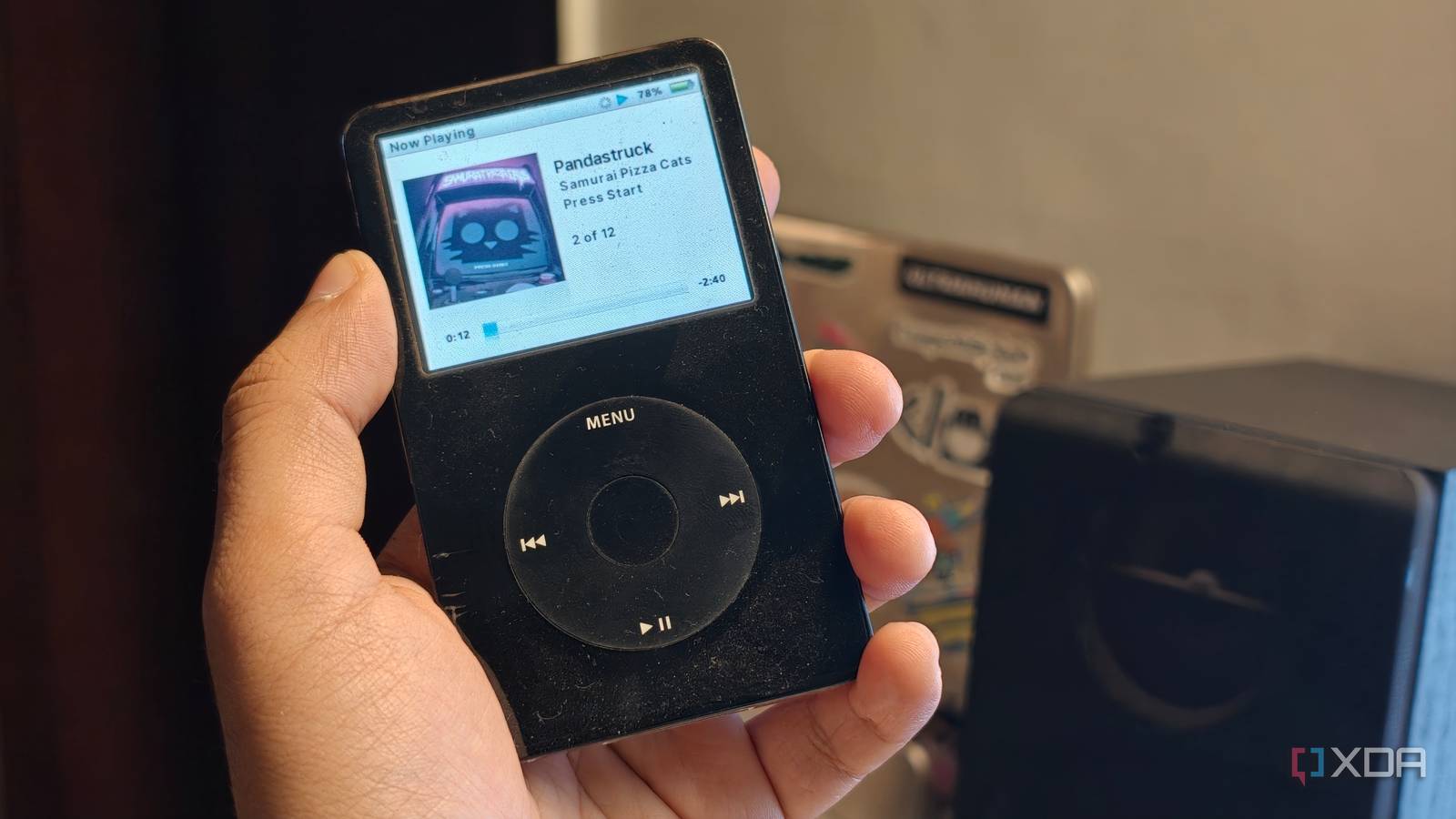
Published Nov 22, 2026, 11:30 AM EST Dhruv Bhutani has been writing about consumer technology since 2008, offering deep insights into the personal technology landscape through features and opinion pieces. He writes for XDA-Developers, where he focuses on topics like productivity, networking, self-hosting, and more. Over the years, his work has also appeared in leading publications such as Android Police, Android Authority, CNET, PCMag, and more. Outside of his professional work, Dhruv is an avid fan of horror media spanning films and literature, enjoys fitness activities, collects vinyl records, and plays the guitar. 25 years later, the iPod is still one of my favorite dedicated music players. But as good as the classic experience is, it's not quite up to scratch with my 2026 needs. In fact, it takes a surprising amount of effort to use one today. Apple's original syncing software is definitely dated, managing large local music libraries can feel tedious, and the stock firmware lacks several features I tend to take for granted. But thankfully, the enthusiast community is on the task with several AI-backed tools that give the iPod a new lease on life. It's surprising to see that AI-assisted development and modern smartphone tools are helping enthusiasts tackle problems that have existed for years, but nobody bothered with. From better music analysis and playlist creation to syncing tools that actually work on modern hardware, new firmware builds and projects make the iPod a lot more interesting. These are just a few of the projects that have caught my attention. iOpenPod A modern synchronization tool for iPods One of the biggest inconveniences with using an iPod in 2026 is just how difficult it is to get music onto it. iTunes was never a great piece of software, and Apple has since split its functions across separate apps and Finder, making syncing iPods across devices feel consistently flaky. Clearly, I wasn't the only one facing this issue, and iOpenPod addresses this problem by replacing iTunes with a dedicated open-source music management application. Available for Windows, macOS, and Linux, the app lets me browse my iPod's existing music library or sync music from local folders on my computer or NAS. Elsewhere, unlike iTunes, which never supported FLAC at all, iOpenPod takes a different approach by letting you bring in all popular formats and offering automatic format conversion. Most of my library today is FLAC-based, and there's just no feasible way for me to maintain a shadow library only for the iPod. Of course, iOpenPod can also handle playlists, album artwork, and metadata editing. That's table stakes for any audio sync software. Finally, you'll also find smart playlists, which can be pretty useful when you're trying to organize a large audio collection using rules rather than manually selecting every track. While several tools have made managing an iPod easier, many are no longer maintained or simply won't start up on a modern Mac. Claude-enhanced development allowed a developer to build a near-perfect tool for getting an iPod up and running in 2026, and I'm glad for it. RockPod RockPod gives Rockbox a modern interface and digital output While RockBox remains my preferred way to get more out of my iPod, let's be real, even Rockbox hasn't really gotten any feature upgrades in a long time. That's where RockPod steps in. This community-developed RockBox fork, designed for the iPod Classic and iPod Video, focuses on improving specific pain points of the RockBox experience. On one hand, you've got visual upgrades like a redesigned CoverFlow implementation. The recreated version veers much closer to the original Apple experience and can display as many as seven covers on-screen simultaneously compared to the three-cover limitation in Rockbox. Elsewhere, the visual upgrades extend to the theming engine, where the Now Playing screen can dynamically extract color from album artwork. When enabled, it lets the color seamlessly transition from album to album, giving you a bit more visual pizzazz. The most interesting addition, however, is the enhancements to digital audio output through the iPod's dock connector. When installed on 6th and 7th-generation iPod Classics, RockPod can send digital audio through to external DACs, bypassing the internal digital-to-analog converter. If you want to use your iPad as a source for high-resolution audio through your music system, this is the way to go. RepriseOS RepriseOS gives you modern features with the stability of Apple's firmware Credit: I get that not everyone wants to ditch Apple's original iPod interface. I understand the appeal of the simplicity and nostalgia. RepriseOS is a step in that direction. It is focused on taking bits and pieces of Rockbox and implementing them in the stock iPod operating system. One of the biggest additions is a custom five-band equalizer that lets you dial in the sound exactly how you want. You'll also find a dark mode option that can make the iPod a bit more comfortable to view in low-light environments. My personal favorite, however, is the sort by Album Artist option. I have a lot of compilation albums and playlists that can clutter up the entire artist page on the iPod. Adding a sort-by Album Artist option brings much-needed sanity to the interface. RepriseOS can be installed right alongside the stock operating system and Rockbox. That said, compatibility is limited to the sixth- and seventh-generation models. And since you're working with a pretty extensive firmware overhaul, it's probably a good idea to back up the firmware first. The iPod still has plenty of life left in it Look, I'm just scratching the surface here. There are plenty more firmware mods, tools, and software that are being developed to cater to iPod fans. But among all those, iOpenPod, RockPod, and RepriseOS have been the most useful to me. They tackle three different parts of the problem by making music management easier, adding quality-of-life features to alternative firmware, and extending the capabilities of Apple's operating system. AI isn't the core feature here, but it enables the development process. More importantly, these projects show that the iPod is still relevant enough for active development. Rockbox
The iPod is making an unlikely comeback thanks to AI, and these 3 projects show why
Full Article
Original Source
Read the full article at Xda-developers →KhanList aggregates and links to publicly available news content. We do not host full articles from third-party sources. Always verify important information with original sources.