
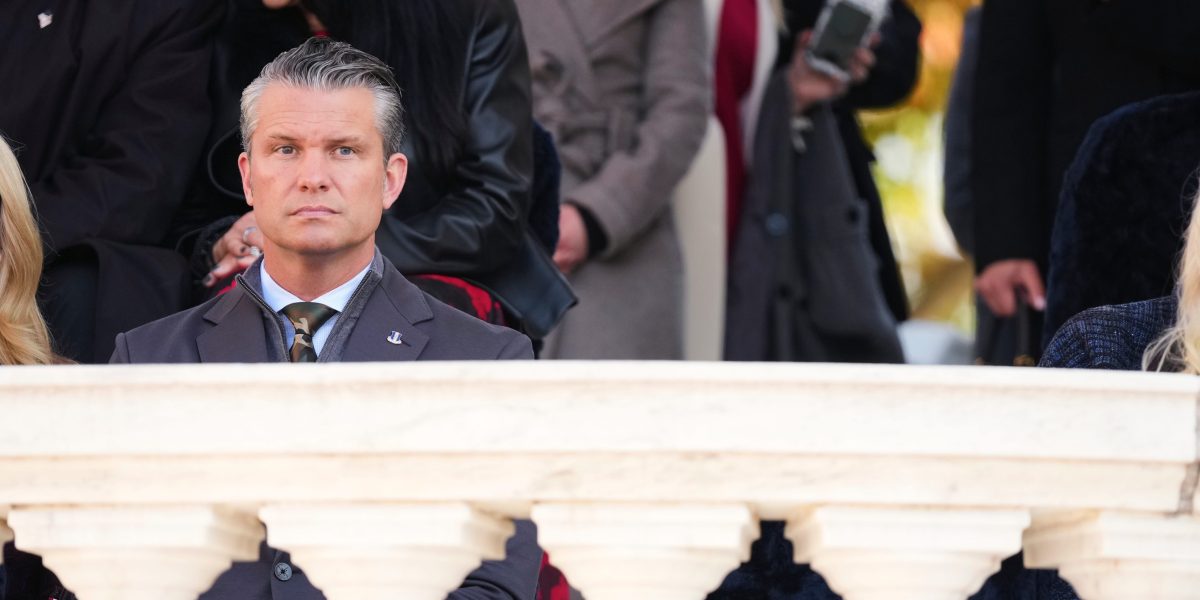
The Intercept and Freedom of the Press Foundation sued Pete Hegseth’s Pentagon in a pair of lawsuits demanding the release of documents related to the number of U.S. casualties in its war on Iran and the Department of Defense’s secretive blacklist of journalists. One lawsuit, filed on Friday, responds to the department’s “repeated, unexplained changes” to its publicly available tracker showing U.S. service members killed or injured in the conflict with Iran — including a failure to acknowledge one soldier’s death for the six months after he died — that were documented by Intercept reporter Nick Turse. The shifting figures led one defense official to call the undercount a “casualty cover-up.” In August, Turse requested from the Pentagon, through the Freedom of Information Act, casualty-related records and briefing materials presented to Defense Secretary Hegseth and his chief of staff, directives and guidance on casualties, as well as communications related to casualties between Hegseth and his staff of advisers. A later request filed by The Intercept in September sought the financial costs of the Iran war since its start in February. In all cases, the government stopped responding to The Intercept and has failed to provide any documents. “They need to come clean to the American people.” A second lawsuit against Hegseth’s DoD, filed on Monday, follows a July conversation with The Intercept in which a spokesperson for U.S. Central Command admitted the military post keeps a blacklist of media members. While reporting on the shifting U.S. soldier casualty figures, the CENTCOM spokesperson, Richard Allee, threatened Turse that he would be “put on a list of people to disregard” for calling the command too often. CENTCOM later denied the existence of such a list. But Turse spoke with an unnamed U.S. official who confirmed that “Hegseth’s office had a standing order not to engage with [Turse] and would deny it if challenged.” During the first Trump administration, Turse had been placed on a separate blacklist kept by U.S. Africa Command, also within the Pentagon, after he reported on the torture of prisoners at a remote military base in Cameroon used by the U.S. for drone surveillance. Turse has since filed a public records request seeking a copy of any “lists of journalists that CENTCOM discriminates against or disregards.” The Freedom of the Press Foundation also filed a request for communications and guidance related to the blacklist, as well as any records related to the command’s response to Turse’s article on the matter, published in August. The government has yet to provide any such information to The Intercept or Freedom of the Press Foundation. “The military doesn’t get to decide which reporters it speaks to or ignores, especially when it’s engaged in legally questionable military actions and the human cost is at its highest. It’s not just the journalists who are harmed when the Pentagon behaves this way — the public and Congress are each denied critical information about what the military is doing in our name and with our taxes,” said Lauren Harper, Daniel Ellsberg chair on government secrecy, who filed FOIA requests for the blacklist on behalf of FPF. “If the Defense Department refuses to answer basic questions about how it engages with journalists, we’ll use the Freedom of Information Act to compel them in court. The Intercept’s Turse called the Pentagon’s journalist blacklist “fundamentally un-American” and a way to avoid accounting for the real human toll of the ongoing war. “Central Command wants to keep the sordid details of its wars — from civilian casualties in Iran and Yemen to U.S. military casualties across the Middle East — under wraps,” he said. “They need to come clean to the American people. We have to hold them accountable.” Hegseth’s Department of Defense has long been hostile toward members of the media. In February 2025, days after Hegseth assumed office, the department forced out outlets such as NBC News, NPR, the New York Times, Politico, CNN, and the Washington Post from their Pentagon press desks. That October, Hegseth issued a new requirement in which journalists could only gain access to the Pentagon if they pledged to only report on information from government employees pre-approved by the Defense Department. This prompted most media outlets, except for the right-wing MAGA-friendly One America News Network, to surrender their press passes. Trump has also targeted specific media outlets and individual journalists by barring them from the White House or Air Force One, though a federal court judge has since paused the bans, cautioning against possible violations of the First Amendment. The Intercept and FPF’s lawsuits arrive days after Hegseth narrowly survived an impeachment attempt over his handling of the Iran war. The effort, led by Rep. Thomas Massie, R-Ky., and backed by Democrats, failed to garner enough votes to impeach Hegseth. In addition to the war on Iran, incoming Democratic members of Congress, along with human rights groups, seek to hold Hegseth accountable for his bloody airstrike campaign on boats in the Caribbean Sea and Pacific Ocean, in which the U.S. has killed more than 240 civilians, and his overseeing of the U.S. invasion of Venezuela.
The Intercept Sues U.S. Military Over Iran Casualty Tally and Blacklist of Journalists
Full Article
Original Source
Read the full article at Theintercept →KhanList aggregates and links to publicly available news content. We do not host full articles from third-party sources. Always verify important information with original sources.