
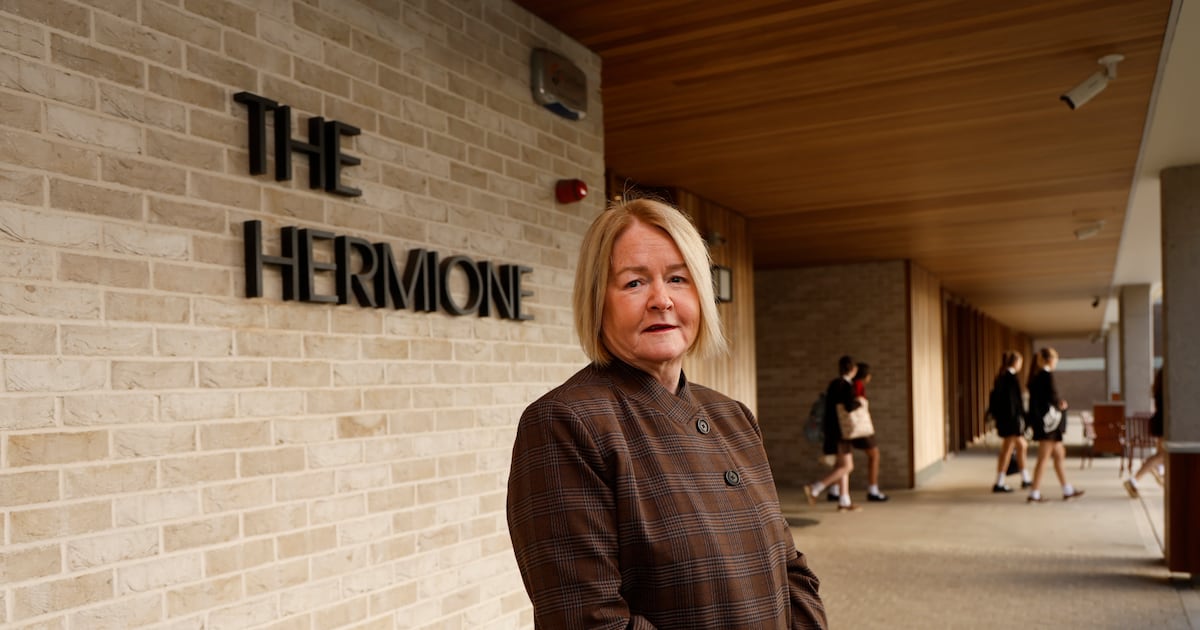
“The boarding market in Ireland has changed considerably,” south Dublin private school Wesley College wrote to parents this month as it announced it would no longer provide seven-day boarding for students there.“We have seen this change very clearly at Wesley where demand from our traditional market for seven-day boarding has declined significantly, while at the same time demand for five-day boarding has grown strongly,” the school wrote.Families increasingly favoured “a model which combines the benefits of boarding during the school week with regular connection with home and family at weekends”, Wesley said. The statement came just a week after one of Ireland’s most prestigious private boarding schools, Glenstal Abbey School in Co Limerick, announced it was closing its doors.READ MOREIn a statement announcing the closure, the school said it was not alone in facing these challenges, and that “boarding schools across Ireland and elsewhere are experiencing similar pressures”. Alongside this, private school fees here have risen by almost 25 per cent over the past five years, according to a recent Irish Times data analysis showing how this tightening financial environment has been borne out in costs to parents.So is the model broken, and could this be the beginning of the end for boarding schools here? “At the moment, we’re fine, and our model is working,” Mark Boobbyer, warden (principal) of St Columba’s College, also in south Dublin, says. “Ironically, our numbers for next September with Irish boarders are absolutely fantastic – probably the best I’ve come across.Mark Boobbyer, warden of St Columba’s College: ‘Parents are paying for a one-stop shop where everything takes place in one go, and then at the weekends they can see their kids.' Photograph: The Irish Times “Will that still be the case every year? You know, every school adapts to demographics and fashions and things like that. And if that happens, it happens. But at the moment, our boarding numbers are holding up pretty well.” St Columba’s College is a coeducational Church of Ireland day and boarding school in Whitechurch, Dublin 16.The school only offers seven-day boarding, not five, and charges €31,154 for boarders and €11,481 for day pupils. It is the most expensive school for seven-day boarding in the State, according to data published by The Irish Times last week. It has 350 pupils, 245 of them boarders – 70 per cent of the school population. Boobbyer believes this is one of the reasons its model is working: people choose the school specifically to board.“Why go to a school [to board] which has only 10 per cent boarding? Where boarding is a bit of a sideshow or kind of periphery. If you’re going to board, then go to a boarding school. That’s my view,” he says.Another reason why some boarding schools in the State have seen an uplift in their numbers is because of the change to tax legislation in the UK.In January 2025 the UK government removed a VAT exemption for private schools, in order to pay for more state schoolteachers. This means fees are now subject to 20 per cent VAT, and the fees parents are paying rose by 22 per cent in just a year. In the same year, enrolment in private schools in the UK dropped by 11,000.[ Is the Irish boarding school becoming a thing of the past?Opens in new window ]“That has kind of worked in our favour in a way,” says Barbara Ennis, principal of Alexandra College Dublin. “We’re seeing a bit of a trend of more UK students applying here, especially if they have any kind of Irish heritage.” Alexandra College is a day and boarding school for girls at both junior and senior level and is located in Milltown, Dublin 6. It has a Church of Ireland ethos and offers both five- and seven-day boarding, with boarding fees ranging from €22,104 to €23,441, and day fees priced at €9,302 for the current academic year. Similarly to St Columba’s, Alexandra College also has not seen any decrease in demand for boarding. “For next year, we have a full list of boarders. Our maximum number is 200,” says Ennis.That number is up from just 64 when Ennis started at the school in 2010. She says the main reason for the increase is a sustained marketing campaign both in Ireland and internationally, as well as a significant building programme, which saw new accommodation for students open recently, with new accommodation for staff planned to open in the near future. “We saw that a lot of schools [that] had been boarding were either closing their boarding [or] if they were a single sex, were going mixed. And we were saying, you know, that’s not where we want to go, this is where we want to be − and how are we going to get there? [ Is the Irish boarding school becoming a thing of the past?Opens in new window ]“We have a very comprehensive written document about our vision and our mission, and [that poses the question] Alex 2036, what’s it going to look like?”Planning for future challenges has been a key priority for Ennis, and she meets the school board and council regularly.“We ask ourselves, okay, what are the threats? What are the challenges? What are the advantages? How do we make sure that we keep Alexandra College up there and that it doesn’t fall victim to what has happened to a lot of similar schools?” she says.A key advantage for both St Columba’s and Alexandra College is that they are located in the leafy suburbs of the capital, at a time of high employment and a booming economy. “We are in south Dublin, which is ultimately a relatively wealthy part of the country,” Boobbyer says.But who in today’s Ireland wants to send their children to a seven-day boarding school, particularly among residents of those leafy suburbs, for whom it is just down the road? “People who can afford to send their children to a place like St Columba’s are working very hard. Both mum and dad are working; they’re both professionals. They are back late. They’re tired in the evenings. Then at the weekend they’re probably taking their kids off to hockey, ballet, rugby, music lessons,” Boobbyer says. [ Private school fees in Ireland have risen by almost 25% in five years. Here’s how much they now costOpens in new window ]“Here, it’s all happening in one place. I think they’re paying for a one-stop shop where everything takes place in one go, and then at the weekends they can see their kids because most of the Irish boarders will go out on the weekend at some point.” For these two schools it appears that demand is not changing any time soon. However, the international market remains key for both, particularly at Alexandra College, where 50 per cent of the boarding population is from outside the State.“We do travel a fair bit around to international fairs where we promote the school. We were in Germany last week. We’re going to Japan at the end of November, we’re going to New York in April, and then we’re going to Miami in April,” Ennis says. What could be their biggest challenge, looking ahead?“Trump and what might happen there with the war,” Ennis says, pointing to the difficulties international uncertainties could cause for parents financially, and how that might have an impact on their ability to pay for private education.“All that stuff with the banks after the Celtic Tiger, that nearly finished a lot of boarding schools and fee-paying schools,” she says.“After 2008, it was a big struggle to fill the school. People just simply couldn’t afford the fees,” Boobbyer says in agreement. “At the moment, the economy is fairly good, but if there’s another crash, that’ll obviously affect people’s ability to pay the kind of fee that we charge.” While the economy remains stable and the demand from international students high, it appears neither of these schools are under threat. But as the experiences of the UK and our post-financial-crash memories in the Republic suggest, stability can be affected quite easily in a high-value market.
The future of Irish boarding schools: ‘We’re seeing a trend of more UK students applying’
Full Article
Original Source
Read the full article at Irishtimes →KhanList aggregates and links to publicly available news content. We do not host full articles from third-party sources. Always verify important information with original sources.