
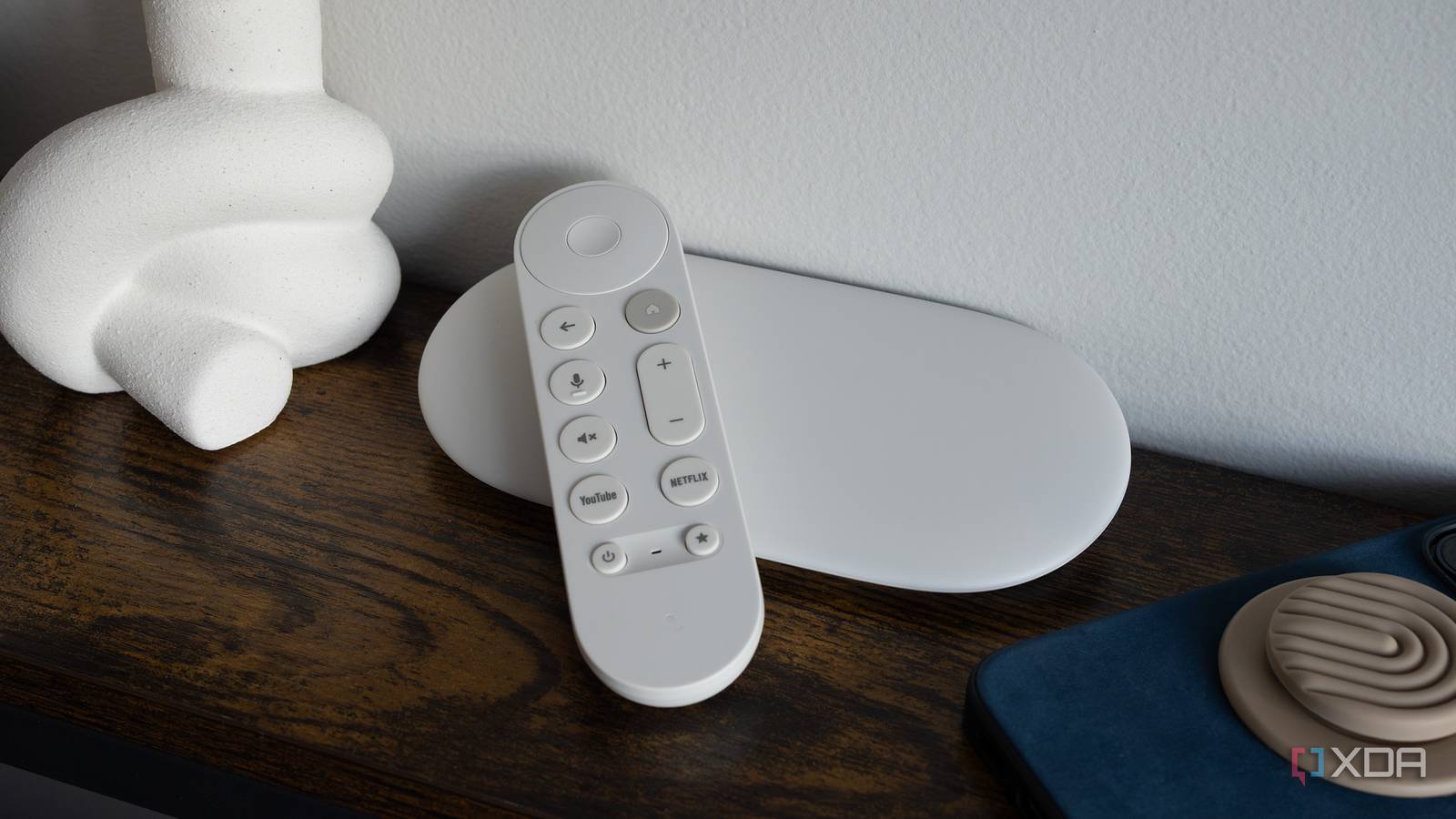
Published Aug 20, 2026, 3:00 PM EDT Based in rural Minnesota, Brian Burgess worked in IT for 10 years before finding his passion for writing about consumer technology. Brian earned his degree in computer and network technology in 2000. He held various IT positions, including help desk support, router installations for IBM, database administration, and other associate network administration roles. He's been a personal technology journalist for 18 years and has written thousands of articles about Microsoft products and services, Android, iOS, streaming, and more. He has written for notable tech sites including XDA, InformationWeek, How-To Geek, Byte, groovyPost, and others. When he is away from the keyboard, you will hear him playing guitar, working outdoors, and watching Star Trek. There's never really been a true Android/Google TV-powered streaming stick. We've had some affordable Onn Android TV sticks, but aside from the first Chromecast, Google hasn't sold its own Android TV dongles. In 2024, it replaced the flagship Chromecast with Google TV (4K) with the Google TV Streamer, which is actually a set-top box. Semantics aside, those devices both work well. But we've never seen a stick-style streaming device from Google, like Amazon's Fire TV Stick or a Roku stick. Also, updates are thin with the Google TV Streamer, and the future of new Android TV-based streaming devices from Google remains unclear. With that in mind, what's the outlook on other Android/Google TV devices? Google could be done with streaming devices New Android TV sticks from Google may not arrive When Google released its Android-powered Google TV Streamer in 2024, it discontinued support for the Chromecast with Google TV. Not only that, but it also discontinued support for all Chromecast devices. Chromecasts were getting long in the tooth, but the one that included Google TV was an excellent product. Currently, there's no confirmed word on anything new for streaming devices from Google's camp, but we haven't heard it's exiting the streaming space, either. Instead, all we can do is read between the tea leaves. The Google TV Streamer could be phased out soon. It has guaranteed updates for five years from its release, putting the potential end-of-support date at 2029. Still, the Google TV Streamer is bug-ridden, and updates have been few and far between. The device has received only six updates since its release, most of which didn't address the issues users complain about. I have a Google TV Streamer, and despite some issues, like a laggy home screen and a remote that disconnects, it can be found on sale for $80 or less, which puts it only $20 more than Onn's budget Android TV box from Walmart (it usually costs $60). So, if you can find it at a good price, I would pull the trigger, since the wonderful open world of the Android TV experience is at your fingertips with Google's TV Streamer. Sideloading APKs is a piece of cake on a real Android device compared to the forked version of Android on Amazon's Fire OS. Amazon is discontinuing Fire OS in favor of its locked-down, Linux-based proprietary Vega OS anyway. But with the semi-neglected Streamer and lower price points, it could indicate it's looking to phase out the streamer and streaming devices altogether. The end of Chromecast support was abrupt A jarring Google announcement In May of this year, Google suddenly announced it would no longer support its legacy Chromecast streaming devices. The announcement indicated that Chromecast with Google TV dongles were also losing security and update support. However, the company walked back the announcement, saying it was in error and that only legacy Chromecast devices would no longer receive critical security updates. It noted that it would continue to support 4K Chromecast models with security updates. Also, if your current Chromecast is working, it's advised to keep using it until the service drops — basically, use it until it stops working. Since that announcement, walkbacks and other contradictory statements about different Chromecast models have left users confused about what models are still supported. Google's support documentation has been inconsistent and confusing, creating uncertainty among owners of the Chromecast with Google TV devices. My old Chromecast with Google TV works; it's the first-gen model, and the images above are from apps I use every day on it for a more robust, smoother experience than the standard apps advertised on the traditional home screen. While the interface is slow, it runs fine, and I have all the features you would expect from Android/Google TV. Still, I did relegate it to the den for guests to use when they need something to watch while visiting. Third-party Android TV devices New options available I've been impressed with my budget 2006 Android TV-powered Onn TV 4K Pro streaming box I picked up from Walmart for $60 — $20 cheaper than the retail price of the Google TV Streamer. On paper, Onn's Android TV box looks less powerful, but the company installs a faster 4x Cortex-A55 CPU clocked at 2.5GHz and a newer ARM Mali-G310 V2 GPU to improve all-day streaming with fewer glitches, freeze-ups, and the laggy home screen you get on the Streamer. Plus, you can do more with a box than a stick. The budget box I have includes an Ethernet port for more reliable connectivity and better LAN streaming for self-hosted media using Jellyfin, Plex, or Emby from a separate server or NAS. It also has a dedicated USB port, so it can become a local media player. For instance, I often load a flash drive full of photos, plug it into the Onn box, and display photos for friends and family. I also use VLC to play audio and video files in odd formats I ripped years ago, such as FLV, OGG, or APE. Onn 4K Pro Streaming Device $60 $60 Save $0 Unleash Nvidia Shield TV power Run a Plex server and more The Nvidia Shield Pro is also an option if you want more power and capabilities, such as running a Plex server, supporting multiple attached drives, better video transcoding, and home theater audio pass-through. It even has AI upscaling capabilities. A Nvidia Shield can also act as a self-hosting server using Plex or Kodi much more easily than a piecemeal workaround with a less powerful Android box. A Shield TV makes a perfect Jellyfin client, capable of transcoding 4K remuxes with lossless audio. That saves your Jellyfin server from using a lot of resources and incurring transcoding overhead on its end. Enthusiasts often use Kodi and Jellyfin, with Kodi for media passthrough, subtitles, refresh rates, and settings. The Jellyfin client then syncs the server library into Kodi's database, or you can browse Jellyfin without syncing locally. You really can do a lot with a Shield TV. However, the Nvidia Shield is still running the same hardware it had when it was released in 2019, but everything has been updated through 2026 for better performance. The company still sends regular Shield Experience updates, bug fixes, security and compatibility updates, and expanded AI upscaling support. That sounds much better than Google's sporadic updates for the Streamer. Still, it would be nice to see a refresh with a new box that includes a modern chipset and GPU. What lies ahead for Android TV sticks is uncertain Whether Google will release an official Android TV streaming device this year or next remains to be seen. Since the abrupt end of support for Chromecast dongles and shaky support for the Google TV Streamer, the future is uncertain. Third-party brands like Onn will likely continue. Another option is buying an Android/Google TV-powered TV set, but they often come with processors that are three to four generations old with limited RAM, so using a stick is typically a better choice for a responsive interface on any smart TV, for that matter. Still, something new from Google or Nvidia will give users peace of mind moving forward.
The future of Android-powered TV streaming sticks looks uncertain
Full Article
Original Source
Read the full article at Xda-developers →KhanList aggregates and links to publicly available news content. We do not host full articles from third-party sources. Always verify important information with original sources.