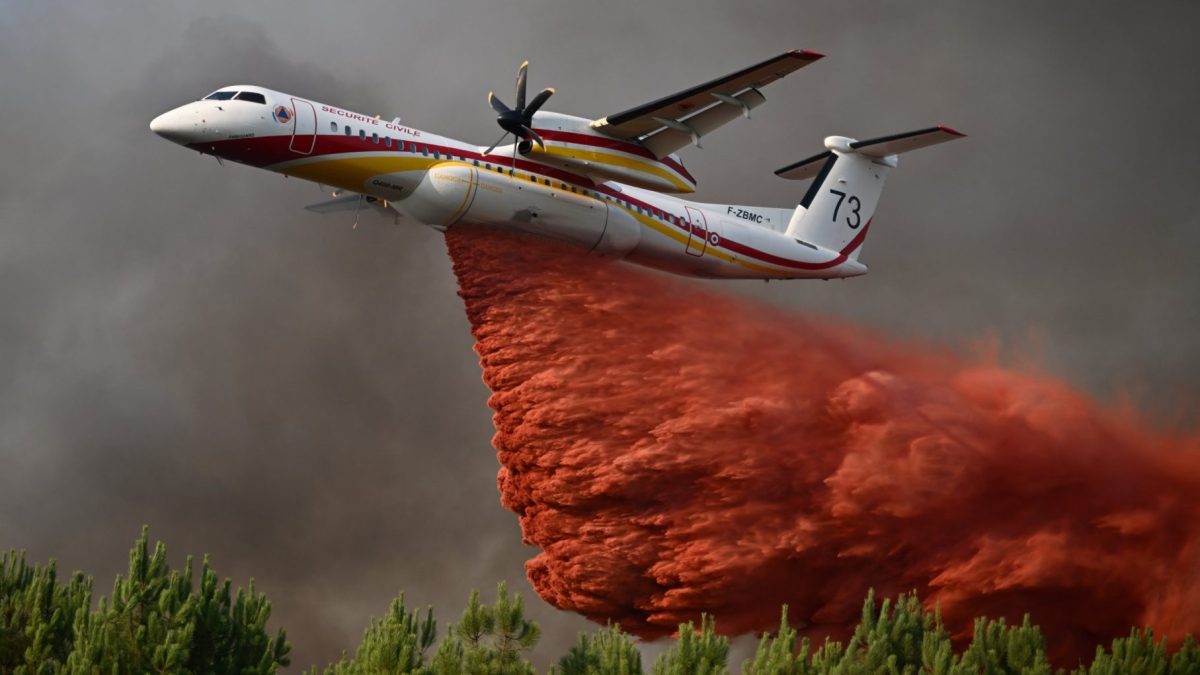
The pine-scented Lake Biscarosse in south-west France holds a special place in my heart: it’s where my daughter so enjoyed splashing in the shallows that she learned to swim. Like many other families, we had a dreamy time amid dappled shade and a chorus of crickets. Now, though, the pines are burned and the land charred. It’s ghastly, even from a distance, to see campsites empty and homes destroyed. Many lives have been shattered, along with visions of sunny holidays, as heavy firefighting machinery replaces tents and picnic tables. Even as a former BBC science editor, it’s been hard to wrap my head around how this hugely popular region of France has just experienced the country’s largest-ever peacetime exodus. Shorts A staggering quarter of a million people have had to flee. When wildfires rage out of control, outflanking fire crews and spreading too fast even for water-bombing planes, there’s only one option: to run. This kind of wildfire is nothing new; the process can happen naturally. But there’s now an unfamiliar ferocity as flames burn so hot that they can create their own fire storms. The context, of course, is that we’re living on an increasingly hotter planet, and need to endure new extremes of heat. On their own, higher temperatures can’t ignite fires, but they can make them much more probable and allow them to erupt in places that have never faced this kind of mass danger before, such as entire cities. For a few days, Bordeaux, the regional capital, faced the unthinkable prospect of evacuating its population of more than a million. Thankfully, that didn’t happen, but it was touch-and-go when the fires reached the outer suburbs, forcing the evacuation of thousands of people and menacing critical military and industrial facilities. Thousands had to flee from their homes and move into shelters when fires reached the outskirts of Bordeaux (Photo: Caroline Blumberg/AP) Some of these are where highly flammable fuel is produced for the missiles that carry France’s nuclear warheads. As you’d expect, there is exceptionally heavy security around those sites, but the reality is that fences are no protection against fires. Suddenly, the crisis acquired a new dimension. Already a body-blow to the French tourist industry at the peak of the season, the rampant wildfires created the nightmare risk of explosions causing a major jump in the death toll. According to reports, the most volatile materials were shipped out when the alarm was raised, though it’s difficult to see how there would have been time to move all of it. Large firebreaks were also created, but embers can be carried for miles if the winds are strong enough. There was a lot at stake, not least because losing one of these sites would have shaken the viability of France’s status as a nuclear power. When President Emmanuel Macron visited Bordeaux this week, his praise for the firefighters battling to save the city carried multiple layers of meaning. David Shukman reporting over a California oil field. The former BBC News journalist has reported on many environmental disasters (Photo: Katie Stephens) I’ve written about environmental disasters for years, and they are always painful, tearing homes and families apart. But these latest wildfires point to a scary new world. The summer of 2026 is already confirming our arrival in a more hostile and less predictable climate, one that will increasingly upend our thinking. For a start, the word “summer” – usually so positive – has taken on a much less pleasant definition as new records of heat crash over us: nights too hot to sleep, trains failing to run, crowds scrambling to buy air-conditioning units and forests and fields ablaze. Summer has now become a new season for dying, where once it was more about freezing winters. Tens of thousands of mainly elderly people succumb to the temperatures, many in Europe, the fastest-warming continent. The word “heatwave” doesn’t convey the seriousness: “heatstorm” would be far more accurate. No one is ready for these dangers. To give just one example, the EU has a system for sharing firefighting planes, which is just as well given wildfires are erupting from Portugal to Spain and from Italy to Greece. But there aren’t nearly enough of these specialised aircraft. Britain’s total: zero. Firefighters near Formariz in Zamora province, Spain. There’s now an unfamiliar ferocity as flames burn so hot that they can create their own fire storms (Photo: Umit Bektas/Reuters) It shouldn’t be a surprise that we’re getting searing temperatures and now massive fires. Climate scientists have warned about them for decades. But their research has been undermined at every turn by lobbyists for fossil fuel interests, who have been extremely effective. Now we find ourselves shocked to see how vulnerable our societies have become. When schools close because classrooms are too hot, parents can’t go to work and economies suffer. If supermarket fridges overheat, food runs short and panic-buying starts. During a wildfire, the heavily polluted air triggers asthma attacks, which can overwhelm emergency wards. Climate change is real; it’s just that for many people the real effects are only just starting to become obvious. Which prompts a thought about future holidays. I now hear people talking about ditching the furnaces of the Mediterranean and Southern Europe for the cool of Scandinavia. These are not conversations that would have been heard even a few years ago. Now they are the reality. I’m having my own discussions, but for me, the key question is: when the pine forests around Lake Biscarosse eventually recover, will it be safe enough in the summer to take my new grandson to learn to swim there? I’m starting to think not. David Shukman is a former BBC News science editor and author of The Response: A Story of Fire and Flood in Britain’s New World of Extremes (£25)
The fiery end of the French summer holiday
Full Article
Original Source
Read the full article at Inews →KhanList aggregates and links to publicly available news content. We do not host full articles from third-party sources. Always verify important information with original sources.