
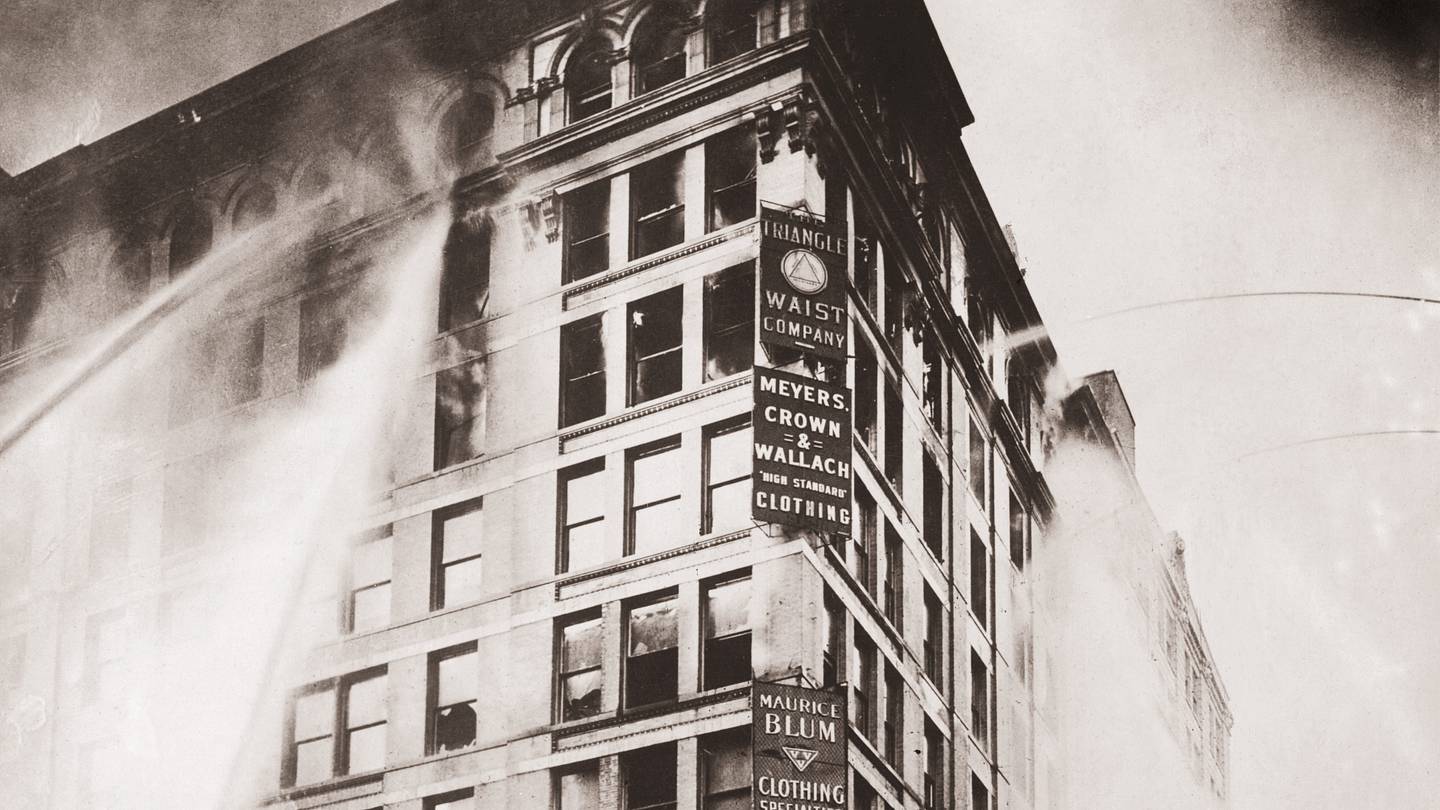
On March 25, 1911, a factory caught on fire in a building in Greenwich Village in New York, resulting in the deaths of 146 people. The tragedy would lead to major changes in health and safety laws in the U.S., and continues to be remembered today. This is the story of the disaster that changed American workplaces forever.Precarious Conditions Lead to DisasterInside aftermath of Triangle Shirtwaist Company Fire | Bettmann/GettyImagesAt the time of the fire, three floors of the building (then known as the Asch Building) were occupied by the Triangle Waist Company, and the factory there was known as the Triangle Shirtwaist Factory. A “shirtwaist” was a type of women’s blouse with an upper section that was similar in design to a man’s shirt. The life of a shirtwaist maker was grueling: they worked from 7 in the morning to 8 at night with only a brief lunch break, and were only paid $6 per week. The Triangle workers had even gone on strike two years before the fire to demand better working conditions. On that fatal day in 1911, a fire broke out on the eighth floor of the factory. It was most likely the result of a cigarette or cigar that had been thrown away without being completely extinguished, which caused a pile of fabric cuttings to ignite. Many workers could not escape because they were so high up in the building, and some of the doors in the building were locked, which led to attempts to exit via the stairwells and fire escapes. But the number of people needing to leave meant that many were not able to make it out in time due to those passages becoming crowded.Out of the 500 people who worked there, 146 of them died. The majority of the victims were young women, 123 of whom died along with 23 men. Rescue efforts were also hindered because the fire began on the eighth floor, and New York fire engines were only equipped to reach as high as the sixth floor of the tall building.A Tragedy Sparks a MovementPeople mourning and carrying signs honoring the Triangle Shirtwaist Factory fire victims | PhotoQuest/GettyImages350,000 people joined the funeral procession march for the victims, and the tragedy led to public outrage and demands for improvements in working conditions. Many of New York’s building regulations were outdated and had not been designed to accommodate so many people working in manufacturing in the same building at the time, but this changed in the aftermath of the Triangle Shirtwaist Factory disaster. Around 30 new laws were created in response to the many problems in the system. The event also strengthened public support for workplace health and safety standards across the country. This would eventually lead to the Occupational Safety and Health Act in 1970.Ever since the disaster, the families of the victims have made efforts to ensure that the tragedy would not be forgotten and that there would be memorials for those they lost. In 1912, a stone memorial was made for six victims who had initially not been identified in the aftermath of the fire. In 2011, a hundred years after the disaster had taken place, these victims were finally identified and their names were confirmed. Families of the victims continued to campaign for a permanent memorial to mark everyone lost in the tragedy, which was finally unveiled on October 11, 2023, on what is now known as the Brown Building at the corner of Greene Street and Washington Place in Greenwich Village.
The Fatal Labor Disaster That Changed American Workplaces Forever
Full Article
Original Source
Read the full article at Mentalfloss →KhanList aggregates and links to publicly available news content. We do not host full articles from third-party sources. Always verify important information with original sources.