
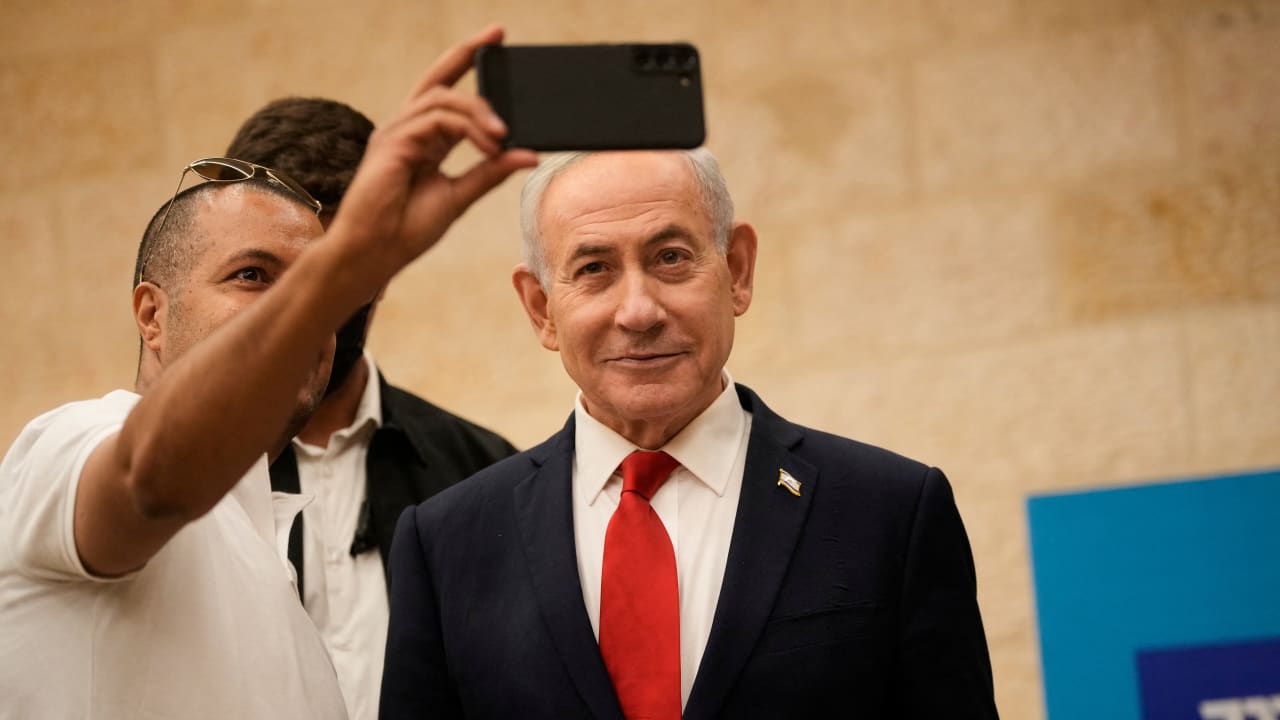
Sunday’s hearing focused primarily on organizing the witness schedule and determining which defense witnesses will be called, rather than hearing new evidence.Follow us on GoogleA man takes a selfie with Prime Minister Benjamin Netanyahu during Likud party primary elections ahead of Israel’s general election in October, in Jerusalem, Monday, August. 17, 2026.(photo credit: Ohad Zwigenberg/Pool via REUTERS)SEPTEMBER 6, 2026 20:25Prime Minister Benjamin Netanyahu’s criminal trial resumed at the Jerusalem District Court on Sunday after the summer recess, beginning a new stretch of the defense case in which the remaining witnesses for Netanyahu and his three co-defendants will take the stand.Netanyahu completed his own testimony in June after 98 hearing days spanning a year and a half. Sunday’s hearing focused primarily on organizing the witness schedule and determining which defense witnesses will be called, rather than hearing new evidence.Four hearing days are planned this week. According to a notice submitted by Netanyahu’s defense, MK Ze’ev Elkin’s cross-examination is scheduled to continue on Monday.Ronit Mandelbaum is expected to testify later that day if necessary, while Police Chief Superintendent Shmuel Sharvit is scheduled to take the stand on Tuesday and Wednesday. The defense asked the court to issue summonses for Mandelbaum and Sharvit.Their testimony will form part of the defense effort to challenge the prosecution’s account of how the investigations in the case were conducted, and whether evidence was lawfully and properly obtained.Prime Minister Benjamin Netanyahu seen after a court hearing in his trial, at the District Court in Jerusalem, June 29, 2026 (credit: YONATAN SINDEL/FLASH90)The trial is also returning to its original venue in Jerusalem. Netanyahu’s testimony was heard at the Tel Aviv District Court building under special security arrangements.The most consequential unresolved question as proceedings resume is the bribery charge in Case 4000, the Bezeq-Walla affair.Judges continued to see evidentiary difficulties in proving bribery After Netanyahu completed his testimony, the judges told the parties that their assessment from June 2023 had not changed: They continued to see evidentiary difficulties in proving bribery and believed the prosecution should consider withdrawing that charge.This was not an instruction, nor was it very detailed. The prosecution has not withdrawn the charge, and the indictment remains unchanged.Case 4000 alleges that Netanyahu, while serving as prime minister and communications minister, advanced regulatory decisions benefiting Bezeq and its then-controlling shareholder, Shaul Elovitch. In exchange, prosecutors allege, Netanyahu and his family received unusually favorable and responsive treatment from the Walla news site, which Elovitch also controlled.Netanyahu and the Elovitches deny that there was any such exchange. Netanyahu has argued that Walla remained hostile to him and that the regulatory decisions were professionally justified.Even if prosecutors withdraw the bribery charge, Case 4000 would not disappear. Netanyahu would continue to face allegations of fraud and breach of trust over the same affair, alongside fraud and breach of trust charges in Cases 1000 and 2000.Case 1000 concerns gifts, including cigars and champagne, that Netanyahu and his wife, Sara, allegedly received from wealthy businessmen, principally Arnon Milchan. Prosecutors allege that Netanyahu provided official assistance in matters affecting Milchan while receiving those gifts. Netanyahu says they were presents exchanged within a genuine friendship.Case 2000 concerns recorded conversations between Netanyahu and Yediot Aharonot publisher Arnon “Noni” Mozes. Prosecutors allege that the two discussed improving Netanyahu’s coverage in exchange for steps that could have weakened the newspaper’s principal competitor, Israel Hayom. Both men deny wrongdoing.Mozes and Shaul and Iris Elovitch are standing trial alongside Netanyahu and will also be able to call witnesses in their defense.The dispute over the Case 4000 bribery charge is closely connected to the battle over how quickly the trial should now proceed. Netanyahu’s attorney, Amit Hadad, has said that if the charge remains, the defense may seek to call hundreds of witnesses to challenge the prosecution’s account.The judges have instead been pressing the parties to narrow the witness lists and accelerate a trial that began in May 2020. Beginning October 4, hearings are scheduled to take place five days a week, from Sunday through Thursday.Both the defense and prosecution opposed the five-day schedule when it was discussed in June. Hadad argued that it would leave Netanyahu’s lawyers without sufficient time to prepare witnesses and warned that members of the defense team could withdraw if they could not provide adequate representation.Court instructed the defense teams to prepare witnesses and alternativesThe court has nevertheless instructed the defense teams to prepare witnesses and alternatives for each hearing day to avoid further cancellations.The timetable is particularly pressing because the head of the three-judge panel, Judge Rivka Friedman-Feldman, is expected to retire in March 2028. The panel also includes Judges Moshe Bar-Am and Oded Shaham.For now, the trial remains in the evidence stage. Once Netanyahu and the other defendants finish presenting their witnesses, the prosecution and defense will submit their final arguments. Only then will the judges deliver a verdict on the charges that remain.Follow us on Google
Netanyahu trial resumes as defense phase moves beyond prime minister
Full Article
Original Source
Read the full article at Jpost →KhanList aggregates and links to publicly available news content. We do not host full articles from third-party sources. Always verify important information with original sources.