
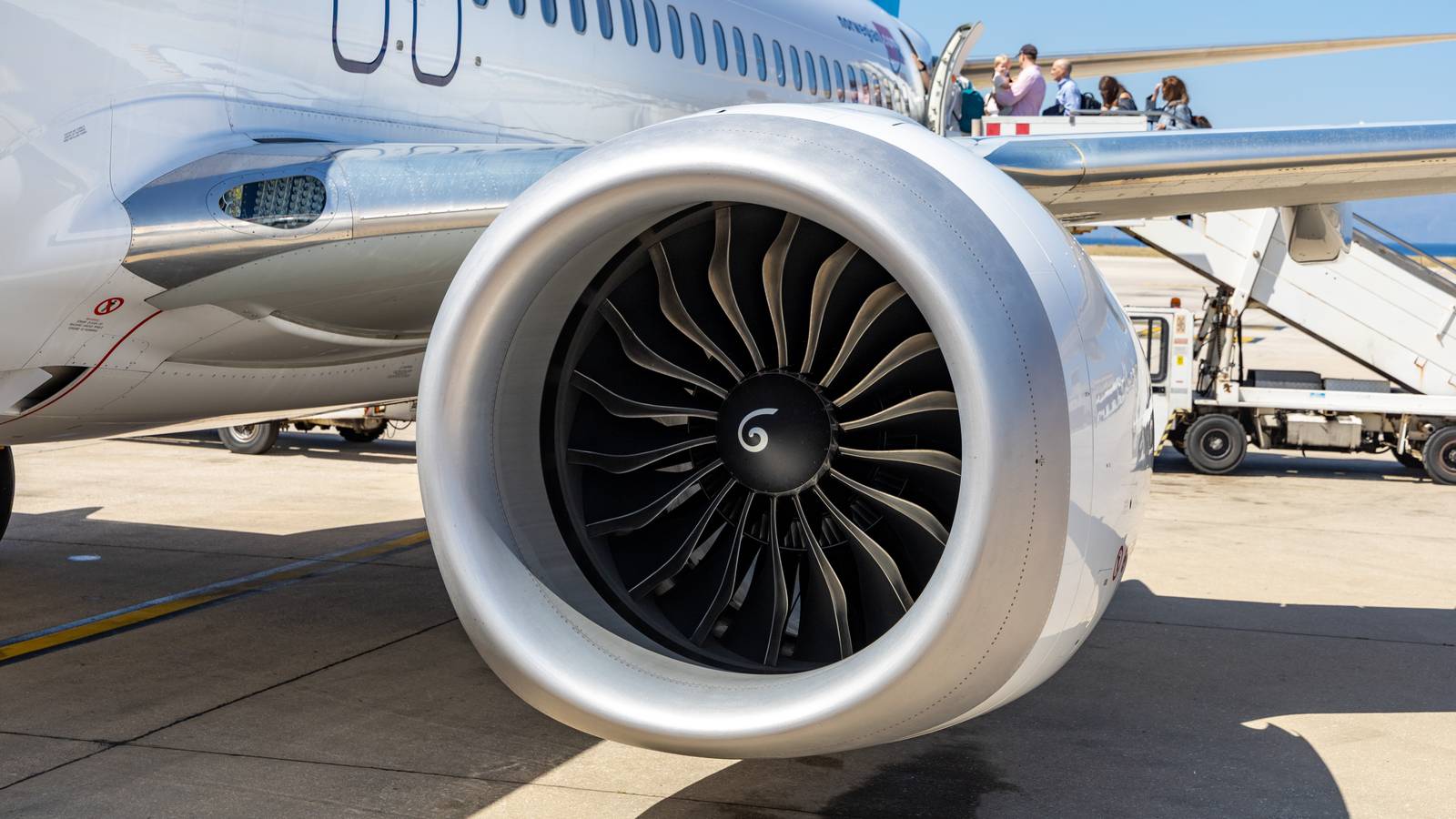
During the 1960s, Boeing introduced several aircraft that would transform commercial aviation, including the 727, 737, and 747. The Boeing 737, which made its first flight in April 1967, was designed for short-haul operations and would eventually become one of the best-selling commercial aircraft families in aviation history. The original 737 was designed around relatively small, narrow engines. However, as engine technology advanced, Boeing faced the challenge of fitting increasingly larger and more efficient engines beneath wings positioned unusually close to the ground. Rather than addressing this limitation through a single redesign, Boeing introduced a series of engineering modifications across successive 737 generations, culminating in the 737 MAX. So, what changes did Boeing make to accommodate these larger engines, and what compromises did they involve? Why The Boeing 737's Low Ground Clearance Became A Problem Credit: Jeppe Gustafsson | Shutterstock The 1960s marked a period of significant expansion for Boeing, with the manufacturer introducing several aircraft that would transform commercial aviation. After introducing the four-engine Boeing 707 in 1958 and the three-engine 727 in 1962, Boeing developed the twin-engine 737 to serve the growing short-haul market. The first 737 took flight on April 9, 1967, seating approximately 100 passengers and offering a range of around 2,500 miles (4,023 km). The original 737 was designed to operate efficiently at airports with limited ground-handling infrastructure. One of the most significant decisions during its development was Boeing engineer Joseph Sutter's proposal to mount the engines beneath the wings rather than on the rear fuselage, as seen on competing aircraft. This arrangement helped define the 737's distinctive design, while its low fuselage allowed ground crews to access baggage compartments and service the aircraft without specialized lifting equipment. This configuration was well suited to the relatively narrow Pratt & Whitney JT8D engines. However, as engine technology advanced, manufacturers increasingly adopted high-bypass turbofans, which improve propulsive efficiency by moving larger volumes of air around the engine core. Their larger fans, however, require considerably more space beneath the wing. This became a challenge when Boeing developed the 737 Classic family, beginning with the 737-300. The manufacturer selected the larger CFM56-3 high-bypass turbofan to replace the original JT8D engines, but the aircraft's low wing position and short landing gear left insufficient space for a conventional installation. Boeing therefore had to find a way to accommodate the larger engines while maintaining adequate ground clearance. Trick One: Flattening The Engine Housing Credit: Airlinephoto | Shutterstock By the early 1980s, advances in engine technology prompted Boeing to select the CFM56-3 for its new 737 Classic family, replacing the original low-bypass Pratt & Whitney JT8D with a larger, more fuel-efficient high-bypass turbofan. The engine's fan diameter increased from approximately 40 inches (102 cm) to 60 inches (152 cm), while the aircraft retained its original low-slung architecture. The CFM56-3 offered improved fuel efficiency and lower noise levels, with fuel consumption improvements of approximately 20% compared with the JT8D. However, its larger diameter meant Boeing could not simply replace the existing engines without modifying their installation. Working with CFM International, Boeing adapted the CFM56-3 to fit beneath the 737 Classic's low wings. The engine nacelle (the outer casing surrounding the engine) received a distinctive flattened lower profile to maintain sufficient ground clearance. To achieve this, components such as the accessory gearbox were relocated from beneath the engine to its sides. The resulting shape, sometimes nicknamed the "hamster pouch," became one of the 737 Classic's most recognizable features. This engineering compromise allowed Boeing to accommodate the larger engine without undertaking an extensive redesign of the aircraft's landing gear and basic airframe architecture. The table below illustrates the timeline of engine installations across successive Boeing 737 generations, which will be explored throughout this article. For a closer look at the CFM56-3's design, Laura Laster provides a detailed explanation in A Boeing 737 Engine CFM56-3 Quick Overview. 737 Generation First Aircraft Fitted (Roll-out) Engine Engine Installation 737 Original (737-100/-200) 1967 Pratt & Whitney JT8D Narrow, cylindrical nacelle 737 Classic (737-300–500) 1984 CFM56-3 Flattened nacelle and relocated accessories 737 NG (737-700) 1996 CFM56-7B Refined nacelle and forward mounting 737 MAX (737-8) 2015 CFM LEAP-1B Larger engine with further installation changes However, modifying the nacelle's shape alone was not enough to overcome the 737's ground clearance limitations. Boeing also had to reconsider how the engines were positioned relative to the wings, introducing another engineering solution that would continue to evolve across subsequent generations. Trick Two: Moving The Engines Forward And Higher Credit: Robin Guess | Shutterstock Nearly a decade after introducing the 737 Classic, Boeing launched the 737 Next Generation (NG) program in November 1993. Designed to compete directly with the Airbus A320 family, the NG represented one of the most extensive upgrades to the 737, introducing a redesigned wing, strengthened landing gear, and improved performance while retaining the aircraft's basic architecture. The new wing featured a greater span of approximately 117 feet, 5 inches (35.79 meters), increased fuel capacity, and improved aerodynamic efficiency, helping extend the aircraft's range and raise its operating ceiling to 41,000 feet (12,497 meters). The 737 NG also introduced the CFM56-7B engine, featuring a fan diameter of approximately 61 inches (155 cm), slightly larger than the Classic's CFM56-3. To accommodate larger engines beneath the 737's lower wings, Boeing continued refining an approach first introduced with the Classic: mounting the engines farther forward and higher relative to the wing. This positioned the fan section ahead of the wing's leading edge rather than directly underneath it, helping maintain sufficient ground clearance. The CFM56-7B also delivered approximately 7% better fuel efficiency than its predecessor, along with improved climb performance and reduced noise levels. However, the next generation of high-bypass turbofans required even larger fans to achieve further efficiency improvements. When Boeing began developing the 737 MAX, the aircraft's low wing position and relatively short landing gear once again limited the size of the engines it could accommodate. With the new CFM LEAP engine offering a substantial increase in fan diameter, Boeing faced another challenge: how could it install a larger, more efficient engine without fundamentally redesigning the 737? Trick Three: Designing A Smaller Engine For The 737 MAX Credit: Karolis Kavolelis | Shutterstock Fast-forward to 2011, when Boeing launched the 737 MAX program as the successor to the 737 Next Generation family. The new aircraft would be powered exclusively by the CFM International LEAP-1B, a next-generation high-bypass turbofan developed to deliver greater fuel efficiency and lower emissions. The LEAP family introduced several advanced technologies, including 3D-woven carbon fiber composite fan blades and improved thermal efficiency. According to CFM International, the engines deliver approximately 15% lower fuel consumption and CO₂ emissions compared with previous-generation engines. However, Boeing's decision to retain the 737's low-slung architecture meant that the LEAP-1B had to be adapted to fit the aircraft's limited ground clearance. Unlike the LEAP-1A, which powers the Airbus A320neo and features a 78-inch (198 cm) fan, the 737 MAX's LEAP-1B was designed with a smaller fan measuring approximately 69.4 inches (176 cm) in diameter. This nearly nine-inch (23 cm) difference was largely driven by the 737's shorter landing gear and lower wing position. The smaller fan also contributed to a lower bypass ratio of approximately 9:1, compared with around 11:1 for the LEAP-1A. Although a higher bypass ratio can improve propulsive efficiency, the LEAP-1B's design allowed Boeing to benefit from newer engine technology without fundamentally redesigning the 737's airframe. Despite the smaller fan, the LEAP-1B was still considerably larger than the CFM56-7B used on the 737 NG, which had a fan diameter of approximately 61 inches (155 cm). The increase of more than eight inches (20 cm) meant that reducing the LEAP's fan diameter alone was insufficient to solve the aircraft's ground clearance limitations. Boeing therefore needed to introduce further modifications to the 737 MAX's engine installation and landing gear, raising another question: how could the manufacturer accommodate the larger engines while preserving the aircraft's existing design? Trick Four: Raising The 737 MAX's Nose Credit: Wirestock Creators | Shutterstock The Boeing 737 MAX was designed exclusively around the CFM International LEAP-1B engine, allowing Boeing to focus on integrating a single engine type into the existing 737 architecture. However, even with its smaller fan diameter, the LEAP-1B required additional ground clearance. To accommodate the larger engines, Boeing extended the MAX's nose landing gear by approximately eight inches (20 cm), raising the front of the aircraft. This modification was possible because the nose landing gear bay offered more vertical space than the main landing gear bays, making it a more practical solution than substantially redesigning the aircraft's undercarriage. Boeing also repositioned the LEAP-1B engines farther forward and higher relative to the wing than on the 737 NG. Combined with the longer nose landing gear and a revised nacelle design, these modifications provided sufficient ground clearance while preserving much of the 737's original architecture. However, the larger, repositioned engines also affected the aircraft's aerodynamic characteristics, particularly at elevated angles of attack. To address differences in handling characteristics, Boeing introduced the Maneuvering Characteristics Augmentation System (MCAS), designed to automatically command nose-down stabilizer trim under certain flight conditions. Although these modifications helped Boeing develop a more fuel-efficient competitor to the Airbus A320neo while maintaining commonality with earlier 737 models, the MCAS system subsequently became central to one of the most serious crises in Boeing's history. Investigations into the crashes of Lion Air Flight 610 in October 2018 and Ethiopian Airlines Flight 302 in March 2019, which killed a combined 346 people, identified serious flaws in pilot training. The accidents ultimately led to the worldwide grounding of the 737 MAX and extensive changes to its flight control systems. The Cost Of Keeping The 737's Original Design Credit: Falcons Spotters | Shutterstock Boeing's decision to retain the 737's basic architecture allowed it to introduce more efficient engines without developing an entirely new aircraft. However, the design required several compromises, including the LEAP-1B's smaller fan, revised engine mounting, and landing gear modifications. While these changes helped Boeing remain competitive with the Airbus A320neo, the long-term consequences of adapting an aircraft originally designed in the 1960s have proved far more difficult to quantify. The financial and reputational costs of the 737 MAX crisis have extended well beyond the aircraft itself. The two fatal accidents, subsequent worldwide grounding, compensation payments, legal proceedings, and production disruptions have cost Boeing tens of billions of dollars. The crisis also intensified scrutiny of Boeing's engineering and certification practices, contributing to a more demanding regulatory environment. The 737 MAX 7 and MAX 10 have faced prolonged certification delays, while the separate 777X program has also experienced years of setbacks and extensive regulatory oversight. Meanwhile, Airbus has strengthened its position in the commercial aircraft market, increasing the competitive pressure on Boeing. Developing an entirely new aircraft rather than continuing to modify the 737 might appear to have been a better long-term decision. However, the challenges extend beyond the MAX. Future improvements in propulsion technology could require significantly larger fans or entirely different engine architectures, potentially exceeding the limits of the 737's existing configuration. CFM International's Revolutionary Innovation for Sustainable Engines (RISE) program, for example, is developing open-fan technology targeting the next generation of commercial aircraft, with the potential for substantial fuel-efficiency improvements. As Boeing looks to its next generation of narrowbody aircraft, will further modifications suffice, or is an entirely new design necessary?
The Engineering Tricks Boeing Had To Come Up With To Fit Bigger Fans Under A 1960s Wing
Full Article
Original Source
Read the full article at Simpleflying →KhanList aggregates and links to publicly available news content. We do not host full articles from third-party sources. Always verify important information with original sources.