
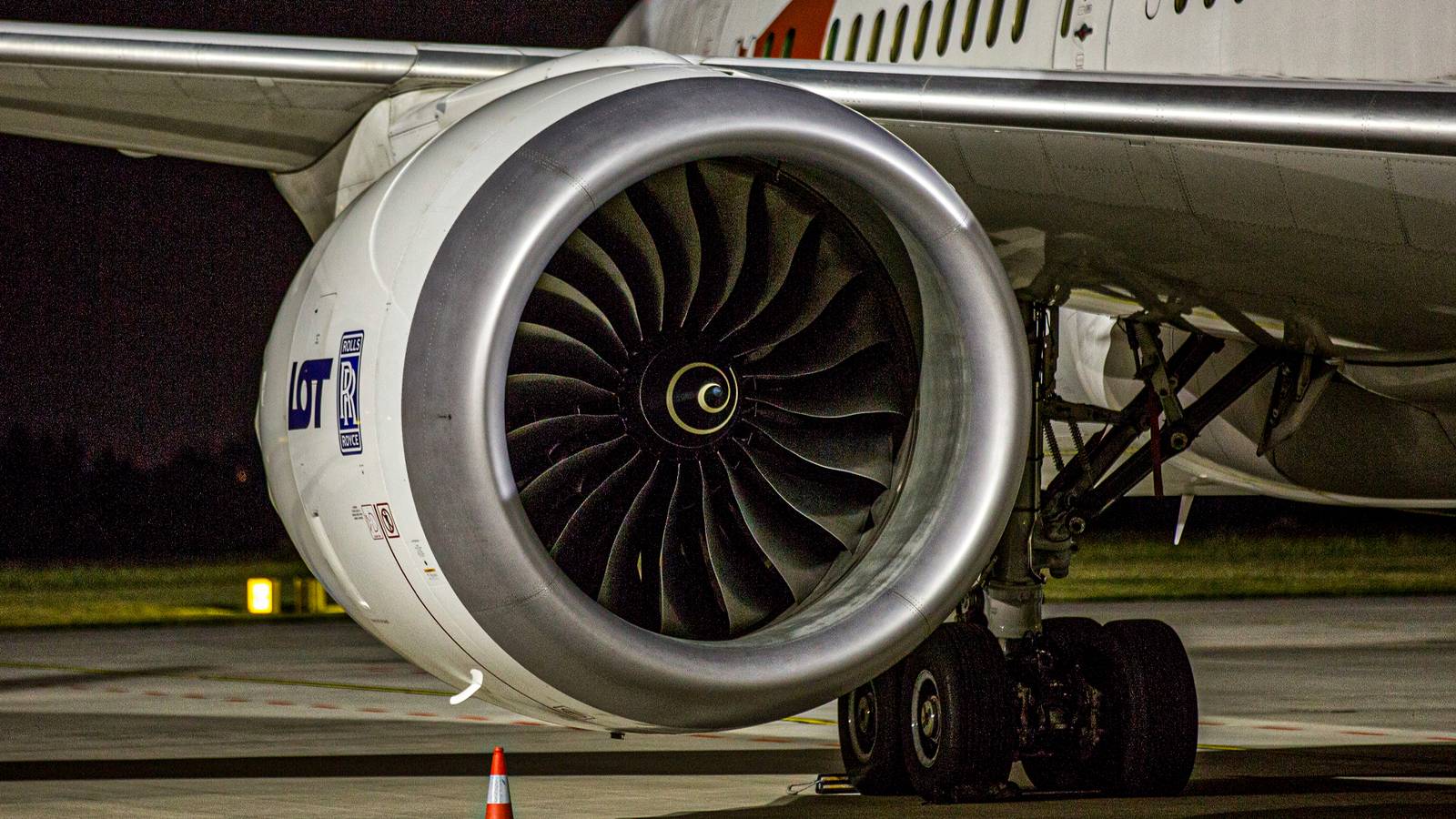
Published Nov 27, 2026, 1:00 PM EST Chris earned a Master’s degree in Defense and Strategic Studies (Highest Honors) from the University of Texas at El Paso. His graduate work concentrated on Global and National Security, Low-Intensity Conflict, Modern Warfare, and US grand strategy. He also undertook extensive regional studies, analyzing how key regions integrate into the broader US security architecture. This rigorous program provided him with a comprehensive understanding of U.S. military operations, global strategy, and weapons systems. Additionally, he gained a strong appreciation for great power competition.—an increasingly central force shaping international relations and conflict for the foreseeable future. The Boeing 787 Dreamliner is central to several major airlines’ long-haul fleets, with Rolls-Royce's Trent 1000 serving as one of its two available engine options. However, the relationship between the engine manufacturer and major customers has changed over the years. The biggest fleets are not automatically the biggest believers, as ANA, British Airways and Air New Zealand steer new deliveries toward GE Aerospace’s GEnx. Meanwhile, LATAM Airlines has returned to the Trent 1000 XE. Examining five 787 operators, namely ANA, Singapore Airlines, British Airways, LATAM and Air New Zealand, reveals how differently airlines are approaching the powerplant behind their Dreamliners. Some are expanding GE-powered fleets, while others are maintaining or renewing their relationship with Rolls-Royce. All Nippon Airways (ANA) General Electric will power the future of ANA's 787 fleet As the world's largest operator of the Boeing 787 Dreamliner, according to its own data, All Nippon Airways, based in Japan, maintains a fleet of 90 787s across the 787-8, 787-9 and 787-10 variants. Just over 80 of these aircraft are equipped with Rolls-Royce Trent 1000 engines. However, following years of reliability issues with the Trent 1000, ANA has increasingly turned to GE Aerospace's GEnx engines for its newer 787 deliveries, marking a gradual shift away from Rolls-Royce. In 2019, ANA was significantly affected by blade issues within the Trent 1000 engines powering its fleet. ANA Aircraft By Type Number of aircraft Number of seats Boeing 787-10 Dreamliner 10 294 to 429 Boeing 787-9 Dreamliner 44 215 to 375 Boeing 787-8 Dreamliner 36 184 to 335 Some blades developed cracks, partly due to vibration under certain operating conditions. In some cases, blades separated from the rotor, potentially resulting in engine failure. Additional engine issues involved corrosion around the blade shanks (the sections attaching the blades to the rotor). This corrosion led to cracking and the possibility of blades breaking away during operation. These issues affected ANA's 787s equipped with the Trent 1000 Package B and C engines, forcing groundings and repairs at the time, as noted by KN Aviation. Due to the problems ANA experienced with its Trent engines, the airline committed to equipping its future 787s with General Electric's GEnx engine. On February 25, 2025, the company announced that it would move forward with the GEnx, a proven powerplant that has been in service for more than 15 years. GE states that the engine has accumulated more than 62 million flight hours, with over 3,000 units in service and on order, including spare units. The GEnx also powers two-thirds of all 787 aircraft currently in operation. Singapore Airlines Remaining committed to the Trent 1000 Singapore Airlines has the unique distinction of being the first airline to operate the 787-10. According to Options, the airline officially received its first 787-10 on March 25, 2018. The aircraft began its inaugural flight from Boeing's South Carolina plant, located in North Charleston, near Charleston International Airport (CHS). After 22 hours, the aircraft landed in Singapore via Osaka. That initial delivery was the first of a planned fleet of 49 Dreamliners. Fast-forward eight years, and according to Planespotters.net, Singapore Airlines currently has 26 of the aircraft in active service and two parked, for a total of 28 787s. Given that each Dreamliner is powered by two Trent 1000 engines, the airline maintains 56 units of the Rolls-Royce powerplant across its current fleet. Singapore Airlines primarily introduced the 787-10 for regional and medium-haul operations, with the aircraft configured to accommodate 337 passengers across two classes. The airline initially deployed the Dreamliner on routes to Osaka and Perth, demonstrating its role in serving high-demand regional markets. British Airways Moving towards GE Much like ANA, British Airways operates all three 787 variants: the 787-8, 787-9, and 787-10. The airline maintains 12 787-8s, 18 787-9s, and 12 787-10s, giving it a total fleet of 42 Dreamliners, according to company sources. While the Trent 1000 had enjoyed several years as the primary engine of BA's 787 fleet, the London fog began to obscure the partnership two years ago. In 2024, the airline selected GE's GEnx-1B engine for six of its incoming 787s rather than maintain its course with Rolls-Royce and its Trent 1000 engines. At the time, BA CEO and Chairman Sean Doyle told Aviation Week that "we ran a competition this time around, and we factored in cost and quality, your total cost of maintenance, and that's been the driver of our decision." The decision marked a significant shift in British Airways' long-standing relationship with Rolls-Royce, with the airline increasingly turning to the American manufacturer for its future Dreamliner deliveries. In terms of future orders, London South East states that the airline currently has 32 787-10s on order, all of which will be powered by GE engines. This represents a gut punch for Rolls-Royce and signals a significant shift in BA's confidence in the two manufacturers. Of this large order, two aircraft have very recently been delivered. One joined the company on October 14, and another followed closely on November 7. With two of the new GE-powered Dreamliners already delivered, British Airways is beginning to put that transition into practice, leaving Rolls-Royce with a shrinking role in the airline's future 787 fleet. LATAM Airlines Group Rolls-Royce hit turbulence with LATAM, but the relationship is back on track LATAM has a fleet of around 400 aircraft, as reported by ALN News. Providing a large portion of the airline's passenger capacity is its 787 fleet, which currently consists of 41 aircraft. By 2028, LATAM plans to increase that number to 48, according to its 2026 third-quarter report. Like many companies making the switch, in 2023 GE noted that LATAM had decided to equip its next 787 deliveries with GEnx engines. AeroTime reports that the 2023 order consisted of 16 787-9s, with LATAM choosing the GEnx due to long-running issues with the Trent 1000 Package C engines that equipped a portion of its 787 fleet. However, all is not lost regarding Rolls-Royce's foothold in the Latin American market. AeroTime states that the engine manufacturer announced that LATAM has once again selected its upgraded Trent 1000 XE engine. The selection provides Rolls-Royce with a customer win that it can point to as it seeks to rebuild confidence in its engines amid concerns among global carriers operating the 787 family. The selection also signals a renewed commitment to Rolls-Royce, particularly as LATAM looks to expand its long-haul network and strengthen the efficiency of its existing Dreamliner fleet. Regarding the selection, LATAM CEO Roberto Alvo stated that: “The incorporation of the Trent 1000 XE on our Boeing 787 aircraft supports our efforts to enhance operational efficiency, while providing optionality to capture growth opportunities as we continue developing our long-haul network,” Air New Zealand Further support for GE's engines The carrier in this list with the smallest number of 787s is Air New Zealand, which currently operates 14 of the aircraft, with an additional 10 on order, according to the airline's website. Like other airlines operating the 787, the carrier experienced similar troubles with the Trent 1000. In 2019, the company selected the GEnx engine to power eight of its future 787-10s, with the possibility of increasing that number to 20, according to GE. That firm order was valued at more than $480 million (£367 million) at list prices, and deliveries of the GEnx-powered aircraft began in 2022. The Trent 1000 problems had a major impact on the company's operations, with five of its 14 Boeing 787-9s grounded and unavailable at the height of the disruption. The airline described the engine shortage as one of the most significant supply chain challenges facing aviation, and aircraft shortages affected its finances and ability to operate its long-haul network. According to AeroTime, the final stored Dreamliner returned to Auckland (AKL) in June 2026. The aircraft resumed commercial flying two days later, marking an important step toward restoring availability across the carrier's existing widebody fleet. The return followed extensive maintenance and engine work. Air New Zealand is now getting ready to grow its Dreamliner fleet with a second engine type. Its 10 incoming aircraft comprise five 787-9s and five 787-10s, all powered by GE Aerospace GEnx-1B engines, rather than Rolls-Royce Trent 1000s. Ch-aviation reported that manufacturing delays pushed the first new 787-9 deliveries into 2027. Meanwhile, Fleet Wire says two new aircraft joined the fleet in October 2026. Operating both engine types will require separate spare engines and support arrangements, adding another consideration as the airline expands its Dreamliner operations, including services to Houston, Vancouver, Shanghai and Taipei as aircraft arrive across its network.
5 Airlines Flying Rolls-Royce Trent 1000 Boeing 787s In 2026, Yet 3 Are Moving New Deliveries To GEnx
Full Article
Original Source
Read the full article at Simpleflying →KhanList aggregates and links to publicly available news content. We do not host full articles from third-party sources. Always verify important information with original sources.