
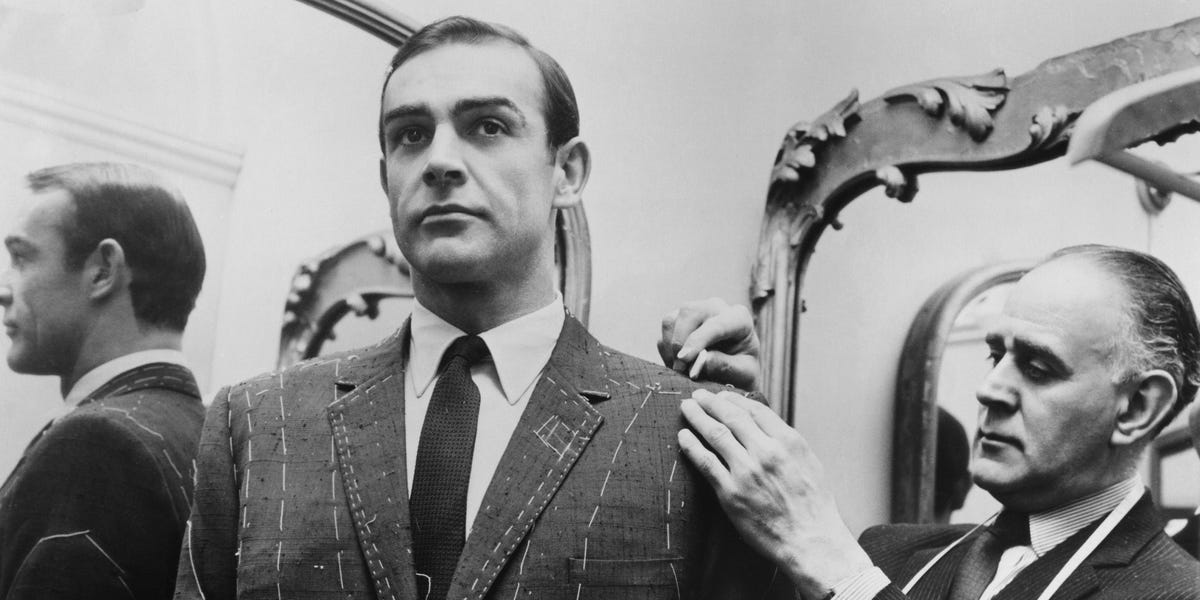
United Artists//Getty Images6 min readWe’ve all been there. You’re standing in front of the mirror, looking at the new suit you just picked up at the store, and thinking that something is … off. That’s probably because it is. The vast majority of suits sold these days are “ready-to-wear.” Unlike made-to-measure or bespoke suits, both of which have a more personalized fit, ready-to-wear suits are designed to fit a wide variety of people. In other words, if it came off a rack in a store, it’s probably not going to fit as well as you’d like.This is where an alterationist comes in. People tend to call them tailors, which isn’t always accurate as they don’t usually create patterns or cut cloth. (Anthony Sinclair, who you see working on a bespoke suit for Sean Connery in the photo above, is a tailor in the traditional sense.) But colloquialisms are what they are, and most folks, when they think about “getting a suit tailored,” are talking about a visit to an alterationist.Terminology aside, when it comes to tuning your suit to fit you as well as it can, it’s important to find a trustworthy professional. Just make sure that you’re not giving them an impossible job. Even though a talented alterationist can perform miracles, you still need to start with the right suit to ensure you’re happy with the final result.Harold M. Lambert//Getty ImagesBack in the day, you could expect to get measured up at a shop. These days, it’s usually on you to find a pro you trust to alter your tailored clothing.To help you figure out what can be done, what can’t, and what suits are best left on the rack, I reached out to Thom Whiddett, the London-based co-founder of luxury menswear brand Thom Sweeney. He trained on Savile Row before launching his own label, which does everything from true bespoke to made-to-measure and ready-to-wear. In other words, the man knows his stuff.Here’s what he had to say about shopping for the right suit, understanding what can—and can’t—be changed, and what you need to know before you spend a bundle on something that’ll never fit.First, a Word of CautionNo matter how good the alterationist, they can’t make a too-small suit suddenly fit you. And they can’t change the vibe from “all business” to “I think I might dance on a table at some point tonight.” You need to start with something that generally fits well—more on that later—and feels right for your style.“The main thing is doing your shopping and getting a suit that agrees with you, so you’re not changing lapel shapes and stuff like that,” Whiddett says. And you should err on the side of a larger size. “If it’s a compromise between going a bit tighter or a bit easier, I’d go a bit easier and take it in.”Hulton Archive//Getty ImagesAlways remember: Start with the shoulders.The ShouldersYou’ve probably heard this from your parents or your grandparents or read it in the pages of Esquire: The shoulders are far and away the most important thing to pay attention to when you’re trying on a suit in a store.“Shoulders are the hardest thing to play around with and alter, so getting the right fit on the shoulders is my starting point,” Whiddett says.Try different brands and sizes and see what works for you. Never go too small, as your jacket will bunch and crease and never be comfortable. You can cheat and go a little bigger if absolutely necessary, though it might be an expensive alteration if you need to bring the shoulders in. Ideally, Whiddett says, “get the shoulders right and then we can alter the rest through the side seams and the back.”The ChestEven 10 or 15 years ago, you might have been able to let a typical ready-to-wear suit jacket out as much as two inches. Nowadays, it’s less common to have that much extra cloth—often referred to as an “inlay” or “allowance”—to work with. Whiddett suspects the standard is more like half an inch or so on each side, which means you can let the chest out about an inch. Taking in the chest, though, is much easier.“You’re not as restricted,” Whiddett says. “A good tailor can work miracles taking something in.” There are limits, of course. If you need to take your chest in more than three inches, things might start looking funky (in a bad way).Bettmann//Getty ImagesIf you’re especially tall, you’re likely going to need a made-to-measure or bespoke suit.The LengthDon’t expect much fabric to bring a jacket length down. Whiddett suspects none. Maybe you’ll get lucky and get a half inch. As always, it’s easier to subtract than add, but be careful when shortening.“You can’t change the button height, so the rest of the proportion can change,” Whiddett says. “It starts to look a bit top-heavy.”He recommends a half inch as the upper limit, but we’re not going to come after you if you try for the full inch.The SleevesAs with the chest, don’t expect too much fabric here. You might be able to sneak another half inch or so onto the length if your sleeves are short. Taking them up is much easier—and, luckily, more common. Most suit jackets have nonfunctional buttonholes, which means that an alterationist can just snip off the button(s) and stitching and bring the sleeve up as high as you need. (Don’t worry, they’ll sew in new nonfunctional buttonholes afterward).Some brands use functional buttonholes, which complicates things considerably. Bring up the cuff more than three quarters of an inch, and it sits too close to the bottom buttonhole, which Whiddett says “looks a bit odd.” You can also take the sleeve off and shorten from the top, but “it’s a big job, it gets quite costly, and the sleeve doesn’t really go back in as well as it did initially.” In other words: probably best to avoid.Mirrorpix//Getty ImagesEven Muhammad Ali knew the struggle of finding the right size.The CollarIf you follow Esquire contributor Derek Guy—aka Die, Workwear! or “The Menswear Guy”—on Twitter, you probably know about the dreaded collar gap, in which the collar of your jacket sits away from the collar of your shirt. It’s a relatively common malady, which means it’s a relatively common fix for a good alterationist.“It takes a bit of skill from the tailor, but they take the collar off, bring in the back neck, and then sew the collar back on a little bit shorter,” Whiddett says.The fix for bunching or rolling fabric at the back of the neck is kind of like the same process in reverse, and equally doable by a skilled professional.The GorgeIf you’ve seen alterationists advertising their ability to raise or lower a gorge—the “notch” point in a notch lapel, if you’re wondering—take those claims with a big grain of salt.“Good luck,” Whiddett says. “I’d stay well away from doing that.”The WaistThough jacket fabric allowances have shrunk over the years in ready-to-wear, the case isn’t the same for trousers.“It’s quite easy to leave that inlay on the back of the seat, so you’ve usually got about one and a half inches” to let out, Whiddett says.And, as always, it’s even easier to bring the waist in.The Legs and HemDon’t expect to go wider, but “you can always taper a trouser quite easily,” Whiddett says. “You can slim it down through the thighs and knee and hem width.”Getting the right length is easy too, since suit trousers come long and unfinished. Wear the right kind of shoes to make sure you get the break you like, and it’s your call on whether you cuff or not.The SeatIf you’ve got a droopy trouser seat, Whiddett recommends “more squats at the gym.” But as you’re building your glutes, there are steps you can take in the meantime. By taking in the inseam in the back of your trousers, where the seam meets the crotch, the alteration professional can pull “the whole pant a bit closer through your seat.” You can also adjust the back seam, which “runs from the top to under your bum.” Problem solved. Just keep that extra cloth so you can let your pants back out when those squat gains hit.
The Do’s and Don’ts of Getting Your Suit Altered
Full Article
Original Source
Read the full article at Esquire →KhanList aggregates and links to publicly available news content. We do not host full articles from third-party sources. Always verify important information with original sources.