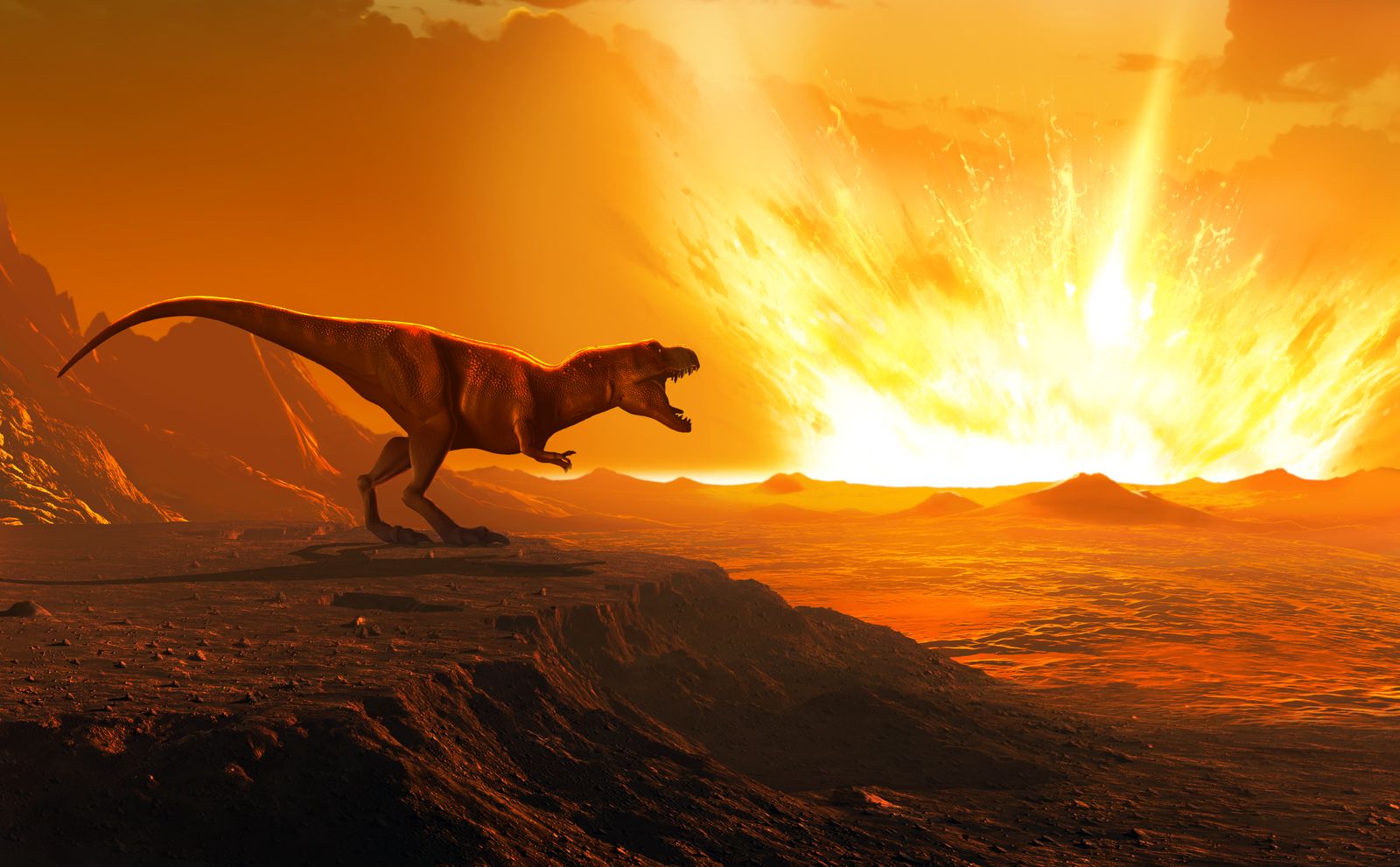
Based on computer simulations and geologic evidence, scientists propose that the deadly event may have caused global wildfires and trapped heat in the atmosphere, roasting any animal that couldn’t take cover fast enough Scientists propose that most creatures died within a couple of hours of the asteroid strike, not because of the following years-long global winter. Mark Garlick / Science Photo Library via Getty Images Around 66 million years ago, a massive, Mount Everest-size asteroid slammed into our planet, killing off 75 percent of all living species, including the non-avian dinosaurs. The incident, known as the Chicxulub impact, left a crater 12 miles deep by 110 miles wide in what is today Mexico’s Yucatán Peninsula. But how did a single asteroid strike trigger such a devastating mass extinction? What chain of events turned the impact into a global catastrophe? Scientists have a new idea, which they outline in a new paper published on July 28 in the Journal of Geophysical Research: Biogeosciences. Based on computer simulations and geologic evidence, they think the asteroid strike may have temporarily transformed the planet into a hellish inferno, charbroiling any living creature that couldn’t take cover fast enough. When the asteroid struck Earth, it vaporized more than 240 cubic miles of rock and dirt, sending a plume of material into space, the scientists posit. Some of that material then cooled and condensed into a cloud of fine dust particles, which encircled the planet. The rest condensed into larger, heavier fragments called spherules—each about half the size of a grain of sugar—which plunged back down through the atmosphere like “mini meteorites,” according to a statement from the journal. “Every joule of heat created by incoming spherules is turned into a thermal pulse that bakes the surface of the Earth,” Craig O’Neill, a geophysicist at the Queensland University of Technology in Australia who was not involved with the research, tells New Scientist’s James Woodford. “For about 30 minutes, the land is turned into history’s largest barbecue.” Computer simulations suggest that this thermal pulse was intense enough to ignite worldwide wildfires. With the dust cloud smothering the planet, the heat from the blazes remained trapped on Earth. All animals—even thick-skinned dinosaurs—that couldn’t take shelter in time would have gotten “baked or fried,” study co-author Alexandria Johnson, an atmospheric scientist at Purdue University, says in a university statement. New research shows dinosaurs were 'charbroiled' following asteroid impact | Purdue Expert Most creatures probably died within an hour or two of the impact, the scientists say. Any animals that did manage to survive the fatal heat would have been left with a habitat that looked “like hell,” Purdue planetary scientist and study co-author Brandon Johnson says in the university statement. “The clouds would have blocked daylight so … the surface would have probably looked dark,” he adds. “You would only have been able to see a reddish glow from the wildfires.” Scientists have long debated how the asteroid strike caused the mass extinction. One leading theory is that the impact created a cloud of dust, sulfur and soot that blocked out sunlight, thus plunging the planet into a global winter. Plants stopped photosynthesizing and, as a result, many creatures slowly starved to death. Did you know? Life may have bounced back surprisingly fast Scientists have long thought that new species—specifically of single-celled marine organisms—started to emerge about 30,000 years after the Chicxulub impact. But a study published in January suggests that they actually began to appear within 2,000 years of the event. The new study supports that theory, the researchers say. The global fires eventually burned out, but the dust layer blanketing the planet likely persisted for years, blocking the warmth from the sun and ushering in the prolonged post-impact winter. “It seems counterintuitive, but actually it’s the same effect,” Johnson says in the journal statement. The team suspects the global fires had a greater impact on life on Earth than the ensuing global winter. But they can’t say for certain until they find geologic evidence of the blazes. “It could be that we will eventually find the record of completely global wildfires,” Alfio Alessandro Chiarenza, a paleontologist at University College London who was not involved with the research, says in the journal statement. “We just don’t have it so far.” You Might Also Like Get the latest stories in your inbox every weekday. More about: Animals Asteroids Dinosaurs Extinction Geology Natural Disasters Plants
The Dino-Killing Asteroid Strike May Have Transformed Our Planet Into a Hellish Inferno, Charbroiling Most Creatures Within Hours
Full Article
Original Source
Read the full article at Smithsonianmag →KhanList aggregates and links to publicly available news content. We do not host full articles from third-party sources. Always verify important information with original sources.