
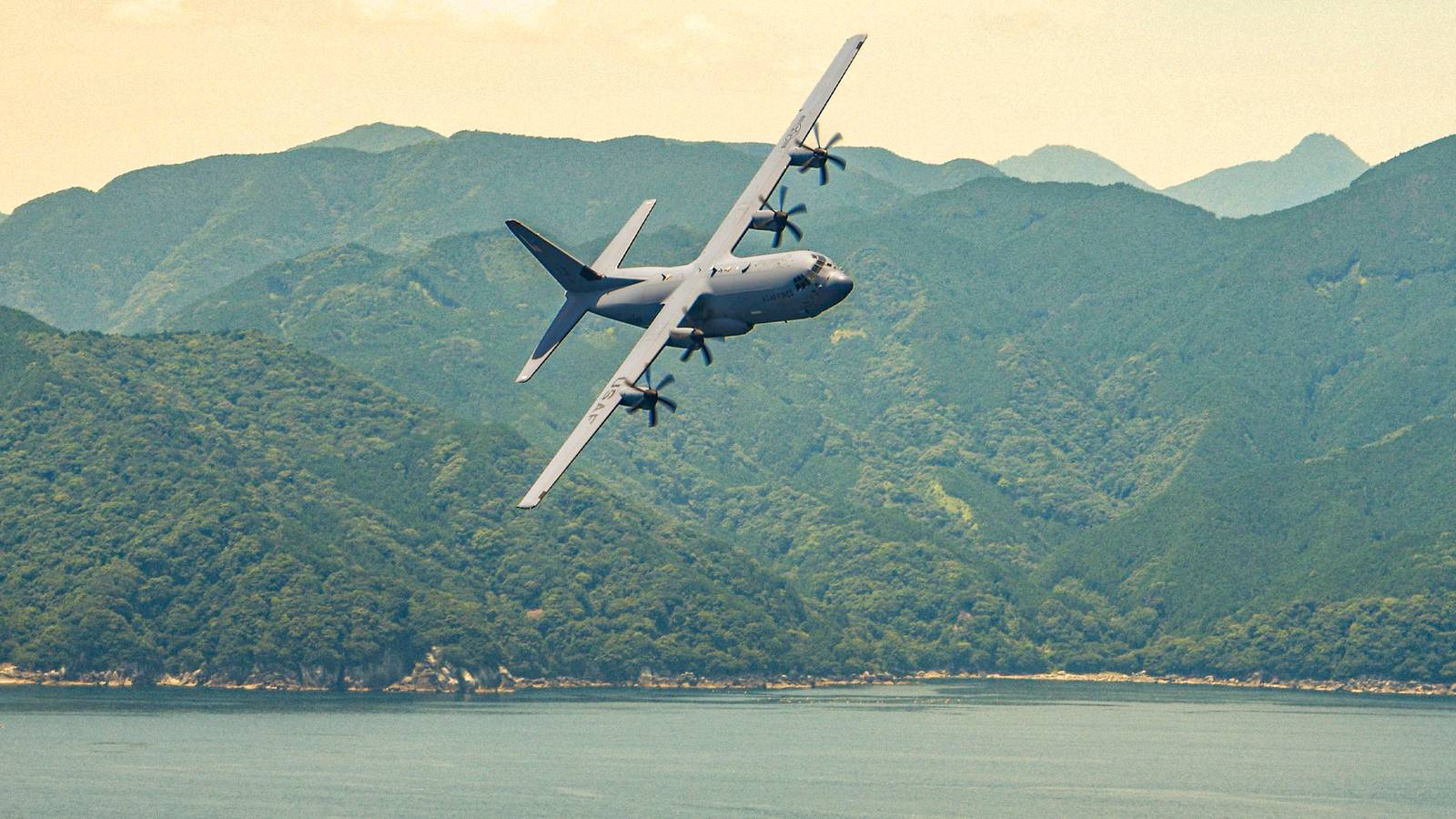
Published Nov 20, 2026, 4:00 AM EST Chris earned a Master’s degree in Defense and Strategic Studies (Highest Honors) from the University of Texas at El Paso. His graduate work concentrated on Global and National Security, Low-Intensity Conflict, Modern Warfare, and US grand strategy. He also undertook extensive regional studies, analyzing how key regions integrate into the broader US security architecture. This rigorous program provided him with a comprehensive understanding of U.S. military operations, global strategy, and weapons systems. Additionally, he gained a strong appreciation for great power competition.—an increasingly central force shaping international relations and conflict for the foreseeable future. Sign in to your Simple Flying account Military operations depend on more than getting troops and equipment to the battlefield; they also require a way to bring the wounded out. For decades, the Lockheed Martin C-130 Hercules has fulfilled that role, combining tactical transport capabilities with the ability to evacuate injured personnel from austere locations. Its latest variant, the C-130J, introduced a more automated flight deck that reduced the standard operating crew from five to three. The stretched C-130J-30 also adds 15 feet (4.57 meters) of fuselage length, allowing it to accommodate a larger number of patients with medical attendants in an aeromedical evacuation configuration. Supported by a five-member medical team, the aircraft provides a vital link between frontline treatment and advanced hospital care, helping transport wounded personnel while giving them access to lifesaving medical attention along the way. The C-130J Offers Enhanced Space For Medical Staff And Patients Credit: US Air Force Within any military operation, casualties are expected and planned for; likewise, humanitarian operations take into account the needs of injured or ill civilians. The first layer of medical care for wounded service personnel is provided by medics or corpsmen, who tend to the immediate needs of the soldier, sailor, airman, or Marine. This initial level of care stabilizes the patient and prepares them for transport to a rear-area aid station, where they are readied for emergency transport to a hospital, possibly in another country. The C-130 is a unique aircraft that combines the ability to deliver much-needed tactical combat logistics with the evacuation of wounded combatants, thanks to its rugged design. The first variant of the aircraft, the C-130A, entered service in December 1956, and a total of 219 were ordered, according to the United States Air Force (USAF). The latest model of the Hercules to be produced is the C-130J, which entered service in 1999. Since then, Lockheed Martin has delivered more than 570 J-family aircraft to 27 countries. Combined, these aircraft have logged more than 3 million flight hours. C-130J-30 Specifications Technical Data Length 112 feet, 9 inches (34.37 meters) Height 38 feet, 10 inches (11.84 meters) Wingspan 132 feet, 7 inches (40.41 meters) Powerplant Four Rolls-Royce AE 2100D3 turboprop engines Propellers GE-Dowty Aerospace R391, six-blade, all-composite Maximum takeoff weight (2.5 g) 164,000 lb (74,389 kg) Maximum payload 46,700 lb (21,183 kg) Operating empty weight 88,252 lb (40,030 kg) Zero fuel weight 129,000 lb (58,513 kg) Landing distance (135,000 lb) 3,000 feet (914 meters) Range (40,000 lb payload) 2,160 nmi (4,000 km) Maximum cruise speed 365 KTAS (675 km/h) In terms of medical evacuation, Lockheed states that the "C-130J-30 has space for up to 97 litters with medical attendants. The Super Hercules can become an airborne emergency room with roll-on/roll-off pallets and modular compartments." The aircraft's ability to accommodate so many patients is due to its extended fuselage, which adds 15 feet (4.57 meters) of length. This extra space also accommodates a five-member medical crew and all of their equipment (discussed in detail below). Regarding the C-130J's capabilities, Major Christine Cardoza, a USAF flight nurse with the 379th Expeditionary Aeromedical Evacuation (AE) Squadron, stated, "It's amazing how quickly a non-scheduled mission can spin up and we are sent out the door ready to take on however many patients, any type of health issue from medical health and non-battle injuries to battle injuries." Major Cardoza added that once patients have entered the AE system, "the patient’s survival rate, I believe, is more than 98%! Being a part of that is an honor in itself." New Technology And Reduced Crew That Made The Extra Space Possible For Additional Aeromedical Crew and Patients Credit: US Air Force Prior to the arrival of the C-130J-30, the USAF had been flying the C-130H. The latter typically required a crew of five to six airmen; at a minimum, this consisted of two pilots, a loadmaster, a flight engineer, and a navigator. Among their other duties, the navigator was responsible for route planning, position tracking, and navigation calculations. Meanwhile, the flight engineer (FE) focused on maintaining the Hercules' mechanical systems. The Air Force states that the FE speaks "for the aircraft and they communicate to the pilots what the abilities and limits are under certain stresses and in different environments." Setting it apart from previous versions of the Hercules, the modern C-130J requires only three crew members to operate: two pilots and a loadmaster. Regarding the new aircraft, Charles Moore (USAF), Conversion Officer for the 133rd Airlift Wing, stated, “The new aircraft is equipped with an extra pallet position, modern avionics (known as a ‘glass cockpit’) that provide a much higher level of automation, and a newer and stronger propulsion system that allows the aircraft to fly higher and slightly faster.” Looking more closely at the enhanced cockpit, according to Airplane Update, the C-130J features an advanced glass cockpit with four L-3 multifunctional liquid-crystal displays for flight control and navigation, alongside a Northrop Grumman color radar display that presents digitally stored map imagery. Each pilot also has a head-up display (HUD), while BAE Systems mission computers monitor aircraft systems and provide status updates to the crew. Additional avionics include a dual-embedded Honeywell Global Positioning System/inertial navigation system (GPS/INS), an enhanced traffic alert and collision avoidance system (E-TCAS), a ground collision avoidance system, a Station Keeping Equipment (SKE 2000) system, and an instrument landing system (ILS). In July 2008, Lockheed Martin announced further additions to the baseline C-130J configuration, including an Elbit Systems digital mapping unit, a TacView portable mission display, and a commercial GPS landing system supplied by CMC Electronics. Due to the expanded integrated avionics technology in the cockpit and enhanced automation that it provides, the Air Force states that the positions of navigator and FE are gradually being phased out and their tasks are being taken over by the pilots and loadmaster. This change is not only among Hercules crews but also among other military airframes in their fleet as well. While some have stated that this move has reduced the human experience from the crew, which added flexibility, at the same time, there is now more space for medical staff and patients during evacuation missions. Flight Nurses And Medical Technicians Keep Patients Alive In The Air Credit: US Air Force The aeromedical evacuation teams (AETs) consist of two nurses and three medical technicians and are considered part of the flight crew. In addition to their medical expertise, these personnel must be thoroughly familiar with the aircraft they are operating aboard, as well as other aircraft to which they could be assigned. These include the Boeing KC-135R Stratotanker and C-17A Globemaster III, the Lockheed Martin C-5M Super Galaxy, and the Learjet C-21A. During a typical mission, the nurses oversee the mission details, while the medical technicians are responsible for packing and loading the precious medical cargo. This includes more than 1,000 lb (454 kg) of equipment, such as bandages, intravenous fluids, regulators, defibrillators, suction units, and other vital lifesaving supplies. Given the C-130J-30's ability to accommodate up to 97 patients and the variety of injuries the medical crew may encounter, the AET packs as many types of medical equipment as possible. Due to advances in medical techniques, training, and lifesaving technologies, Air Mobility Command states that its rapid-response capabilities provide wounded service personnel with "an incredible 98 percent survival rate" if they reach a hospital quickly and are returned to the US within three days or less. This represents an improvement over Vietnam, "when the survivability rate was 75 percent, taking an average of 45 days." A March 2013 mission in Afghanistan highlighted the professionalism and skill of an aeromedical evacuation technician (AET), demonstrating how a C-130J crew can save a life. After picking up an Air Force combat controller with a severe gunshot wound to his thigh, the Airman's condition deteriorated during the flight. The crew diverted directly to Bagram Airfield, completing a journey that normally took more than an hour in just 42 minutes. The five-member medical team continued providing intensive treatment en route, helping ensure the Airman reached advanced medical care in time to save not only his life but also his severely wounded leg. The C-130J Continues To Save Lives Through Aeromedical Evacuation Credit: US Air Force The C-130J has brought significant improvements to the Hercules, combining modern avionics, greater automation, and a reduced flight crew with the tactical capabilities that have made the aircraft a mainstay of military aviation. Its stretched C-130J-30 variant also provides additional room for patients, medical personnel, and the equipment needed to deliver lifesaving care during aeromedical evacuation missions. Ultimately, the aircraft's value extends beyond its ability to transport wounded personnel. Its five-member medical team can provide critical treatment throughout the journey, helping patients reach advanced medical facilities as quickly as possible. Whether responding to battlefield injuries or humanitarian emergencies, the Super Hercules remains an important part of the military's ability to move patients and give them another chance at survival.
The C-130J Flies With 3 Crew Until Aeromedical Missions Typically Add 2 Flight Nurses & 3 Medical Technicians
Full Article
Original Source
Read the full article at Simpleflying →KhanList aggregates and links to publicly available news content. We do not host full articles from third-party sources. Always verify important information with original sources.