
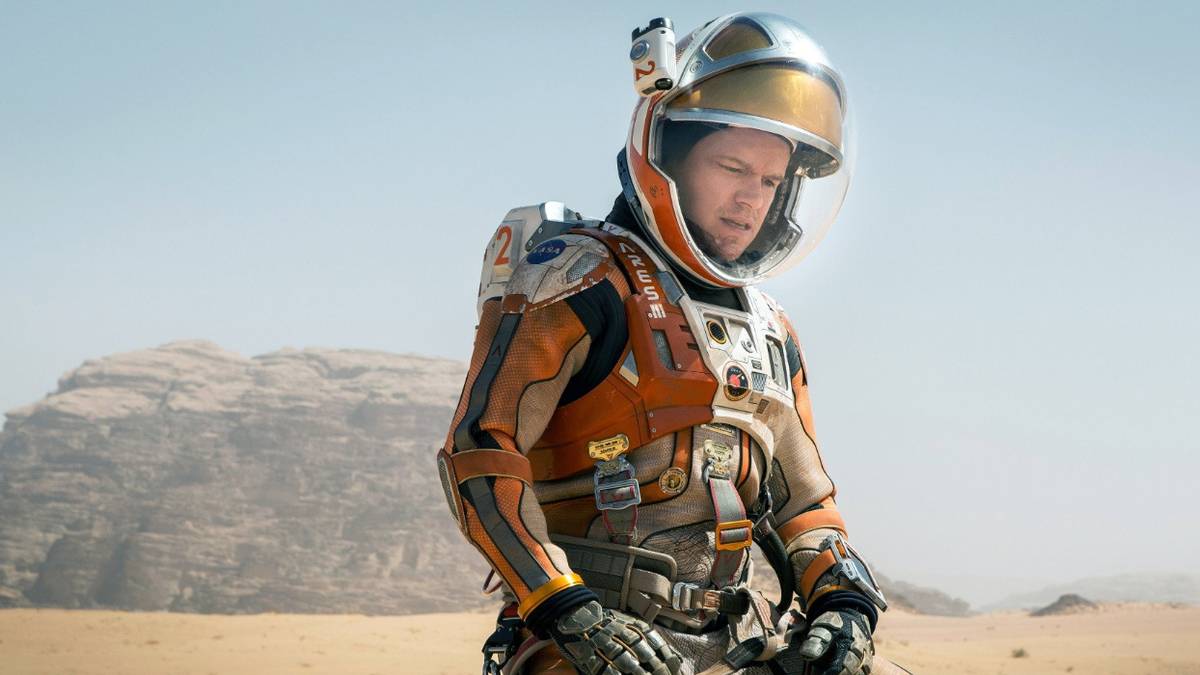
Image via 20th Century Studios Published Oct 7, 2026, 12:27 AM EDT Remus is a writer, editor, journalist, and author with an eye for detail and an extremely active imagination. He is an enthusiast of everything to do with the graphic medium, whether it's Western comics and their adaptations or manga and anime. Remus is also the author of the sci-fantasy novel Once Upon a Time in Hyperspace and several works of short fiction in the mystery, comedy, and horror genres. Sign in to your Collider account The 2010s were a time of great transformation within the publishing industry, largely driven by the rise of digital platforms that enabled greater accessibility and reach than ever before. This was also a time when global socio-politics underwent a lot of evolution as well, and all of that fed into the creation of some truly spectacular science fiction books. From mainstream hits to unexpected indie breakouts, the decade gave us several excellent sci-fi novels, some of which have since become recognized as ranking among the greatest of all time. Of course, choosing one book as the best of its year is no simple task, and it’s largely subjective. But each year of the 2010s did have at least one sci-fi book that stood out as a true masterpiece of the genre, worthy of revisiting again and again. With that in mind, here’s our selection of the best sci-fi book from every year of the 2010s. 1 ‘Death’s End’ (2010) Image via Tor Books Chinese author Liu Cixin is best known globally for his 2008 novel The Three-Body Problem, which kicks off the Remembrance of Earth’s Past trilogy. The 2010 sci-fi book Death's End is the third and final novel in that trilogy, set half a century after the events of its predecessor, The Dark Forest. The book begins in a time of uneasy peace between Earth and alien invaders known as the Trisolarans, maintained through the use of the Dark Forest Deterrence — the principle that any civilization that is known to the wider galaxy is sure to be shortly destroyed by alien forces — creating a state of mutually assured destruction for both parties if either’s location is broadcast to the cosmos. The world of Death’s End is largely utopian and follows aerospace engineer Cheng Xin, who wakes into this new era and finds herself put in a position that disrupts the balance between the two civilizations. Of all the books in the trilogy, this one is arguably the most cutting-edge in its scientific speculations, and the novel earned several accolades, particularly after its English translation by Ken Liu was published in 2016. A complex sci-fi novel with fascinating themes and ideas, it’s a must-read for all fans of hard science fiction and cosmic-level worldbuilding. 2 ‘The Martian’ (2011) Image via Ballantine Books The 2011 debut novel of acclaimed sci-fi author Andy Weir, The Martian is a story of survival and ingenuity in the face of near-certain doom. The book follows American astronaut Mark Watney, who is stranded on Mars in the year 2035 and must use his wits and know-how to improvise survival on the hostile planet. The novel was famously adapted as a 2015 movie of the same name, which was directed by Ridley Scott and stars Matt Damon as Mark Watney. The Martian is a self-publishing success story, having started life as a serialized novel on Weir’s blog before eventually becoming an international bestseller. It’s been translated into over 45 languages and has won numerous awards, not to mention near-universal acclaim from critics and fans alike. A fascinating, exciting, and ultimately inspiring story that can really ignite a love for the sciences, The Martian is easily one of the best sci-fi novels of recent decades. 3 ‘Saga’ (2012) Written by Brian K. Vaughan and illustrated by Fiona Staples, Saga is a genre-bending comic book series published by Image Comics. An epic space opera fantasy, the story follows Alana and Marko, lovers belonging to warring alien species, who flee both sides of a galactic war while trying to care for their newborn daughter, Hazel. The series combines sci-fi and fantasy elements in its worldbuilding, primarily represented by the opposing armies of the science-oriented Landfall Coalition and the magic-wielding Wreath. Combining influences of Romeo and Juliet, The Lord of the Rings, and Star Wars, Saga’s first issue hit stores in 2012 to massive acclaim, and it’s been a consistent bestseller ever since, with the publication still ongoing. With beautiful art and powerful explorations of war, ethnicity, sexuality, and gender, the series has been widely hailed as one of the best American comics of the 21st century. The first trade paperback collection, published in 2012, won a Hugo Award for Best Graphic Story, and the series as a whole has received 12 Eisner and 17 Harvey Awards. 4 ‘Ancillary Justice’ (2013) Image via Lauren Saint-Onge/Orbit Books The debut novel of writer Ann Leckie and the first book in her Imperial Radch series, Ancillary Justice is a space opera set thousands of years in the future within the expansionist, technologically advanced Radch empire. The Radchaai are post-humans who don’t distinguish between genders, so all characters are referred to with female pronouns. The novel moves between two timelines, separated by nearly 20 years, following Breq, the sole survivor of a destroyed starship and the vessel of that ship’s AI, as she seeks justice. Ancillary Justice was a phenomenal debut when it was first published in 2013, earning critical praise and winning several awards, including the Hugo Award, Nebula Award, BSFA Award, Arthur C. Clarke Award, and Locus Award for Best First Novel. The book holds the distinction of being the only novel ever to win the Hugo, Nebula, and Arthur C. Clarke awards. Combining a gripping thriller plot, fascinating characterizations, and intricate worldbuilding, the novel is a masterpiece of science fiction, and it led to the release of two sequels, three additional novels, and two short stories, with the latest novel, Radiant Star, released in 2026. Collider Exclusive · Sci-Fi Survival Quiz Which Sci-Fi World Would You Survive? The Matrix · Mad Max · Blade Runner · Dune · Star Wars Five universes. Five completely different ways the future went wrong — or sideways, or up in flames. Only one of them is the world your instincts were built for. Eight questions will figure out which dystopia, galaxy, or desert wasteland you'd actually make it out of alive. 💊The Matrix 🔥Mad Max 🌧️Blade Runner 🏜️Dune 🚀Star Wars TEST YOUR SURVIVAL → 01 You sense something is deeply wrong with the world around you. What do you do? The first instinct is often the truest one. APull on every thread until I understand the system — then figure out how to break it. BStop asking questions and start stockpiling — food, fuel, weapons. Questions don't keep you alive. CKeep my head down, observe carefully, and trust no one until I know who's pulling the strings. DStudy the patterns. Every system has a rhythm — learn it, and you learn how to survive it. EFind the people fighting back and join them. You can't fix a broken galaxy alone. NEXT QUESTION → 02 In a world of scarcity, what resource do you guard most fiercely? What we protect reveals what we believe survival actually requires. AKnowledge. If you understand the system, you don't need resources — you can generate them. BFuel. Everything else — movement, power, escape — runs on it. CTrust. In a world of fakes and informants, a truly reliable ally is rarer than any commodity. DWater. And after water, information — the two things empires are truly built on. EShips and credits. The galaxy is big — you survive it by being able to move through it freely. NEXT QUESTION → 03 What kind of threat keeps you up at night? Fear is useful data — if you're honest about what you're actually afraid of. AThat reality itself is a lie — that everything I experience has been constructed to keep me compliant. BA raid. No warning, no mercy — just the roar of engines and then nothing left. CBeing identified. Once someone with power decides you're a problem, you're already out of time. DBeing outmanoeuvred — losing a political game I didn't even know I was playing. EThe Empire tightening its grip until there's nowhere left to run. NEXT QUESTION → 04 How do you deal with authority you don't trust? Every dystopia has a power structure. Your approach to it determines everything. ASubvert it from the inside — learn its rules well enough to weaponise them against it. BIgnore it and stay out of its reach. The further from any power structure, the better. CAppear to comply while doing exactly what I need to do. Visibility is the enemy. DManoeuvre within it carefully. You can't beat a system you refuse to understand. EResist openly when I have to. Some things are worth the risk of being seen. NEXT QUESTION → 05 Which environment could you actually endure long-term? Survival isn't just tactical — it's physical, psychological, and very much about where you are. AUnderground bunkers and server rooms — cramped, artificial, but with access to everything that matters. BOpen wasteland — brutal sun, no shelter, constant movement. At least the threat is honest. CA dense, rain-soaked city where you can disappear into the crowd and nobody asks questions. DMerciless desert — extreme heat, no water, and something enormous living beneath the sand. EThe fringe — backwater planets and busy spaceports where the Empire's attention rarely reaches. NEXT QUESTION → 06 Who do you want in your corner when things fall apart? The company you keep is the clearest signal of who you actually are. AA tight crew of believers who've seen behind the curtain and have nothing left to lose. BOne or two people I'd trust with my life. Any more than that and someone talks. CNobody, ideally. Alliances are liabilities. I work alone unless I have no choice. DA community bound by shared hardship and mutual survival — people who need each other to last. EA ragtag team with wildly different skills and total commitment when it counts. NEXT QUESTION → 07 Where do you draw the line — if you draw one at all? Every survivor eventually faces a moment that tests what they're actually made of. AI won't harm the innocent — even the ones who'd report me without hesitation. BI do what I have to to protect the people I've chosen. Everything else is negotiable. CThe line shifts depending on who's asking and what's at stake. DI draw a long-term line — nothing that compromises my people's future, even if it'd help now. ESome lines, once crossed, can't be uncrossed. I know which ones they are. NEXT QUESTION → 08 What would actually make survival worth it? Staying alive is one thing. Having a reason to is another. AWaking others up — dismantling the illusion so no one else has to live inside it. BFinding somewhere — or someone — worth protecting. A reason to keep moving. CAnswers. Understanding what I am, what any of this means, before time runs out. DLegacy — shaping the future in a way that outlasts me by generations. EFreedom — for myself, for others, for every world still living under someone else's boot. REVEAL MY WORLD → Your Fate Has Been Calculated You'd Survive In…Your answers point to the world your instincts were built for. This is the universe your temperament, your survival instincts, and your particular brand of stubbornness were made for. The MatrixYou took the red pill a long time ago — probably before anyone offered it to you. You're a systems thinker who can't help but notice the seams in things. You're drawn to understanding how the system works before figuring out how to break it. You'd find the Resistance, or it would find you — your instinct for spotting constructed realities is the machines' worst nightmare. You function best when you have access to information and the freedom to act on it. The Matrix built an airtight prison. You'd be the one probing the walls for the door. Mad MaxThe wasteland doesn't reward the clever or the well-connected — it rewards those who are hard to kill and harder to break. That's you. You don't need comfort, community, or a cause larger than the next horizon. You need a vehicle, a clear threat, and enough fuel to outrun it — and you're good at all three. You are unsentimental enough to survive that world, and decent enough — just barely — to be something more than another raider. In the wasteland, that distinction is everything. Blade RunnerYou'd survive here because you know how to exist in moral grey areas without losing yourself completely. You read people accurately, keep your circle small, and ask the questions others prefer not to answer. In a city where humanity is a legal designation rather than a feeling, you hold onto something that keeps you functional. You're not a hero. But you're not lost, either. In Blade Runner's world, that distinction is everything. DuneArrakis is the most hostile environment in the known universe — and you are precisely the kind of person it rewards. Patience, discipline, and political awareness are your core strengths — and on Arrakis, they're survival tools. You understand that the long game matters more than any single victory. Others come to Dune and are consumed by it. You'd learn its logic and earn its respect. In time, you wouldn't just survive Arrakis — you'd begin to reshape it. Star WarsThe galaxy far, far away is vast, loud, and in a constant state of violent political upheaval — and you wouldn't have it any other way. You find meaning in being part of something larger than yourself — a cause, a crew, a rebellion. You'd gravitate toward the Rebellion, or the fringes, or whatever pocket of the galaxy still believes the Empire's grip can be broken. You fight — not because you have to, but because standing aside isn't something you're capable of. In Star Wars, that willingness is what makes all the difference. ↻ RETAKE THE QUIZ 5 ‘Station Eleven’ (2014) Image via HarperCollins The fourth novel written by Canadian author Emily St. John Mandel, Station Eleven is a post-apocalyptic story that explores events before and after a devastating flu pandemic causes the collapse of civilization as we know it. Moving between the past and present, the book explores the intertwining stories of a nomadic theater group, a violent religious cult, a famous actor, and a paramedic, focusing primarily on Kirsten, a young actor whose most cherished possession is a two-volume set of comic books called Station Eleven. Though it's broadly categorized as science fiction, Station Eleven is a piece of literature that’s hard to put into a neat genre box. It is a dystopia, but it’s unlike any dystopian book you may have heard of before, using the stories of its characters and their struggle to hold on to the best parts of human civilization to create an ultimately hopeful and touching narrative. The novel was a finalist for the National Book Award and was awarded the 2015 Arthur C. Clarke Award. An HBO miniseries adaptation was released in 2021. 6 ‘The Fifth Season’ (2015) Image via Orbit The sixth novel written by N. K. Jemisin, The Fifth Season is a science fantasy novel that marks the beginning of the Broken Earth Trilogy. The series as a whole explores a world where the effects of highly advanced science appear akin to magic to a later, less advanced society. Set on a supercontinent called the Stillness, which experiences a “fifth season” of catastrophic climate change every few centuries, the novel follows Essun, an Orogene with the power to cause or prevent geological upheaval, as she tries to save her daughter while another Orogene triggers the worst fifth season of all time by ripping the continent in half. Jemisin’s Broken Earth trilogy is arguably one of the most effective fusions of science fiction and fantasy ever published. The first book, The Fifth Season, is an excellent introduction to this world, exploring sharp socio-political themes through its unique worldbuilding and non-linear story. Easily one of the most significant sci-fi books of the 21st century, The Fifth Season won a Hugo Award for Best Novel, making Jemisin the first African-American author to win in that category, and was followed by two sequels, both of which also won the award. 7 ‘Dark Matter’ (2016) Image via Crown Publishing Group Blake Crouch’s sci-fi thriller novel Dark Matter follows the mind-and-reality-bending story of Jason, a quantum physicist who is kidnapped and transported to a parallel universe. This parallel reality largely mirrors Jason’s life, right up to the moment he made a fateful decision 15 years ago. This kicks off a dangerous journey through multiple realities to reunite with his family and stop his alternate self from stealing his life. Drawing on theories of quantum mechanics that suggest that every possible outcome of every individual event creates a new parallel reality, Dark Matter is a thrilling and immersive story that uses a familiar sci-fi trope to explore themes of identity, self, and choice. The book is a fast-paced read and quite complex in its science while still being, first and foremost, a thriller. Crouch has also adapted the novel into an Apple TV series of the same name starring Joel Edgerton as Jason. 8 ‘All Systems Red’ (2017) Image via Macmillan All Systems Red is the first novella of Martha Wells’ The Murderbot Diaries. Set in a future hyper-capitalist space-faring society, the book is narrated by “Murderbot," a cyborg guard, aka SecUnit, owned by a megacorporation. After hacking its safeguards and choosing its unintentionally ominous name, the unit attempts to hide its new autonomy from the scientific expedition that has leased it. Unfortunately, this becomes increasingly difficult when the expedition faces unexpected dangers and sabotage while surveying an alien planet. A masterclass in deadpan humor, All Systems Red is a funny, engaging, and surprisingly touching read. While the plot itself may be rudimentary and largely predictable, the story thrives on the peculiar personality of its half-human protagonist, who would much rather watch soap operas than help the humans but still finds himself compelled to protect and care for them, to his own irritation. The novel has since spawned an extensive series that includes eight books and three short stories so far. An Apple TV adaptation starring Alexander Skarsgård premiered in 2025. 9 ‘Record of a Spaceborn Few’ (2018) Image via Harper Voyager Written by Becky Chambers, Record of a Spaceborn Few is the third novel in her Wayfarer series and a sequel to the books The Long Way to a Small, Angry Planet and A Closed and Common Orbit. Though set in the same world, the books are not directly connected by their plots, with the novels taking a more character-centric, slice-of-life approach. The novel is set centuries after humanity left Earth, exploring life in the Exodus fleet, comprised of multiple generation ships that exist in a closed-loop ecosystem, as seen through the perspectives of five very different characters. An intriguing mosaic novel that explores life in a unique community in the immediate aftermath of tragedy, Record of a Spaceborn Few eschews action and active plots in favor of intimate personal explorations, just like the other books of its series. One of the key tensions of the book is the fact that the Exodus fleet is part of the greater galactic community, so its residents could easily leave their closed, carefully cultivated way of life to find new worlds, with some eager to take the opportunity while others seek to hold on to their aging home. It’s a powerful, deeply human story that’s arguably one of the 2010s’ most underrated sci-fi novels. 10 ‘This Is How You Lose the Time War’ (2019) Image via Saga Press Co-written by Canadian author Amal El-Mohtar and American author Max Gladstone, This Is How You Lose the Time War is an LGBTQ sci-fi/fantasy epistolary novella. The story follows enemy agents Red and Blue, who travel back and forth through multiple universes, altering their timelines on behalf of their respective empires. Over the course of the war, they begin leaving each other secret letters and unexpectedly fall in love, a fact that could doom them both. As you might have realized from the premise, This Is How You Lose the Time War is an engaging read that plays with time-travel tropes in fresh new ways. But underneath that overarching conflict is a beautiful romance between two women that builds into a force that threatens their respective empires. It’s easily one of the best sci-fi books of the last 10 years, with intricate wordplay and a beautiful, poetic style, and it received numerous accolades, including the Hugo, Locus, and Ignyte Awards for Best Novella. Release Date May 15, 2025 Network Apple TV+ Showrunner Chris Weitz, Paul Weitz Directors Aurora Guerrero, Roseanne Liang Writers Chris Weitz, Paul Weitz Franchise(s) The Murderbot Diaries
The Best Sci-Fi Book from Every Year of the 2010s
Full Article
Original Source
Read the full article at Collider →KhanList aggregates and links to publicly available news content. We do not host full articles from third-party sources. Always verify important information with original sources.